
The iconic hard rock group Deep Purple boasts a phenomenal legacy spanning over five decades, but the band’s members have evolved across nine distinct lineup eras. This comprehensive guide details the complete current lineup (Mark IX)—including Ian Paice, Ian Gillan, Roger Glover, Don Airey, and Simon McBride—while exploring the storied history, musical chemistry, and legendary classic lineups that first defined their sound. Whether you are curious about who is touring in Deep Purple today or how their classic 1970s sound was forged, here is the ultimate breakdown of rock’s most enduring titans.
Quick Glance: Deep Purple Current Band Members (Mark IX)
| Role | Current Member | Lineup Joined | Instrument / Gear Focus |
|---|---|---|---|
| Drums & Percussion | Ian Paice | 1968 (Mark I / Founding Member) | Pearl Drums, Paiste Cymbals |
| Lead Vocals | Ian Gillan | 1969 (Mark II Era) | |
| Bass Guitar | Roger Glover | 1969 (Mark II Era) | Vigier Basses, TC Electronic Amps |
| Keyboards & Organ | Don Airey | 2002 (Mark VIII Era) | Hammond B3 Organ, Moog Synthesizers |
| Lead Guitar | Simon McBride | 2022 (Mark IX Era) | PRS Guitars, Marshall Amplification |
Deep Purple’s music is a mosaic of talent, innovation, and sheer genius—an intricate sonic tapestry woven by a myriad of individual threads, each as vibrant as they are unique. Exploring their story isn’t just about listing names; it requires diving into their individual musical journeys, their mastery over their instruments, and their significant contributions to the hallmark sound that is Deep Purple. They remain a perpetual favorite among guitarists worldwide, largely because almost every player first learns to master rock songs on guitar through the iconic, heavy-distorted riff of “Smoke on the Water.”
Who is in Deep Purple Now? Complete Mark IX Profiles
All hail, music enthusiasts! To understand Deep Purple today is to delve into their Mark IX lineup—an iconic band whose enduring impact reverberates across the spectrum of hard rock and heavy metal. From the hallowed halls of the Rock and Roll Hall of Fame to the roaring cheers of festival audiences worldwide, Deep Purple continues to ignite stages across continents.
Often hailed as part of the “unholy trinity of British hard rock and heavy metal” alongside Black Sabbath and Led Zeppelin, Deep Purple’s modern roster features five gifted virtuosos who maintain their legendary sonic footprint while injecting vibrant new energy into every concert and studio release.
1. Ian Paice: The Unstoppable Rhythmic Backbone (Drums)
Anchoring the backline in the current Deep Purple lineup is the unstoppable Ian Paice. As the drummer and the single member to remain continuously with the band since its genesis in 1968 (Mark I), Paice is the true backbone of Deep Purple’s sound. He is a born performer, serving as the guiding star that provides the rhythmic foundation upon which the band’s symphony of rock is constructed.
Paice’s drumming is defined by his jazz-influenced swing, single-bass drum speed, and razor-sharp single-stroke roll technique. While many heavy metal drummers rely on double-kick pedals, Paice’s right foot on a single pedal created the driving pulse on tracks like “Fireball” and “Burn.” His endurance and precision after more than 55 years behind the kit make him one of the most respected percussionists in rock history.
- Joined Band: 1968 (Founding Member)
- Signature Tracks: “The Mule,” “Fireball,” “Space Truckin’,” “Burn”
- Playing Style: High-speed swing, shuffle grooves, left-handed traditional grip power.
2. Ian Gillan: The Signature Voice of Hard Rock (Lead Vocals)
Fronting the current lineup, we have the rock-sure vocal mastery of Ian Gillan. Joining Deep Purple in their most transformative phase in 1969 (Mark II), Gillan provided the band with his iconic vocal range, belting out lyrical themes in a signature blend of intense high-register screams and casual, conversational phrasing. His voice, intertwining dynamically with the organ and guitar riffs, forms a vital component of the sound that fans worldwide know and love.
Gillan’s performance on early 1970s masterpieces like “Child in Time” set the benchmark for heavy metal frontmen, influencing generations of singers from Bruce Dickinson to Rob Halford. Today, Gillan continues to captivate live crowds with bluesy swagger, dramatic delivery, and an undeniable stage presence that holds audiences in the palm of his hand.
- Joined Band: 1969 (Mark II Era)
- Signature Tracks: “Child in Time,” “Highway Star,” “Smoke on the Water,” “Perfect Strangers”
- Key Contribution: Iconic high screams, poetic blues-rock lyrics, and compelling frontman energy.
3. Roger Glover: Bass Virtuoso and Swing Compass
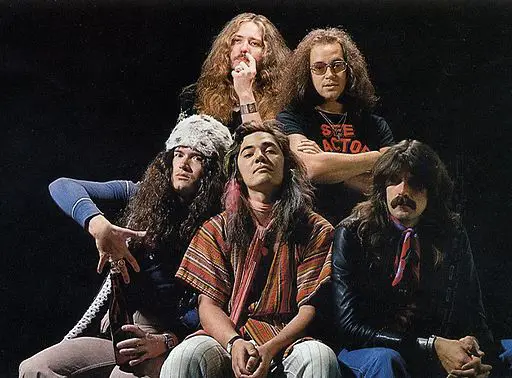
Roger Glover, another longstanding pillar of Deep Purple, serves as the bassist and the band’s trusted swing compass. As the purveyor of Deep Purple’s deep, driving basslines, Glover garnishes each performance with an aura of intensity, drive, and rhythmic weight. He is an intrinsic component of the creative alchemy that forged the band’s genre-defining anthems.
Beyond his physical playing on stage, Glover’s contributions as a producer and songwriter have proven crucial to Deep Purple’s discography. His ability to lock in seamlessly with Ian Paice’s drum fills creates a thick rhythm wall that gives the lead guitar and keyboards complete freedom to improvise during live shows.
- Joined Band: 1969 (Mark II Era)
- Signature Tracks: “Pictures of Home,” “Black Night,” “Lazy,” “Woman from Tokyo”
- Key Contribution: Solid low-end groove, song arrangements, and studio album production.
4. Don Airey: Keyboard Wizard & Organ Virtuoso
On keyboards, Don Airey gracefully fills the massive shoes left behind by his predecessor and founding member, Jon Lord. Airey, with his virtuosic classical training and rock background, weaves keyboard magic that adds lush tonal richness to every composition. His masterful touch sustains and heightens the band’s legendary dual-lead organ-and-guitar dynamic.
Having recorded and performed with legendary acts like Rainbow, Ozzy Osbourne (notably composing the chilling synth intro to “Mr. Crowley”), Whitesnake, and Gary Moore, Airey brought unparalleled prestige when he joined in 2002. Pushing his Hammond B3 organ through cranked Marshall amplifiers, Airey honors Jon Lord’s classic overdriven tone while continually introducing fresh synthesizer textures to modern releases.
- Joined Band: 2002 (Mark VIII Era)
- Signature Tracks: “Rapture of the Deep,” “Uncommon Man,” “Portable Door”
- Key Contribution: Overdriven Hammond B3 organ solos, synthesis layers, and classical motifs.
5. Simon McBride: Lead Guitar Virtuoso (Replacing Steve Morse)
Steering the ship with his hands firmly on the guitar strings is Simon McBride. McBride joined Deep Purple in 2022, initially standing in for Steve Morse during a live tour, before officially becoming the permanent lead guitarist in late 2022 (Mark IX). He is a true powerhouse of technical precision and blues-rock feeling.
With his dynamic guitar-playing wizardry, McBride echoes the soaring glory and fierce attack of the band’s former guitar virtuosos—most notably original maestro Ritchie Blackmore—while injecting his own modern tone that simultaneously respects and evolves the group’s legacy. McBride made his full studio recording debut with the band on their 2024 album, =1, earning immediate praise from critics and long-time fans alike.
- Joined Band: 2022 (Mark IX Era)
- Signature Tracks: “Portable Door,” “A Bit on the Side,” “Bleeding Obvious”
- Key Contribution: Explosive blues-rock solos, razor-sharp riffing, and high-energy stage charisma.
The Legacy of the Classic Mark II Lineup (1969–1973)
While the current Mark IX members maintain a vibrant modern legacy, any serious exploration of Deep Purple remains incomplete without honoring the legendary Mark II era. Active initially from 1969 to 1973 (and reforming for celebrated runs in later decades), this specific configuration defined the band’s signature heavy rock sound and produced their most universally acclaimed catalog.
The Classic Mark II Roster:
- Ian Gillan – Lead Vocals & Harmonica
- Ritchie Blackmore – Lead Guitar & Riffs
- Jon Lord – Keyboards, Organ, & Orchestral Arrangements
- Roger Glover – Bass Guitar
- Ian Paice – Drums & Percussion
The Mark II lineup stands responsible for the “Holy Trinity” of hard rock records: Deep Purple in Rock (1970), Fireball (1971), and Machine Head (1972). Their intense, classically infused heavy rock sound was driven by a fierce instrumental rivalry between Blackmore’s Fender Stratocaster and Lord’s roaring Hammond organ, all grounded by the unstoppable rhythm section of Paice and Glover.
Deep Purple’s Complete Evolution: From Mark I to Mark IX
For over five decades, Deep Purple has captivated a massive global following, propelling waves of head-banging, fist-raising euphoria among rock lovers of every generation. Yet, the enduring impact of this iconic band lies not merely in the quantity of their years, but in the chameleon-like manner they have creatively evolved their sound to resonate across changing musical eras.
To trace the band’s story is to understand its distinct historical eras, categorized chronologically by line-up changes:
Mark I (1968–1969): Formed by Jon Lord, Ritchie Blackmore, Ian Paice, singer Rod Evans, and bassist Nick Simper. This era produced psychedelic hard rock hits like “Hush” and “Kentucky Woman.”
Mark II (1969–1973, 1984–1989, 1992–1993): The definitive lineup featuring Gillan, Blackmore, Lord, Glover, and Paice. They pioneered hard rock with albums like Machine Head and the groundbreaking live album Made in Japan.
Mark III (1973–1975): Following Gillan and Glover’s departure, a young David Coverdale took over lead vocals alongside bassist/vocalist Glenn Hughes. This soulful, blues-funk infused era spawned legendary records Burn and Stormbringer.
Mark IV (1975–1976): American guitar star Tommy Bolin replaced Ritchie Blackmore, producing the funk-rock album Come Taste the Band before the group temporarily broke up in 1976.
Mark V to Mark VII (1989–1994): Included vocalist Joe Lynn Turner replacing Gillan for Slaves and Masters (Mark V), and guitar maestro Joe Satriani stepping in briefly to finish an international tour (Mark VII) when Blackmore permanently departed in 1993.
Mark VIII (1994–2022): Guitarist Steve Morse joined in 1994, inaugurating the longest stable period of continuous touring and recording in Deep Purple’s history, later joined by Don Airey in 2002.
Mark IX (2022–Present): Simon McBride officially takes over lead guitar duties, sparking an energized new era marked by extensive world tours and the 2024 studio release =1.
The Musical Chemistry & On-Stage Synergy of Mark IX
One of the essential attributes that defines the enduring appeal of Deep Purple lies in the potent chemistry shared among its members. The band’s harmony is an intricate web spun with threads of raw talent, mutual respect, and an unyielding dedication toward creating music that deeply moves listeners.
The current lineup—comprising Ian Paice, Ian Gillan, Roger Glover, Don Airey, and Simon McBride—brilliantly upholds the heritage of the band while flinging open new doors for musical exploration. The common muse that binds these virtuosos together remains the transformative power of rock and roll itself. Each musician brings his unique nuances to the stage, crafting a blend that is aesthetically rich, engrossingly diverse, and undeniably heavy.
Mutual respect among the members fuels the band’s operational structure. They function seamlessly as a unit because they revere each other’s technical capabilities. Simon McBride, for example, represents a perfect balance of reverence for tradition and a thirst for reinvention. He approaches his role with humility, honoring legendary predecessors like Ritchie Blackmore and Steve Morse while expressing his own musical identity without compromise.
A similar deference is echoed by Don Airey, whose Hammond organ ripples with admiration for Jon Lord’s legacy, even as he carves his distinct sonic signature into Deep Purple’s modern catalog. Deep Purple thrives creatively because its members understand how to complement each other’s strengths on stage.
A single Deep Purple track is a unified sonic experience: Ian Paice’s drum patterns lock effortlessly with Roger Glover’s rhythm-nailing bass, all held together by the iconic rumble of Ian Gillan’s vocals and soaring lead duels between organ and guitar. Their passion pours through the speakers, settling directly into the hearts of concertgoers and listeners worldwide.
Frequently Asked Questions About Deep Purple Members
Who is the current lead guitarist for Deep Purple?
Simon McBride is the lead guitarist for Deep Purple. He joined in 2022 to replace Steve Morse and recorded on their 2024 album =1.
Why did Steve Morse leave Deep Purple?
Steve Morse stepped down from Deep Purple in 2022 after 28 years with the group to support his wife, Janine, during her battle with cancer.
Are any original founding members still in Deep Purple?
Yes. Drummer Ian Paice is the sole founding member (Mark I era) who has remained continuously in Deep Purple since 1968.
Is Ritchie Blackmore ever coming back to Deep Purple?
Ritchie Blackmore permanently left Deep Purple in 1993 and currently focuses on his renaissance-rock project, Blackmore’s Night. While fans frequently speculate, the current Mark IX lineup actively tours and records with Simon McBride on lead guitar.
Final Thoughts: A Legacy That Continues to Reign
Deep Purple is far more than a nostalgia act; it is a living, evolving musical phenomenon continuously shaped through individual brilliance and collective synergy. The voyage through time that defines Deep Purple’s story highlights the undying spirit of hard rock and roll that still pulses in their hearts today. The current members spark together, burn together, and in their shared fire, continue to create music that is nothing short of extraordinary.
Cover Photo Credit: “Deep Purple” by Stephan Birlouez (www.amongtheliving.fr) is licensed under CC BY-SA 2.0