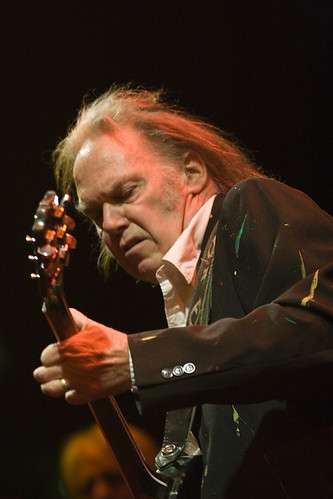
Neil Young is a legendary singer-songwriter and guitarist who has provided the world with a vast catalog of influential and timeless music. Known for his unique blend of acoustic folk, raw garage rock, and rustic country, Neil Young’s guitar playing style is captivating, instantly recognizable, and admired by guitarists of all levels. In this guide, we will explore the core techniques required to play his music, arranged progressively from foundational rhythm concepts to advanced electric expression.
1. Basic Strumming Patterns and Rhythmic Dead-Notes
Neil Young’s acoustic foundation relies on a heavy, driving rhythm anchored by simple open chord progressions. The first step in mastering his guitar approach is getting comfortable with his signature percussive strumming style. Unlike traditional folk players who maintain a light, fluid wrist motion, Young frequently strikes the low bass strings with an emphatic downstroke before lifting his palm to create short, muted rhythmic clicks on the upstroke.
A classic entry point for this technique is studying tracks like “Heart of Gold” and “Old Man,” where downstrokes dominate the measure and accent subtle rhythmic shifts on the second and fourth beats. If you have already built a basic foundation, applying easy country strumming and chord transitions[cite: 1] will help you lock into the steady acoustic pulse required for his classic catalog.
2. Open Chord Progressions and Hammer-On Embellishments
Once you’ve tackled the basic strumming rhythm, the next milestone involves Neil Young’s iconic open chord voicings and hammer-on embellishments. Rather than holding static chords, Young frequently lifts fingers to create suspended variations or hammers onto open bass notes—a habit that turns standard Em, D, and C voicings into signature hooks.
In acoustic masterpieces like “Harvest Moon” and “The Needle and the Damage Done,” understanding these subtle chord variations becomes essential. For instance, transitioning between an Em7 and a G major with a sharp thumbed bassline gives the song its rolling, percussive motion. Studying these finger movements aligns closely with acoustic fingerstyle traditions found in mastering Gordon Lightfoot’s classic folk arrangements[cite: 1], where bassline voice leading carries the entire arrangement.
3. Alternating Basslines and Fingerpicking Independence
Moving further along the difficulty curve, Neil Young’s acoustic work regularly features intricate fingerpicking patterns that blend steady alternating basslines with ringing open-string melodies. Developing independent control between your thumb and fingers is crucial for capturing the driving, hypnotic feel of songs like “Sugar Mountain” and “Don’t Let It Bring You Down.”
To master these pieces, start by isolating the thumb pattern on the bottom three strings (E, A, and D). Once your thumb can maintain a metronomic beat, layer index and middle finger plucks on the upper strings. This steady thumb-groove technique mirrors the acoustic Delta and folk-blues foundations seen in learning Skip James’ acoustic blues style[cite: 1], where thumb independence acts as a self-contained rhythm section.
4. Alternate Tunings: Double Drop D and Open D
Neil Young is celebrated for his creative exploration of alternate guitar tunings to unlock massive, ringing resonances. One of his absolute favorites is Double Drop D (D-A-D-G-B-D), achieved by tuning both high and low E strings down a full step to D. This tuning allows for rich, one-finger power chords while leaving open middle strings to drone freely underneath delicate vocal melodies.
Anthems like “Cinnamon Girl,” “Thrasher,” and “Ohio” rely heavily on Double Drop D and Open D configurations. When practicing in these tunings, pay close attention to finger placement; standard chord shapes shift dramatically across the fretboard. If you want to verify chord shapes or analyze how alternate tunings function across different song arrangements, using smart learning tools detailed in our Chordify vs. Ultimate Guitar software review[cite: 1] can help you map out non-standard chord diagrams efficiently.
5. One-Note Solos, Bigsby Manipulation, and Harmonica Rigging
At the highest level of Neil Young’s electric style is his instinctual, highly emotional soloing. Armed with “Old Black”—his heavily modified 1953 Gibson Les Paul Goldtop equipped with a Firebird pickup and a Bigsby vibrato tailpiece—Young eschews fast, technical scalar runs in favor of raw attack, sustain, and fierce single-note repetition.
In electric epics like “Cowgirl in the Sand” and “Down by the River,” he demonstrates how striking a single note repeatedly with variable pick dynamics and dramatic Bigsby pitch bends can express more raw tension than a lightning-fast scale. Pair this with a neck-mounted harmonica rack, and you achieve his legendary solo acoustic performance setup. Much like the storytelling mindset of legendary rock rhythm figures like Tom Petty and his iconic guitar selections[cite: 1], Young’s soloing prioritizes mood and narrative over technical flash.
Conclusion
Mastering Neil Young’s guitar style requires patience, physical commitment, and a deep appreciation for acoustic tone and electric texture. From basic percussive strumming to intricate fingerpicking, Double Drop D tunings, and expressive single-note lead playing, working through his song catalog offers an invaluable lesson in songcraft. Start with the foundational rhythm tracks, build your thumb independence, and gradually embrace the raw, beautiful feedback that makes Neil Young a true guitar original.
Further Reading & Resources: