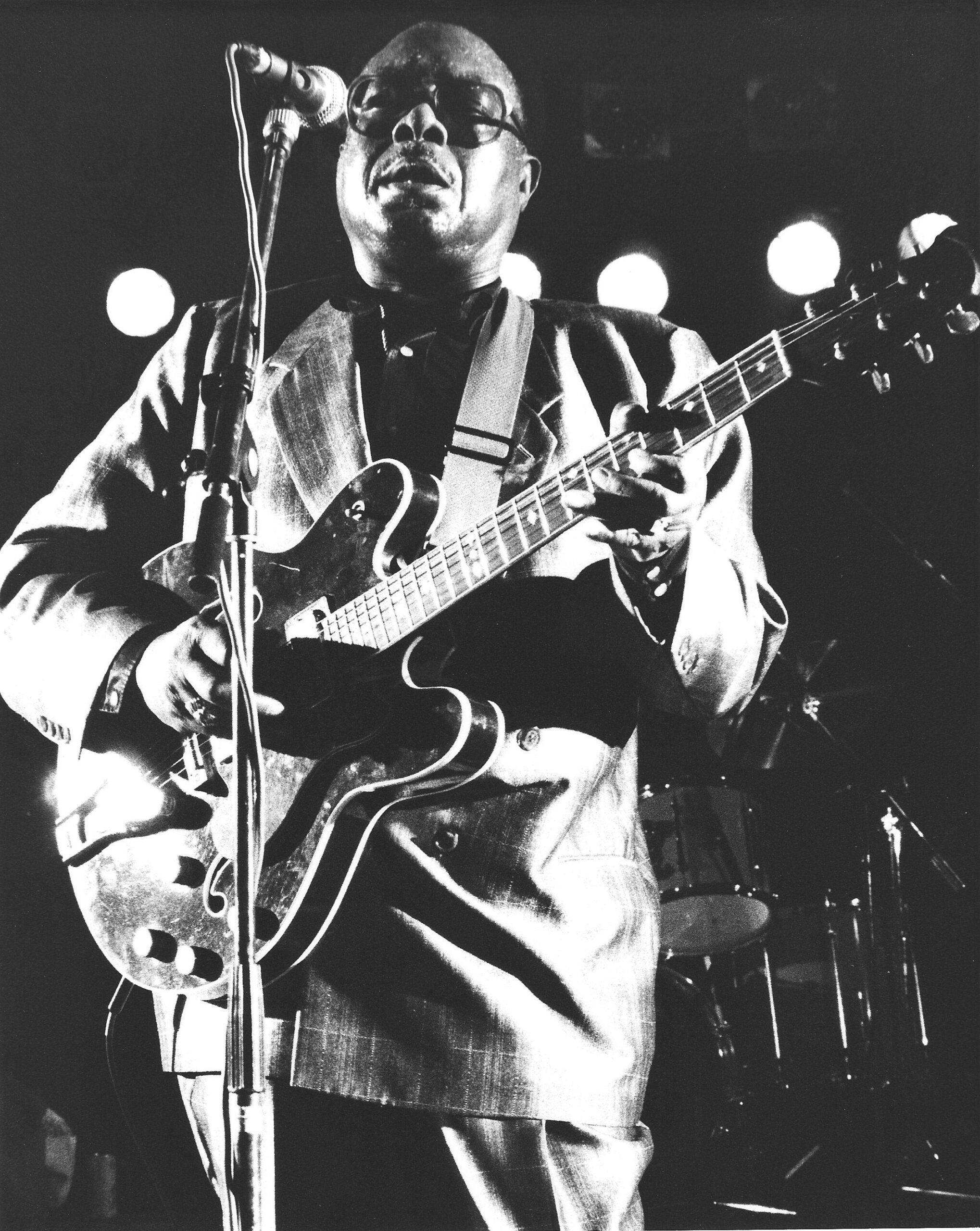
Jimmy Rogers (1924–1997), born James A. Lane, was one of the foundational figures of the post-war electric Chicago blues sound. He is best known as the essential rhythm guitarist and occasional vocalist in the original, classic lineup of the Muddy Waters Band from 1950 to 1960. While Muddy Waters brought the raw Delta intensity, Rogers provided the sophisticated, steady, and infectious rhythmic foundation that transformed Delta blues into the amplified, urban Chicago sound that would eventually influence rock and roll. His contributions, both as a band member and a solo recording artist for Chess Records (with hits like “That’s All Right” and “Walking by Myself”), cemented his legacy as a master of the blues shuffle and the urban groove.
The Rogers Technique: The Perfect Shuffle
Rogers’s guitar style was the very definition of a supportive, powerful electric blues rhythm, relying on precision and tone rather than flash.
The Seamless Rhythm: Rogers was a master of the shuffle, particularly the swinging, triplet-based rhythm that drives the Chicago blues sound. His playing was characterized by a clean, sharp tone and an emphasis on hitting the rhythmic pulse and the off-beats with impeccable timing. He was the anchor that allowed Muddy Waters to weave his bottleneck slide melodies over the top.
Melodic Riffing: While he primarily played rhythm, his work often involved melodic, single-string bassline riffs that interlocked with the actual bass player, creating a complex, driving pattern. This technique—playing simple, repeated, high-impact phrases—provided harmonic motion while maintaining the rhythmic core.
Chord Voicings: He used sparse, clean chord voicings that rarely clashed with the slide guitar, demonstrating his supreme musicality and understanding of ensemble dynamics. He often favored an early, simple electric guitar sound, relying on an articulate tone without heavy distortion to let the clarity of his rhythm shine through.
Three Essential Songs and How to Approach Playing Them
These three tracks exemplify Rogers’s foundational role in the Chicago blues scene:
“That’s All Right” (1950)
This was one of Jimmy Rogers’s earliest and most successful solo recordings on Chess Records, featuring Muddy Waters playing slide guitar behind him. To approach this song, the focus must be on the clean, dominant rhythm guitar part that defines the track. The player must use a tight, precise strumming hand to execute the slow, swinging shuffle, ensuring the rhythm is slightly behind the beat (or laid back) to create that quintessential lazy, heavy Chicago groove. The chord voicings are simple but must be executed cleanly to allow the slide guitar room to breathe.
“Walkin’ by Myself” (1956)
A later hit showcasing Rogers’s evolution as a vocalist and guitarist, this track is a perfect example of his ability to front a band. The guitar approach requires mastering the dynamic interplay between the rhythm part and the lead fills. When Rogers sings, his guitar lays down the foundational shuffle; during the breaks, he executes concise, melodic lead fills (often in the key of E) that are brief, perfectly phrased, and heavy on controlled vibrato and wide bends with classic Chicago electric blues phrasing that avoids unnecessary clutter.
“I Can’t Be Satisfied” (1948, Muddy Waters Band)
Though credited to Muddy Waters, this recording (with Rogers on second guitar) is historically significant as a transition point. Rogers’s part is a prime example of his role as the rhythmic anchor. The player should concentrate on keeping a steady, pulsing rhythmic foundation using fingerstyle picking or light strumming that contrasts with and supports the aggressive, untamed bottleneck slide of Waters. The technique is about subtlety and consistency, maintaining the electric tension without overpowering the Delta acoustic roots still present in Waters’s style.
🎉 Conclusion Wrap-up: The Soul of Chicago Blues
Jimmy Rogers was the silent architect of the classic electric Chicago blues sound. While stars like Muddy Waters and Howlin’ Wolf delivered the raw, primal energy, Rogers provided the sophisticated, unwavering rhythmic pocket that made the sound danceable, repeatable, and universally influential. His legacy is one of a rhythm guitar master whose clean tone and impeccable sense of time were essential ingredients in transforming a regional folk music into an electrified international phenomenon that directly paved the way for rock and roll.
Cover Photo Credit “Jimmy Rogers” by Phil Wight is licensed under CC BY 2.0