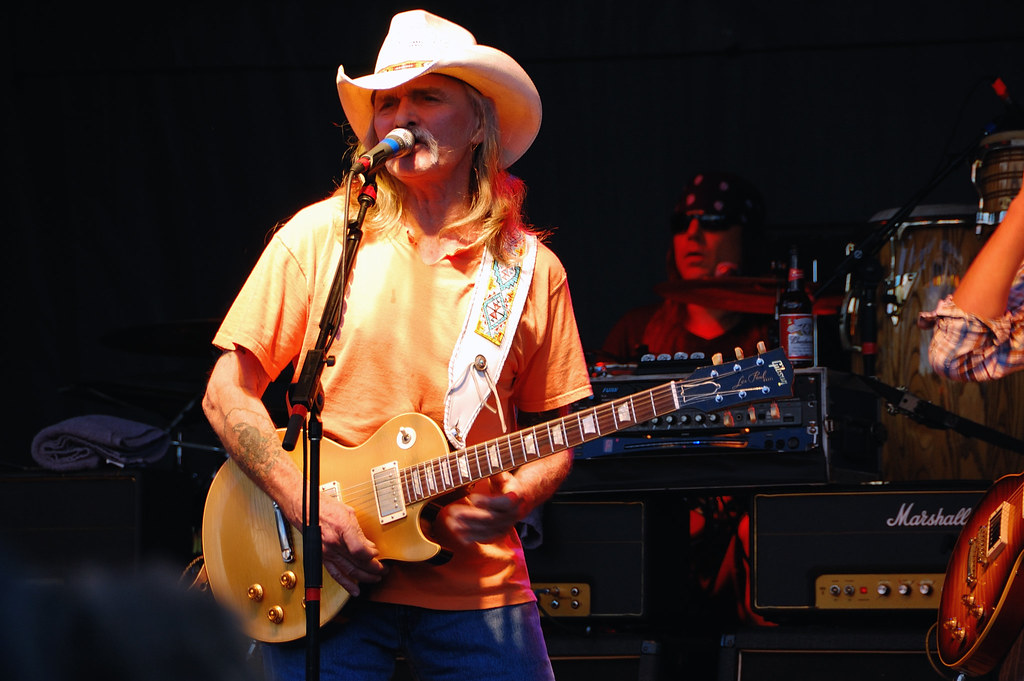
Dickey Betts, a name synonymous with soulful Southern rock guitar, carved an indelible mark on the landscape of American music as a founding member and principal songwriter of the legendary Allman Brothers Band. Born Forrest Richard Betts on December 12, 1943, in West Palm Beach, Florida, his journey into music began in his teenage years. Initially drawn to the sounds of bluegrass and country, Betts’ musical horizons expanded as he discovered the blues and rock and roll, eventually leading him down a path that would redefine the sound of rock guitar. His early experiences playing in local bands honed his skills and laid the foundation for the distinctive style that would later captivate audiences worldwide.
Bluegrass Beginnings: The Early Influences That Shaped Dickey Betts

Betts’ formative years were steeped in the rich musical traditions of the South, and his early influences ranged from country greats like Hank Williams to blues pioneers such as B.B. King. This eclectic mix of genres played a crucial role in shaping his unique approach to the guitar. Before joining forces with the Allman brothers, Betts played in several local Florida bands, including the Jokers and the Second Coming. It was during this period that he developed his signature melodic phrasing and his ability to weave intricate lines that were both technically impressive and deeply emotive. These early experiences provided him with the confidence and musical vocabulary that would make him an indispensable part of the ABBand.
Joining Forces: How Dickey Betts Became an Allman Brother
The pivotal moment in Dickey Betts’ career arrived in 1969 when he joined forces with Duane and Gregg Allman, Berry Oakley, Butch Trucks, and Drummer Jaimoe Johanson to form the Allman Brothers Band. His arrival brought a crucial songwriting element to the group, complementing Duane Allman’s virtuosic slide guitar playing. Betts penned some of the band’s most iconic tracks, including “In Memory of Elizabeth Reed,” “Ramblin’ Man,” and “Blue Sky,” showcasing his knack for crafting memorable melodies and sophisticated instrumental arrangements. His contributions were instrumental in establishing the Allman Brothers Band as pioneers of Southern rock, blending blues, rock, country, and jazz into a unique and compelling sound.
The Melodic Maverick: Unpacking Dickey Betts Guitar Style
What truly set Dickey Betts apart was his distinctive guitar playing style. While Duane Allman was known for his fiery and expressive slide work, Betts brought a more melodic and structured approach to the band’s improvisational jams. His playing was characterized by its lyrical quality, often employing major keys and a lighter touch that contrasted beautifully with Allman’s intensity. This interplay between the two guitarists became a hallmark of the Allman Brothers Band’s sound, creating a rich tapestry of interwoven lines and harmonies. Betts’ ability to construct intricate solos that were both technically proficient and emotionally resonant solidified his reputation as one of the most gifted guitarists of his generation.
Betts’ Axes: A Look at the Guitars That Defined His Sound
Throughout his illustrious career, Dickey Betts wielded a variety of guitars, each contributing to his evolving sound. He is perhaps most famously associated with his Gibson Les Paul Goldtop, a guitar that became synonymous with his early work with the Allman Brothers Band. Later, he often played Gibson SG models, known for their sustain and tonal versatility, which allowed him to explore different sonic textures. He also utilized Fender Stratocasters on occasion, adding a brighter, more articulate edge to his playing. Each of these instruments, in the hands of Betts, became a vehicle for his unique musical expression, contributing to the diverse sonic palette of the Allman Brothers Band and his subsequent solo work.
Stepping Up: Betts Leads the Allmans and Forges His Own Path
Following Duane Allman’s tragic death in 1971, Dickey Betts stepped up to become the band’s primary guitarist and a driving creative force. He continued to write and perform with the Allman Brothers Band through various lineup changes and periods of inactivity, always maintaining a high level of musical integrity. He also embarked on a successful solo career, releasing albums that further showcased his songwriting and guitar prowess. Despite some periods of separation from the Allman Brothers, his contributions to the group remained undeniable, and his influence on subsequent generations of guitarists is profound. Dickey Betts passed away on April 18, 2024, leaving behind a legacy of timeless music and unforgettable guitar work.
Witness the Legend: Must-See Dickey Betts Performances
To truly appreciate the genius of Dickey Betts, experiencing his playing firsthand is essential. Here are three recommended videos that showcase different facets of his remarkable talent: “In Memory of Elizabeth Reed” Live at Fillmore East (1971) captures the early magic of the Allman BB, featuring the mesmerizing interplay between Dickey Betts and Duane Allman on one of Betts’ signature instrumental compositions:
Blue Sky Dickie Betts Live
Blue Sky” is one of the most celebrated songs written and originally sung by guitarist Dickey Betts for The Allman Brothers, first appearing on their 1972 album Eat A Peach. Betts often took the lead vocal on live performances of this track. There are numerous live video recordings capturing Betts performing this iconic song over the decades, both with The Allman Brothers Band and his own groups like Great Southern. Notable examples available online include performances with The ABB from the Capitol Theatre in 1981 and from Germany in 1991. Videos also exist of Betts performing it later with Great Southern, such as a recording from Bonn, Germany in 2008 (featured on his official channel) and another from Mountain Sky in Pennsylvania in 2014. These live versions often feature extended guitar solos and showcase the song’s enduring appeal in a concert setting
Dickie Betts Ramblin Man
Written and sung by guitarist Dickey Betts, “Ramblin’ Man” was released by The Allman in 1973 on their Brothers and Sisters album. It became their biggest commercial hit and only top 10 single, peaking at #2 on the Billboard charts. Inspired partly by Betts’ own experiences growing up moving frequently and taking its title from a 1951 Hank Williams song (though it’s an original composition), the lyrics tell the story of a man born to roam. The song marked a distinct country influence on the band’s sound, which initially made them hesitant to record it.