
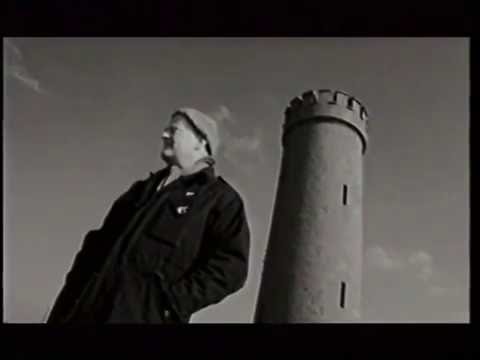
There are very few figures in the history of music who have managed to maintain a career as consistent and culturally significant as Christy Moore. Spanning over fifty years, his work is not merely a collection of folk songs but a sustained exercise in rhythmic architecture and lyrical endurance. Even for the player who finds traditional folk outside their personal rotation, there is an objective, technical value in analysing how Moore constructed his sound. He transformed the acoustic guitar from a simple backing instrument into a percussion-heavy, rhythmically complex engine that could hold an audience’s attention for hours without the aid of a band.
The Evolution of a Technical Benchmark
To understand Moore’s influence, one must look at the transition he spearheaded in the 1960s and 70s. Before the mainstreaming of bands like Planxty, the Irish folk scene was largely composed of singular balladeers or very traditional ensembles. Moore, working alongside collaborators like Dónal Lunny and Andy Irvine, essentially re-engineered the genre. He introduced a level of rhythmic aggression that was previously absent from the folk canon. He treated the guitar not as a soft accompaniment, but as a driving force. This approach requires a level of stamina and precision that is rarely seen in amateur playing; he essentially mastered the art of playing for the “long haul,” ensuring that his energy levels remained consistent whether he was in a small pub or a concert hall.
The Mechanics of the Moore Percussive Style
The most distinct aspect of Moore’s contribution to the guitar is his percussive style. He recognized early on that a solo performer needs to fill the sonic space typically occupied by a drummer or a percussionist. He accomplished this by adopting a style of palm-muting and aggressive down-stroking that mimics the heartbeat of a bodhrán. By placing the heel of his hand on the bridge, he manages to deaden the sustain just enough to create a rhythmic “thud” that underscores his playing. This technique is something every guitarist, regardless of genre, could examine in their playing, as It turns the guitar into a two-in-one instrument, providing the chordal structure and the rhythm section simultaneously.
If you are looking to integrate this into your own playing, you must move away from the light, melodic strumming often taught in introductory courses. You have to focus on the weight of your right hand. When playing tracks like “The Curragh of Kildare,” notice how he does not just play the notes; he attacks the strings. This is a deliberate aesthetic choice that provides the listener with a sense of forward momentum. For those who want to see how this technical foundation can be translated into other areas of music, reading into Neil Young’s guitar techniques offers a parallel, as Young similarly uses the acoustic guitar as a percussive, driving force rather than a purely harmonic one.
Songwriting as a Form of Social Architecture
Appreciating Moore’s work requires recognizing that he views the guitar as a vehicle for history. He has always operated with the understanding that songs are not just pieces of entertainment, but pieces of infrastructure. His songs often serve as modern-day chronicles of the Irish experience, covering themes of political unrest, emigration, and the mundane struggles of the working class. This is why his career has survived for decades; he made himself the lens through which history was viewed.
From a compositional standpoint, his lyrics are intentionally direct. He rarely relies on flowery metaphors, choosing instead to use stark, unadorned language that strikes harder than poetry. When you analyze his work, you realize that he is a master of “economy of expression.” He keeps the arrangements simple so that the narrative takes center stage. This is a critical lesson for any musician: knowing when to stop playing is often more important than knowing what to play next. If you are struggling with the balance between musicality and lyrical focus, looking into how to approach playing guitar if you cannot sing can be enlightening, as it teaches you to let the guitar communicate the emotion that words might otherwise carry.
The Endurance of the Career
Perhaps the most impressive aspect of Moore’s tenure is his survival. In an industry that is notoriously fickle, he has remained relevant by refusing to chase trends. He settled into his own niche, perfected his sound, and built a foundation of fans who understood his specific brand of social commentary. His career path is a model for any independent artist. He did not rely on major label support to dictate his direction; he leveraged the power of the folk circuit, which values authenticity over polish. This serves as a reminder to all musicians that you do not need to be everything to everyone; you simply need to be excellent at one specific thing.
When studying his discography, it becomes clear that his “sound” did not change; it only deepened. The percussive elements became sharper, the delivery of his lyrics became more nuanced, and his understanding of how to hold a room’s attention became absolute. This is not the result of luck or happenstance. It is the result of thousands of hours of playing the same chords, finding subtle variations in the wrist, and learning how to read an audience. Even if his style is not one you intend to mimic, the professional discipline required to sustain that level of performance for over fifty years is something that every working guitarist should respect.
Applying These Lessons to Your Craft
If you want to take something tangible away from Moore’s legacy, do not start by learning his songs. Start by learning his habits. Examine the way he maintains consistency in his tempo. When you analyse how he uses chord transitions to lead into a narrative beat, pay attention to how he prioritises the clarity of his message over the complexity of his solos. By studying the “bones” of his playing rather than just the surface, you can incorporate the same discipline into your own practice sessions.
Whether you find yourself gravitating toward the guitar music of other folk icons or you prefer the technical rigor of electric rock, the value of Christy Moore’s work is found in his commitment to the craft. He is a prime example of what happens when a musician stops trying to be clever and starts trying to be honest. That is a hallmark of a long career, and it is the most valuable takeaway for any guitarist looking to build a legacy of their own.