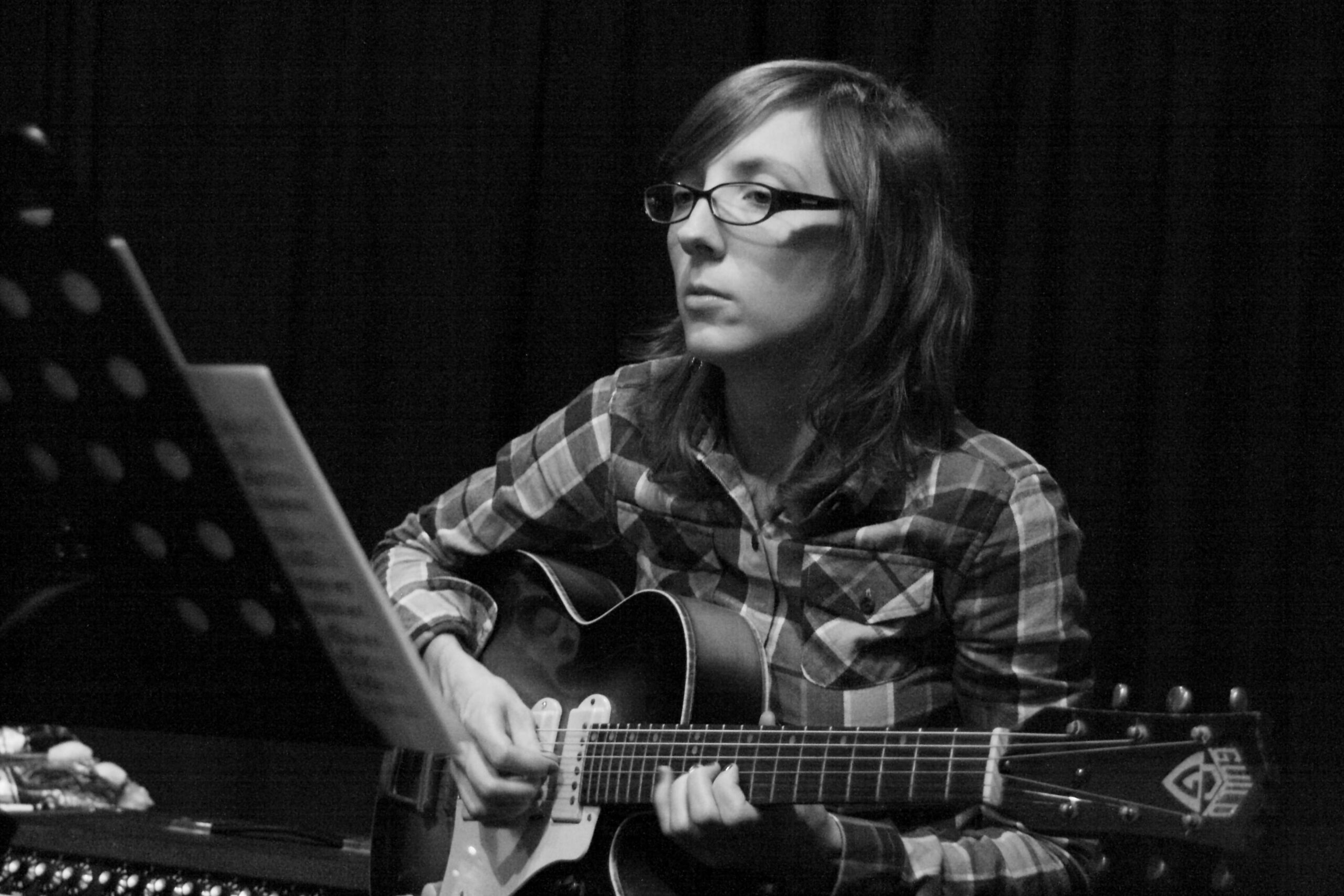
Mary Halvorson is a highly acclaimed American guitarist, composer, and improviser known for her unique and innovative approach that bridges avant-garde jazz, rock, and free improvisation. She has been recognized as one of the leading figures in contemporary improvised music, earning multiple “Best Guitarist” awards in the DownBeat International Critics Poll. Her style is a deliberate mix of meticulous composition and fearless experimentation, resulting in a sound that is both highly structured and wonderfully warped.
🛠️ The Halvorson Technique: Pitch-Bending and Texture
Halvorson’s distinctive guitar style is defined by her use of unconventional note choices, complex compositions, and a highly textural approach to effects.
Pitch-Bending and “Wobbly” Sound: A hallmark of her sound is the use of an expression pedal with a delay modeler (specifically a Line 6 DL4) to manipulate the delay time, which results in a signature pitch-shifting or pitch-modulation effect on the notes. This technique gives her playing a “slippery and thrilling,” “woozy and unexpected” quality, creating a feeling of “uncanniness” that moves between melodic consonance and harmonic friction.
Unique Tone and Attack: She actively avoids the “perfect” smooth jazz tone, instead prioritizing a raw, dry attack with minimal reverb. She often blends the sound of her amplified strings with a close-miked acoustic voice of her semi-hollow guitar, which brings out a deep, “woody” resonance. Her playing involves a strong pick attack, occasional percussive “mutes and whacks,” and a purposeful embrace of dissonance and “jagged edges.”
Compositional Focus: Her compositions are known for their complexity, balancing written themes with group improvisation. She is highly focused on orchestration and texture, carefully managing how instrumental lines overlap and how much sonic density is in a section. Her compositional approach is influenced by her studies with jazz master Anthony Braxton, who encouraged her to pursue her own distinct musical voice. She creates her own complex technical exercises to internalize scales and patterns in personal ways.
🎧 Three Tracks to Analyze Halvorson’s Approach
To fully appreciate the elements of Halvorson’s unique guitar playing, here are three examples that highlight different facets of her work:
1. “Carved From” (Showcase of Signature Effects)
This track is an excellent entry point into her signature sound. It features her guitar moving into the spotlight, where you can hear her slide playing and pitch-modulation effects weaving through the ensemble. The guitar often creates a sonic counterpoint to the fluid vibraphone lines, showcasing her ability to add a disorienting, experimental edge to a structured composition.
2. “Haunted Head (feat. The Mivos Quartet)“
This piece is noted in an analysis of her style for exploring the core element of her practice: how she approaches composing and interpreting music in a meticulous manner. Listening to her larger ensemble works like this, especially those with her Amaryllis octet, demonstrates how she successfully balances precise arrangement with spontaneous, collective improvisation, engineering each musical moment to create a compelling narrative.
3. The Work on the Album Meltframe (Solo and Deconstruction)
Her solo recording, Meltframe, provides a look at her ability to completely reconstruct and reinterpret well-known jazz tunes. By stripping the music down to a solo guitar performance, she exposes her foundational technique, unusual chord voicings, and unconventional lines and note choices. This album suggests her clear compositional ability by providing a coherent framework while still transforming the familiar material with her signature approach.
Wrap-Up: Mary Halvorson—Composer and Avant-Garde Guitar Innovator 🎸
Mary Halvorson is one of the most compelling and highly-regarded figures in contemporary improvised music, distinguishing herself as both a virtuoso guitarist and an accomplished composer. Her work deliberately bridges avant-garde jazz, rock, and free improvisation, earning her acclaim for her wholly original voice on the instrument.
🎶 Key Elements of Her Style
Halvorson’s unique sound is built upon a foundation of meticulous composition combined with fearless experimentation:
- Signature Pitch-Bending: Her most recognizable sonic device is the use of a Line 6 DL4 Delay Modeler, manipulated via an expression pedal, to create a “wobbly” or pitch-shifting effect. This effect turns simple notes and chords into something woozy, unsettling, and yet musically intentional, adding a layer of sonic friction and surprise to her playing.
- A Textural Tone: She actively rejects the “smooth” jazz guitar tone, instead favoring a raw, dry attack that emphasizes the woody resonance of her instrument. Her technique incorporates percussive attacks, open strings, and a purposeful use of dissonance, making the guitar a highly textural and sometimes aggressive voice in the ensemble.
- Compositional Architecture: Halvorson’s compositions, often written for larger ensembles like her Amaryllis octet, are highly structured. She excels at orchestration, carefully balancing complex written themes with sections of collective, open improvisation, a concept influenced by her studies with Anthony Braxton.
Halvorson’s genius lies in her ability to make the “wrong” notes sound inevitable, and the chaotic feel deliberate. She has successfully reinvented the identity of the jazz guitar, inspiring a new generation of musicians with her technical ingenuity and unique artistic vision.