Welcome back to Guitardoor.com, where we champion the unsung heroes and true innovators of the guitar. Today, we turn our attention to one of the most important and criminally overlooked guitarists of the entire British post-punk movement: the one and only Martin Bramah. As a co-founding member of the legendary and fiercely influential band The Fall, and later as the creative force behind his own brilliant groups Blue Orchids and Factory Star, Bramah was a key architect of the Manchester sound, a player known for his wiry, trebly, and uniquely psychedelic take on the guitar.
The Sound of the Rainy City
In the late 1970s, just across the Irish Sea from here, a new sound was being forged in the grey, industrial landscape of Manchester. It was a stark, intelligent, and energetic reaction against the bloat of classic rock, and Martin Bramah was one of its primary innovators. As a contemporary and early peer of Bernard Sumner of Joy Division, Bramah was also a key figure in redefining the guitar’s role. But where Sumner’s playing often evoked a cold, vast emptiness, Bramah’s style was different. It was the sound of nervous energy, infused with the jagged, trebly aggression of 60s garage rock bands like The Seeds and The Monks. His playing was less atmospheric and more wiry, a sound that was both abrasive and deeply psychedelic. With his definitive band, Blue Orchids, this style would blossom, blending post-punk’s tension with a poetic, melodic, and overtly psychedelic quality that was all his own.
Anatomy of a Post-Punk Psychedelicist
The guitar sound of Martin Bramah is the sound of sparks flying off a rusted, churning machine. It is not about the warm sustain or rich chords of classic rock; it is a masterclass in creating maximum impact through sharp, percussive, and trebly textures that cut through the mix with a nervous, electric energy. His playing is proof that a simple, jagged line delivered with the right attitude can be far more powerful than a thousand technically perfect notes. He created a sonic signature that was lean, intelligent, and utterly unique.
The Wiry Riff: Bramah’s style is built on a foundation of sharp, trebly, and often repetitive single-note or double-stop riffs. His lines are angular, often using slight, unsettling dissonances and a relentlessly aggressive picking attack. He completely eschewed traditional blues scales and rock clichés, creating a vocabulary that was fresh, exciting, and influential.
The Post-Punk Gear: His sound was a product of the era’s “form follows function” ethos. He is most often associated with the bright, cutting tone of the Fender Telecaster. Like many in the scene, his tone was not about expensive, boutique gear but about finding tools that delivered a sharp, trebly, and articulate sound.
The Trebly Tone: His tone was the essence of post-punk clarity and aggression. He often used solid-state amplifiers like the famously loud and clean British HH Electronics amps, prized for their bright, sometimes even harsh, treble response. Effects were used sparingly, but a touch of reverb or a simple fuzz pedal could be used to add grit and space without ever approaching the saturated sound of mainstream rock.
Essential Bramah: The Manchester Canon
Martin Bramah’s work with The Fall and Blue Orchids created a blueprint for a more psychedelic and garage-influenced strain of post-punk. To understand his incredible and influential style, these three tracks are essential.
“Psycho Mafia” (by The Fall)
A raw, chaotic, and brilliant classic from The Fall’s debut EP, Bingo-Master’s Break-Out!. The track is powered by Bramah’s frantic, wiry, and relentlessly driving guitar riff. It’s a perfect example of the early, chaotic, and truly original energy he brought to the band, a sound that is pure, uncut Manchester post-punk.
“The Flood” (by Blue Orchids)
The stunning opening track from his band Blue Orchids’ masterpiece album, The Greatest Hit (Money Can Buy). The song is a perfect showcase of his signature sound: a chiming, trebly, and beautifully hypnotic guitar line, drenched in a psychedelic haze and paired perfectly with a swirling Vox organ. It is both beautiful and full of a palpable nervous energy.
“Work” (by Blue Orchids)
A more aggressive and driving post-punk anthem, “Work” features Bramah’s guitar at its most cutting and angular. The riff is sharp and percussive, slicing through the mix like a jagged piece of glass and creating an incredible sense of tension and release. It is a brilliant example of his minimalist, high-impact style.
Martin Bramah is a true pioneer of post-punk guitar and an essential, if often unsung, architect of the legendary Manchester sound. While he may not have the household name of some of his contemporaries, his influence is undeniable and can be heard in countless alternative and indie rock bands who were inspired by his wiry, trebly, and uniquely psychedelic approach to the instrument. He is one of the era’s great, authentic, and uncompromising voices.
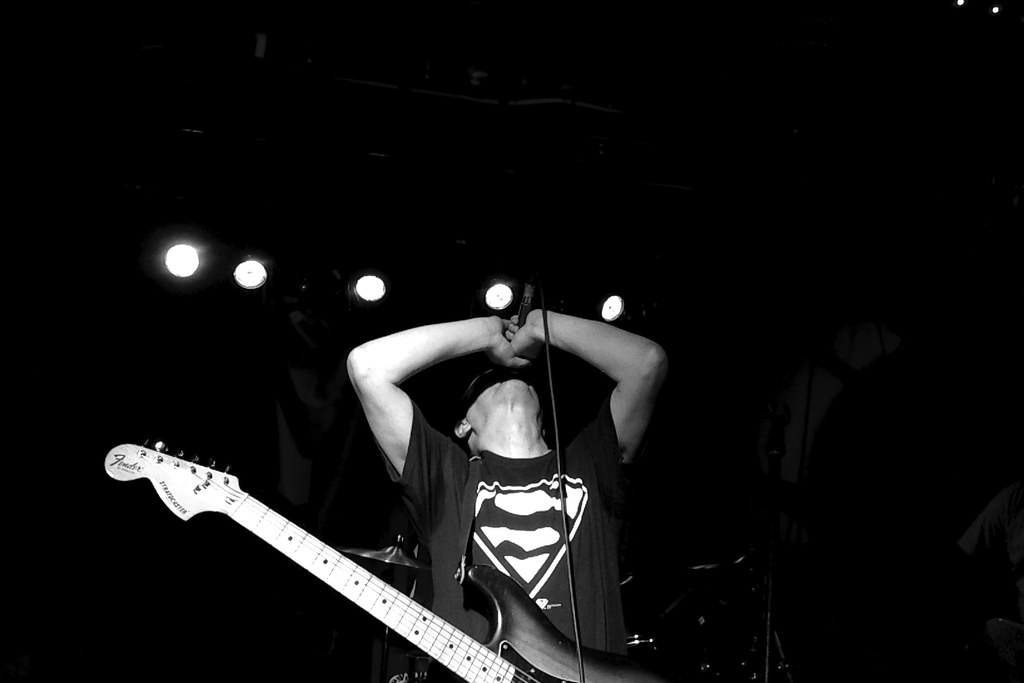
Cover Photo Credit “Martin Bramah, The Blue Orchids, Water Rats, London, 3 May 2013” by GanMed64 is licensed under CC BY 2.0