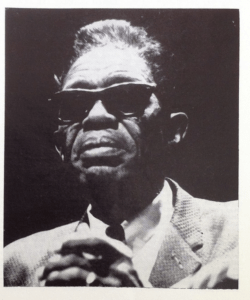

Lonnie Brooks was a musical force of nature who defied simple categorization, blending the swampy rhythms of his Louisiana roots with the hard-edged electric blues of the Chicago South Side. Born Lee Baker Jr., he began his career in the 1950s under the name Guitar Junior, touring with zydeco and R&B legends before relocating to Chicago and reinventing himself as Lonnie Brooks. He became a cornerstone of the Alligator Records roster, known for an explosive “voodoo” blues style that incorporated elements of rock and roll, country, and soul. Brooks was a consummate entertainer whose grit and infectious energy made him one of the most beloved figures in the modern blues era.
The Signature Brooks Style: The Voodoo Mix
The signature style of Lonnie Brooks was defined by its incredible versatility and a unique rhythmic approach often called “swamp rock.” His guitar playing was characterized by stinging, percussive single-note leads and a heavy, tremolo-laden chordal style that echoed the sounds of the Gulf Coast. He was a master of the “shuffling” rhythm, often playing slightly behind the beat to create a sense of deep, rolling tension. Brooks was also a powerful vocalist, possessing a rich, gravelly baritone that could pivot from a soulful croon to a ferocious shout. His ability to mix diverse genres into a cohesive blues framework allowed him to appeal to wide audiences without ever losing his authentic edge.
Three Essential Tracks to Hear His Genius
To understand the range of Lonnie Brooks, three tracks stand out as essential entries in his massive discography. First is “The Crawl” (1958), recorded during his early years as Guitar Junior. This track is a quintessential piece of Gulf Coast rock and roll, featuring a driving, danceable beat and a sharp, youthful guitar tone that hints at the legend he would become.
Next, listen to “Two Headed Man” (1978). Originally recorded for the Living Chicago Blues series, this track is the definitive representation of his “voodoo” style. It blends a funky, mid-tempo groove with searing guitar licks that cut through the arrangement. It showcases the raw, amplified power he brought to the Chicago scene while maintaining a rhythmic complexity that was uniquely his own.
Finally, explore “Wife for Tonight” (1983). This song highlights his skill as a storyteller and a soulful vocalist. The guitar work here is more restrained and atmospheric, demonstrating his ability to use the instrument to underscore the emotional weight of his lyrics. It is a masterclass in dynamic control and tasteful blues phrasing.
The Ultimate Rolodex: From Sam Cooke to the Brooks Dynasty
The career of Lonnie Brooks was marked by high-profile associations and a lasting familial legacy. Early in his career, he toured as a guitarist for R&B royalty like Sam Cooke and Jimmy Reed, learning the art of professional showmanship and melodic restraint. Upon moving to Chicago, he became a fixture at the legendary Theresa’s Lounge, sharing stages with the likes of Junior Wells and Buddy Guy. Perhaps his most enduring collaboration was with his sons, Wayne Baker Brooks and Ronnie Baker Brooks. Both became accomplished blues guitarists in their own right, and the “Brooks Family” tours became legendary for their multi-generational guitar battles and high-energy performances.
Conclusion: Bayou Lightning in the Windy City
Lonnie Brooks was a bridge between eras and regions, bringing the warmth and mystery of the Louisiana bayou to the cold, industrial streets of Chicago. He remained a vibrant performer until the very end, always looking for ways to push the blues forward while staying rooted in the traditions he helped build. His legacy lives on through his sons and the countless guitarists who were inspired by his “swampy” approach to the electric blues. Lonnie Brooks wasn’t just a bluesman; he was a musical architect who proved that the blues is a living, breathing, and ever-evolving art form.
Cover Photo Credit “Lonnie Brooks in action” by LWimages is licensed under CC BY-NC-ND 2.0