
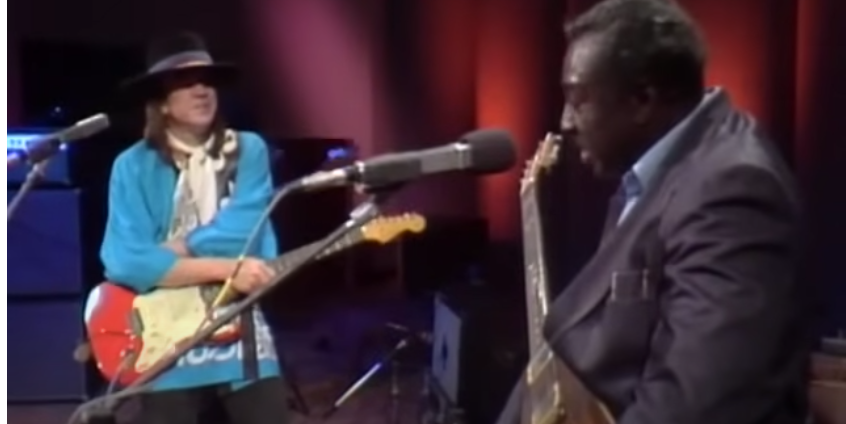
If a picture is worth a thousand words, a single jam session between two true blues titans is worth a thousand guitar lessons. In 1983, a pivotal moment in music history was captured live on tape: the television special Albert King with Stevie Ray Vaughan: In Session. It was the moment the old guard, represented by the towering force of Albert King, formally acknowledged the young man who was carrying the blues torch into the arena rock age: Stevie Ray Vaughan.
This wasn’t a competition; it was a conversation, a father-son dynamic played out through massive string bends and razor-sharp licks. It is, perhaps, the single greatest document of the passing of the blues crown.
II. The Setting: Respect and Recognition in Hamilton, 1983
The session took place at CHCH-TV studios in Hamilton, Ontario, Canada. Initially, the meeting almost didn’t happen. The story goes that Albert King, a titan of the genre, wasn’t familiar with “Stevie Ray Vaughan.” However, once he realized the young gun was the “Little Stevie” he remembered sitting in at clubs years earlier in Texas, the mood shifted to immediate warmth and familial respect.
The tension—and the heart—of the session is captured in King’s famous compliment to SRV:
“There’s a lot of guitar players out here that just play fast, they don’t concentrate on soul… but you got ’em both.”
In that moment, the entire purpose of the jam was validated: King was testing his musical heir, and SRV was passing the exam with flying colors.
III. The Master’s Voice: Albert King’s Massive Attack
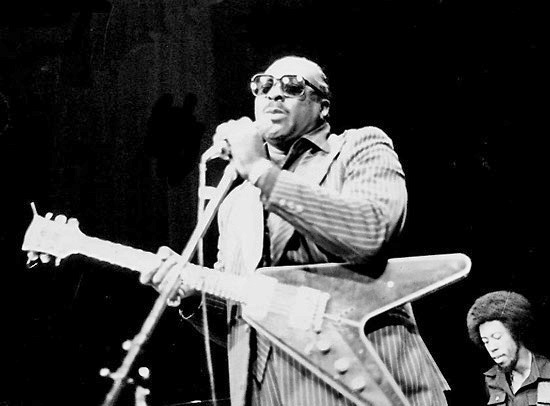
Albert King, perched on a stool with his distinctive, V-shaped Gibson Flying V (named Lucy, not to be confused with B.B. King’s Lucille), played with an utterly unique and dominating style:
Feel Over Theory: Albert King was left-handed but played a right-handed guitar flipped upside down, never restringing it. This unorthodox setup forced him into huge, unusual string bends and unconventional phrasing that became his signature.
The Powerhouse: His tone was direct, his bends were wide and emotional, and his attack was minimalistic yet devastatingly powerful. He used his thumb to fret the low strings, allowing for a unique damping and punch.
The Mentor: Throughout the session, King is clearly driving the proceedings, guiding the band, and often teasing and testing SRV, forcing the younger man to react on the spot.
IV. The Disciple’s Dialogue: SRV’s Reverent Fury
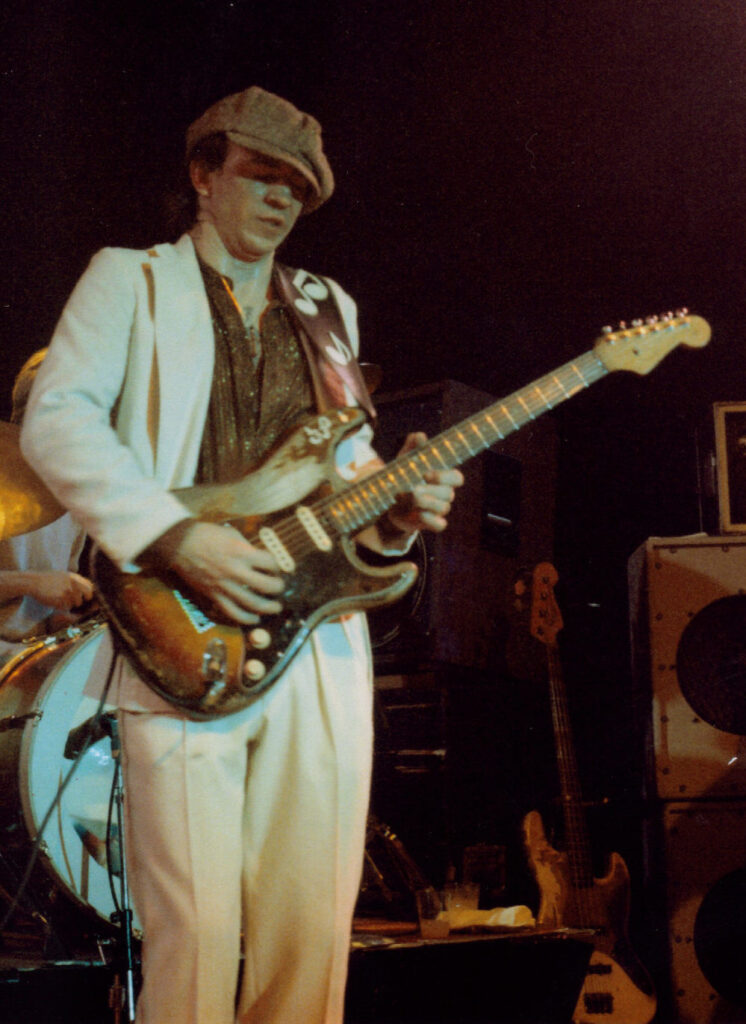
For Stevie Ray Vaughan, this was literally a dream come true. Along with Jimi Hendrix, Albert King was the single biggest influence on his style.
Honoring the Source: SRV is visibly nervous yet reverent. His playing is explosive and technically brilliant, but he consistently pays tribute to his hero, often quoting King’s own signature licks (like those from “Born Under a Bad Sign“) as a form of respect.
The Fusion: SRV’s use of heavy-gauge strings and higher volume brought a massive energy to the blues. When he stepped forward, he infused King’s foundational phrases with the rock energy and speed that defined the 1980s guitar world.
Dialogue in Practice: Listen closely to their exchanges on songs like “Texas Flood” and “Call It Stormy Monday.” King delivers a powerful, authoritative statement, and SRV follows with a complex, fiery paragraph that still manages to conclude with deep, Southern blues soul.
V. Conclusion: An Essential Blues Document
In Session is more than just an album; it’s a living textbook on blues guitar dynamics. It proves that despite a 30-year age gap and vast differences in technique, the language of the blues is universal. The recording is famous not just for the musical brilliance, but for the human moments, the friendly banter, the laughter, and King’s paternal pride in the fiery guitarist who was continuing his legacy. This session is a mandatory watch for every guitar player who wants to understand the meaning of “feel,” “soul,” and the crucial moment of the blues hand-off.