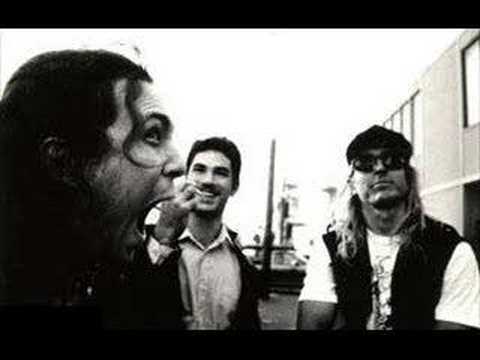
When bass virtuoso Les Claypool launched Primus into the alternative rock stratosphere in the early 1990s, the world was mesmerized by a bizarre, cartoonish blend of funk and metal. However, the blueprint for that signature sound wasn’t drawn up by Larry LaLonde. The true genetic engineer of the earliest, most avant-garde Primus compositions was Todd Huth. As the band’s original guitarist from 1984 to 1989, Huth paired with Claypool (and early drummers like Jay Lane and Vince “Perm” Parker) to construct a chaotic, anti-traditional style that laid the cornerstone for 90s alternative music before he walked away to prioritize his family.
The Early Days: Forming Primate and the Birth of Primus
To understand the roots of Primus, you have to go back to El Sobrante, California, in 1984. Before major record deals and MTV exposure, Claypool and Huth initially formed a project called Primate using a drum machine. When a local reggae group threatened legal action over the name, they pivoted to Primus. During those foundational years, the band released their legendary 1988 demo tapes—recordings that featured early blueprints for tracks like “Groundhog’s Day,” “Pudding Time,” and “Harold of the Rocks”. Huth’s signature riffing was already fully formed, giving Primus a dark, avant-garde edge long before their debut album Frizzle Fry.
The Dissonant Fretboard: Augments, Tritones, and Strange Riffs
Todd Huth’s style completely bypassed the traditional blues-rock and speed-metal paradigms dominating the 1980s Bay Area scene. Instead of fluid pentatonic runs or neoclassical shredding, Huth built his sonic language on tension, dissonance, and rhythmic punctuation.
His playing is characterized by a heavy reliance on the augmented scale, chromatic passes, and the infamous tritone (the “devil’s interval”). Utilizing offsetting offsets on instruments like his Fender Jazzmaster and Telecaster, Huth treated his guitar like a sharp, metallic percussion instrument rather than a typical harmonic bed. His lines wriggled around Claypool’s popping bass strings like a nervous, syncopated conversation.
This unique approach—subverting traditional guitar rules to fit into a complex rhythm pocket—is a philosophy we celebrate across our profiles of versatile masters like Stef Burns: The Versatile Virtuoso. When Huth reunited with Claypool and drummer Jay Lane in 1996 to form the cult-favorite power trio Sausage, he brought that exact setup back to the forefront. It’s an adaptable, session-ready mastery of the unusual that reminds us of the technical precision we dissect in profiles of players like Jefferson Kewley.
Is Primus Avant-Garde? Huth’s Legacy and Nostalgic Nods
Listeners often ask: is Primus avant-garde, funk-metal, or progressive rock? The answer lies in Huth’s original compositions. By avoiding standard chord progressions and embracing unconventional intervals, Huth grounded the band in experimental noise art. Even after Larry LaLonde took over guitar duties in 1989, LaLonde intentionally preserved Huth’s iconic riffs on classic tracks out of respect for his singular vision.
That early era left a lasting mark on Les Claypool’s songwriting. Decades later, on the 2011 Primus track “Lee Van Cleef,” Claypool looked back fondly on his youth in the 1980s—the exact era when he and Huth were jamming in garages and shaping the Bay Area underground.
3 Essential Todd Huth Recordings
1. “Tommy the Cat” (The Original Sausage Version)
While millions know the version on Primus’s Sailing the Seas of Cheese, the definitive showcase of Huth’s guitar madness is found on Sausage’s 1994 album Riddles Are Abound Tonight. Huth’s opening riff is a jagged, scratching masterpiece of alternate picking and palm muting that handles the breakneck tempo with absolute authority, showing the high-energy drive we love to highlight in our Blues Guitar Greats section.
2. “Prelude to Fear”
Another classic written during the early Primus years and laid down in the studio with Sausage, this track shows off Huth’s mastery of building dread. His guitar tone is thin, sharp, and dripping with an eerie chorus effect, weaving a dissonant web over an unwavering, heavy funk groove. It is a masterclass in how to use texture and restraint rather than raw distortion to sound heavy, an attribute shared by rock veterans like Pete Friesen.
3. “John the Fisherman” (Original 1988 Demo)
Before leaving the band, Huth co-wrote this timeless track that would eventually put Primus on the map. The demo recordings from his era reveal just how much of the song’s DNA belongs to his jagged chord voicings and rapid-fire rhythmic stabs, proving that his impact on alternative rock was carved in stone before the band ever signed a major record deal.
The Legacy of an Underground Pioneer
In 2026, Todd Huth’s foundational influence takes on an even grander spotlight as Primus hits the road for the massive “Claypool Gold” tour. This unique three-band tour acts as a living retrospective of Les Claypool’s musical legacy, featuring headlining sets from Primus alongside the Claypool Lennon Delirium and the Fearless Flying Frog Brigade.
As Primus kicks off this career-spanning trek, the DNA of Huth’s original anti-traditional arrangements continues to form the core of their classic live performances. He serves as living proof that you don’t need to follow standard blues-rock or jazz-fusion templates to leave an indelible mark on music history. For the GuitarDoor community, his work stands as the ultimate reminder that rhythm, space, and a healthy dose of dissonance can often build a far more memorable legacy than the fastest solo on earth.
External Resources
- Official Bullhead Bandcamp (Todd Huth’s Post-Sausage Project)
- AOL Entertainment: Primus Kicks Off Three-Band ‘Claypool Gold’ Tour.
“Todd Huth was the guy who brought the weird chord shapes and the scraping, percussive energy to early Primus. Without his anti-guitar mindset in 1984, the entire 90s alternative rock landscape might have sounded completely different.”