The saga of the band’s formative years is a testament to Steve Harris’s unwavering vision—a relentless pursuit that transformed a local London band into a heavy metal phenomenon. The initial stages of this journey were marked by a revolving door of musicians, acting as a crucible where Harris meticulously forged his complex bass lines and galloping rhythms.
In the mid-1970s, the East End music scene was caught between a dying pub rock wave and the aggressive explosion of punk. Harris was determined to bridge that gap, laying the early groundwork for what would soon be recognized as the New Wave of British Heavy Metal (NWOBHM).
The arrival of Dave Murray, a guitarist of undeniable talent, and Doug Sampson, a solid rhythmic backbone, provided the necessary stability. However, the true spark of this era ignited with the discovery of Paul Di’Anno at the Red Lion Pub. His raw, streetwise vocals, a stark contrast to the operatic singers of the time, provided the gritty edge that defined the band’s early sound.
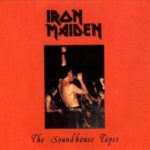
This pivotal moment was captured in the legendary 1978 New Year’s Eve demo, The Soundhouse Tapes. Recorded at Spaceward Studios, this tape circulated heavily through the underground scene, landing in the hands of heavy metal DJ Neal Kay at the Ruskin Arms and eventually manager Rod Smallwood, who recognized the band’s immense potential. The rapid sale of the demo fueled their momentum, leading to a significant record deal with EMI in 1979.
Their self-titled 1980 debut album showcased a unique blend of punk energy and progressive metal ambition. Early tours opening for massive acts like Kiss and Judas Priest, alongside an acclaimed appearance at the Reading Festival in 1980, solidified their reputation as a formidable live act. The short-lived tenure of Dennis Stratton, followed by Adrian Smith’s arrival, further refined the twin-guitar attack, but it was the raw, unbridled energy of the Di’Anno era that truly set the blueprint for their legendary status.
Iron Maiden – Live At The Rainbow 1980
Iron Maiden seemed to bridge the gap between Metal and Punk, and Paul’s vocals went from brash to beautiful. The twin guitar attack was a force to be reckoned with as well. Recently I read a statement in a guitar group that the Fender Stratocaster was NOT capable of properly playing metal. My response was two words: Dave Murray. He proved to a generation of skeptics that classic single-coils and modified Strats could absolutely wail, a topic widely discussed among fans regarding playing metal on a stratocaster.
The band worked like dogs; even to the present day, they have never rested on their laurels. Next came Killers in 1981. Much of the tracklist was actually written before the first album was even released, showing just how prolific Harris was during those early years.
Iron Maiden Killers live 1980 (Paul Di’Anno)
The record was followed by the band’s first world tour, which included their debut performance in the United States opening for Judas Priest. Iron Maiden played 45 shows in North America to several hundred thousand fans, including two headline gigs in Canada. In total, the band booked 132 shows to promote their second album.
During this era, musicians played small or mid-size venues, mostly using standard stage setups which included around 200 lamps and heavy smoke machines. The visual element was evolving rapidly, featuring two backdrops showcasing their mascot, Eddie, and four members of the road crew wearing Eddie masks during the live performance of the song “Iron Maiden.”
Eddie The Head Iron Maiden – Live in Milan, Italy, March 30th, 1981 [with Paul Di’Anno]
The cover illustration by artist Derek Riggs became the first of many iconic visual staples in the history of the heavy metal genre. Killers sold much better worldwide than their debut, hitting the million mark just a year after its release.
The band toured and recorded in Japan during this cycle as well. The resulting live album, Maiden Japan, was another huge success and remains an incredible historical document of the band’s early live precision.

By 1981, Paul Di’Anno was demonstrating increasingly self-destructive behavior, largely due to heavy substance abuse. Di’Anno later commented: “It wasn’t just that I was snorting a bit of coke, though; I was just going for it non-stop, 24 hours a day, every day… the band had commitments piling up that went on for months, years, and I just couldn’t see my way to the end of it. I knew I’d never last the whole tour. It was too much.”
With his live performances beginning to wane under the pressure, Di’Anno was dismissed following the Killer World Tour. At that point, the band had already selected his replacement. Enter Bruce Dickinson.
Funnily enough, during the early days, Paul Di’Anno completely avoided the whole “Devil’s Music” controversy that historically plagued blues icons like Robert Johnson or the heavy metal bands targeted by the PMRC. Iron Maiden’s next album with Bruce, The Number of the Beast (1982), was the ultimate catalyst for that media insanity to come.
The transition shifted the band from street-level rock into massive, concept-driven albums and historic, exhausting world tours. This golden era cemented their legacy through a string of classic records:
The World Slavery Tour (1984–1985) was an epic, theatrical multi-date trek supporting Powerslave that featured their most iconic ancient-Egyptian stage setups.
Albums like Somewhere in Time (1986) and Seventh Son of a Seventh Son (1988) became experimental masterpieces utilizing guitar synthesizers and deep progressive concepts.
Later on, Fear of the Dark (1992) provided a dark, brooding record containing legendary live staples that sustained the band through the shifting musical landscape of the 1990s.
If there were ill feelings regarding the singer transition back in the day, time has healed those wounds. For many years on stage, Di’Anno consistently wished Bruce and the rest of the band continued success.
Paul Di’Anno aka ‘The Beast’ in Interview
In interviews, Paul Di’Anno, often dubbed “The Beast,” projected a complex persona that blended raw honesty with a touch of rebellious defiance. He frequently reflected on his time with the band, acknowledging their monumental success while expressing a natural sense of detachment from the later, more polished era.
Di’Anno’s interviews were often punctuated by candid accounts of his personal struggles, health issues, and his sometimes turbulent relationship with the music industry. He spoke openly about the early days, emphasizing the raw energy and punk-infused spirit that defined their initial sound, providing a unique, unfiltered perspective on those formative years. While some interviews showcased a hardened exterior, others revealed a vulnerable side, highlighting his pure passion for music and his enduring connection with the fans who embraced his untamed vocal style.
Flashback Interview: Paul Di’Anno (ex-Iron Maiden) 2001
The “Flashback Interview: Paul Di’Anno (ex-Iron Maiden) 2001” offers a direct glimpse into the past. Conducted two decades after his departure, this interview provides valuable insights into Di’Anno’s time with the band, shedding light on his personal experiences, unique perspectives, and foundational contributions to Iron Maiden’s early success. It serves as a nostalgic reminder of a crucial chapter, offering fans a chance to connect with the charismatic vocalist who helped shape their distinctive, heavy debut sound.
IRON MAIDEN – Live At Ruskin Arms (1980)
The iconic “IRON MAIDEN – Live At Ruskin Arms (1980)” concert stands as a pivotal moment in the band’s history. Held at the historic venue in 1980, this performance captured them at the absolute cusp of their rise to heavy metal stardom.
With their electrifying stage presence and raw energy, the band delivered a powerhouse performance, captivating the audience with blistering riffs, thunderous drums, and Di’Anno’s charismatic vocals. This show not only showcased their immense talent but also solidified their reputation as one of the most formidable live acts in the metal scene. The Ruskin Arms concert remains a cherished memory for fans and an undeniable testament to their enduring legacy in the realm of heavy metal music.
The Soundhouse Tapes Full Album
The Soundhouse Tapes stands as a crucial artifact in rock history, capturing the raw energy of the band’s formative years. This 1979 EP, recorded at Spaceward Studios, features early, visceral versions of “Prowler,” “Invasion,” and “Iron Maiden.” These recordings offer a brilliant glimpse into the band’s sound before their self-titled debut album, showcasing a highly unpolished style. The limited release quickly became a legendary collector’s item, solidifying its place as a pivotal piece of history and a cherished treasure for enthusiasts.
Evolution, Exit, and Reunion
The band’s iconic sonic architecture was heavily shaped by guitarist Adrian Smith, whose melodic sensibilities and tight harmonies perfectly balanced Dave Murray’s blazing legato speed. When Smith briefly departed the band in 1990, Janick Gers stepped in, bringing a wild, unpredictable energy to the stage during the era of A Prayer for the Dying.
The mid-90s brought further upheaval when Dickinson left to pursue solo work. The band recruited Blaze Bayley, releasing darker, more atmospheric albums like The X Factor and Virtual XI. While this era split opinion among purists, it kept the flame alive during a tough decade for traditional heavy metal.
The ultimate triumph arrived at the turn of the millennium. Both Bruce Dickinson and Adrian Smith returned to the fold, transforming Iron Maiden into a three-guitar powerhouse. The resulting album, Brave New World (2000), completely revitalized the band and initiated a massive, stadium-filling modern era that continues to sell out arenas around the globe today.