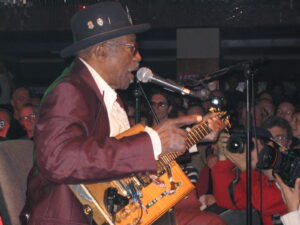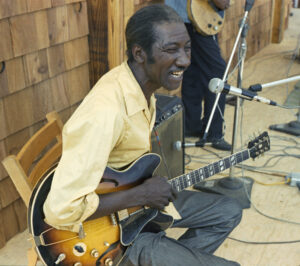
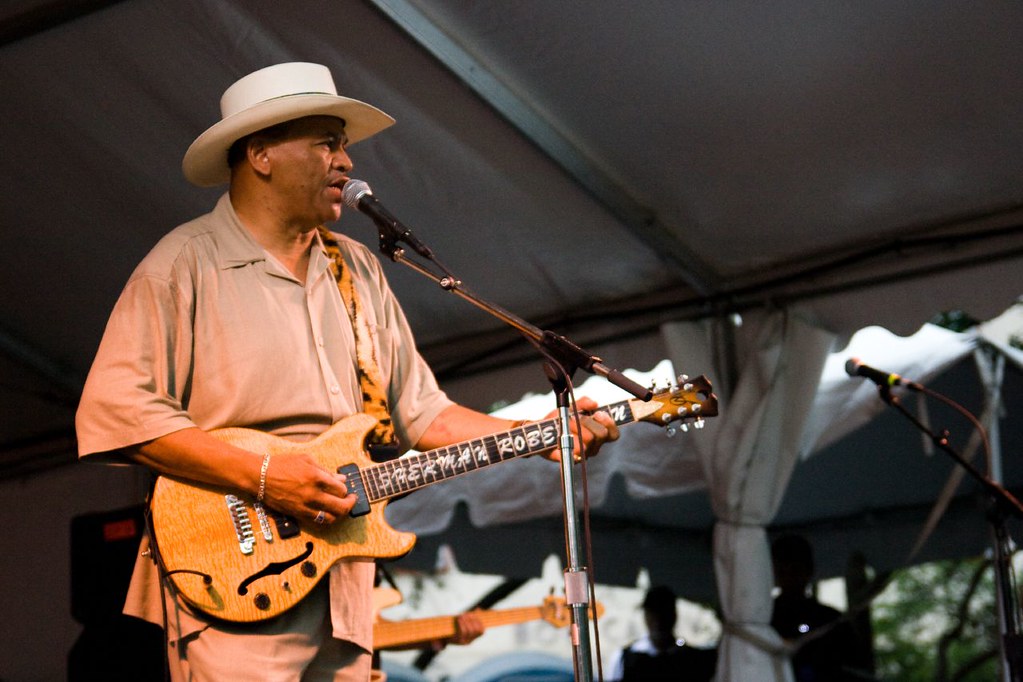
The blues is a river, a vast and flowing current of human emotion, and within its depths swim artists who not only navigate its waters but also shape its course. Sherman Robertson, born October 27, 1948, in the heart of Louisiana’s Creole country, Breaux Bridge, and raised in the vibrant, musically eclectic city of Houston, Texas, was one such seminal figure. His was a sound forged in the fiery crucible of Gulf Coast traditions , a potent concoction of raw zydeco rhythms, the haunting soul of swamp blues, the razor-sharp edge of electric Texas blues, and the timeless groove of classic rhythm and blues. Until his passing on January 28, 2021, at the age of 72, Robertson wielded his guitar and voice like a master craftsman, carving out a legacy that continues to inspire and move blues lovers across the globe.
Cover Photo Credit “Sherman Robertson” by cybertoad is licensed under CC BY-NC-ND 2.0
From Hank Williams’ Spark to Chenier’s Zydeco Kingdom: The Forging of a Bluesman
Sherman Robertson’s musical awakening was almost cinematic. At the tender age of 13, a flickering television screen brought the lonesome yodel and heartfelt storytelling of Hank Williams Sr. into his Houston home. It was a lightning bolt moment. “When I saw Hank Williams on TV, I knew that’s what I wanted to do,” Robertson often recounted. This initial spark ignited a lifelong passion. He acquired his first guitar, a modest Sears Silvertone, and with an innate talent and relentless dedication, began to teach himself the rudiments, his ears keenly attuned to the myriad sounds emanating from the Houston music scene, a melting pot of blues, R&B, country, and the burgeoning sounds of zydeco migrating from Louisiana.
His prodigious talent soon caught local attention. By his late teens, Robertson was already a working musician, honing his skills in the demanding environment of Houston’s clubs and juke joints. The true turning point in his early career, however, came when he crossed paths with the undisputed “King of Zydeco,” Clifton Chenier. In the late 1960s or early 1970s (accounts vary slightly), Robertson joined Chenier’s Red Hot Louisiana Band. This was no mere sideman gig; it was an immersive apprenticeship with a master.
Playing alongside Chenier, a Louisiana French-speaking Creole legend, Robertson absorbed the intricate rhythms, the infectious energy, and the cultural depth of zydeco. A raw snapshot of Chenier’s music was a force of nature, a joyous, accordion-driven sound that demanded rhythmic precision and improvisational flair from his guitarists. Robertson provided that and more, his Texas blues sensibilities adding a unique flavor to Chenier’s sound.
He toured extensively with Chenier, playing countless dancehalls and festivals, learning not just the music but also the art of showmanship and connecting with an audience on a visceral level. This period, which lasted several years, was invaluable, instilling in him a rhythmic complexity and a dynamic stage presence that would become hallmarks of his solo career.
Stepping into the Spotlight: “I’m the Man” and the Arrival of a Major Talent
After his transformative years with Chenier, and a period playing with zydeco artist Terrance Simien, Robertson felt the pull to forge his own path. He had a sound brewing within him, a desire to meld the zydeco he had mastered with the deep blues and R&B he had grown up on. The 1980s saw him fronting his own bands and beginning to make a name for himself as a solo artist, primarily in the Texas and Louisiana circuits.
The international breakthrough, however, came in the early 1990s. British blues doyen and producer Mike Vernon, renowned for his work with Eric Clapton, Fleetwood Mac, and John Mayall, recognized Robertson’s immense talent. This collaboration led to Robertson signing with Atlantic Records’ subsidiary, Code Blue Records. The result was his landmark 1993 debut solo album (released more widely in 1994), boldly titled “I’m the Man.”
This album was a stunning statement. The title track, “I’m the Man,” was a confident, swaggering blues-rocker that perfectly encapsulated his arrival. With its driving rhythm, Robertson’s assertive vocals, and a guitar solo that stung and soared, the song announced that a new blues force had arrived. The album itself was a masterful collection, showcasing the breadth of his influences. From gritty blues shuffles to soulful R&B-inflected tunes and even zydeco-tinged numbers, “I’m the Man” was a cohesive and compelling artistic vision. It wasn’t just a collection of songs, but a declaration of identity. Critical acclaim followed, including a prestigious W.C. Handy Award nomination (now the Blues Music Awards), cementing his status as a rising star in the international blues firmament. The album allowed Robertson to tour extensively in Europe, where he found a particularly appreciative audience.
Another gem from this pivotal album was the soulful, slow-burning ballad “Make It Rain.” This track revealed a different facet of Robertson’s artistry – his ability to convey deep emotion through his vocals and his lyrical guitar playing. The song drips with a melancholic atmosphere, Robertson’s voice pleading and yearning over a sparse, evocative arrangement. It’s a masterclass in blues dynamics, building from a simmer to a boil, showcasing his control and emotional range. “Make It Rain” became a signature song, a perennial favorite in his live shows where he could stretch out and truly inhabit its emotional landscape.
The Road Warrior: “Guitar Man Live” and the Essence of Performance
Sherman Robertson was, above all, a performer. While his studio albums captured his songwriting prowess and versatility, it was on stage that his music truly came alive. He was a relentless tourer, spending a significant portion of his career crisscrossing the United States and, especially, Europe, where he built a fiercely loyal following. His live shows were legendary for their intensity, spontaneity, and the sheer joy he exuded while playing.
The 2007 album “Guitar Man Live” offered a potent taste of this live experience. Recorded during his European tours, the album crackles with energy. One of the standout tracks, “Long Way from Home,” perfectly encapsulates the life of a touring bluesman. The song often served as a narrative piece in his shows, where Robertson would good-naturedly talk about the unique nature of his touring band – frequently comprised of top-tier UK musicians while he, their bandleader, resided thousands of miles away in Texas. This geographical separation made their tight, intuitive interplay on stage all the more remarkable. “Long Way from Home” is a blues journey in itself, with Robertson’s guitar leading the charge, weaving tales of the road, the distance, and the unwavering commitment to bringing the music to the people. The album demonstrated his improvisational skills, his ability to connect with an audience, and the telepathic understanding he shared with his band.
His live performances were not just about technical virtuosity, though he had that in spades. They were about creating a communal experience, a shared journey through the blues. He would often engage directly with the audience, his easygoing charm and infectious enthusiasm drawing them in. His guitar solos were not mere displays of speed but were emotionally charged narratives, full of bends, sustains, and fiery flurries that spoke directly to the soul.
Blues Standards and Shared Stages: “Dust My Broom” with Mick Pini at The Crawdaddy
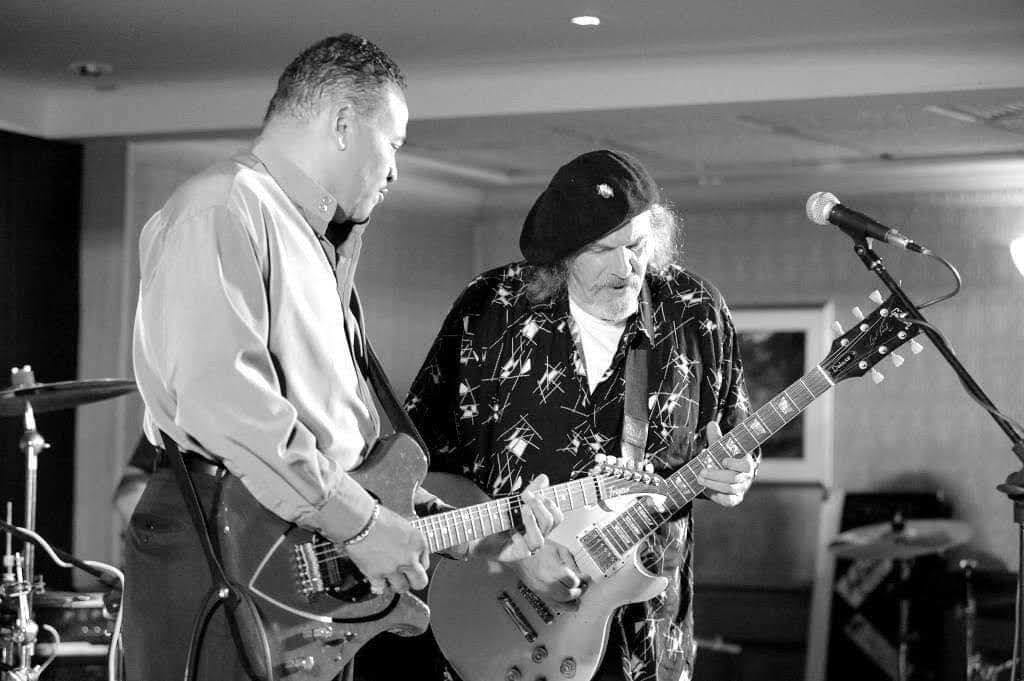
Like many blues artists, Sherman Robertson paid homage to the masters who came before him by incorporating classic blues standards into his repertoire. One such iconic tune was “Dust My Broom,” most famously associated with Elmore James, whose slide guitar rendition set the template for generations to follow. Robertson’s versions, often featuring his own incisive, non-slide lead work, were always electrifying, respecting the tradition while stamping it with his own authority. This track also features on his Guitar Man Live album, a testament to its place in his live sets.
A particularly notable and cherished performance of “Dust My Broom” took place at The Crawdaddy Club in the UK, where Sherman Robertson joined forces with the respected British blues guitarist Mick Pini. The Crawdaddy Club itself holds a significant place in blues and rock history, having been a key venue in the British blues boom of the 1960s, hosting bands like The Rolling Stones and The Yardbirds. To play there was to connect with a rich lineage.
The collaboration between Robertson and Pini was a meeting of kindred spirits. Pini, a veteran of the British blues scene, is known for his own soulful playing and deep understanding of the blues. Video evidence of their performance at The Crawdaddy showcases an undeniable chemistry. During the show, Robertson spoke warmly of their long-standing connection, mentioning that he had first met Pini way back in 1965. He expressed what an honor it was to be sharing the stage with him again after so many years. Their rendition of “Dust My Broom,” along with other blues numbers, was a dynamic interplay of two distinct yet complementary guitar styles. It was a conversation in the language of the blues, filled with call-and-response licks, shared rhythms, and an palpable sense of mutual admiration. Such collaborations are at the heart of the blues tradition, where musicians come together to share their interpretations of classic forms, pushing each other and creating unique, ephemeral musical moments for the audience. The Crawdaddy performance was a testament to this enduring spirit of camaraderie and musical exploration within the blues community.
The Robertson Sound: A Deeper Dive into Style and Substance
Sherman Robertson’s musical DNA was complex and richly textured. His Louisiana roots provided the rhythmic drive and a certain joie de vivre often found in zydeco and swamp pop. His Texas upbringing imbued his playing with a sharp, cutting-edge characteristic of Texas bluesmen like Albert Collins or Freddie King, though his style was uniquely his own.
Vocals: Robertson possessed a powerful and emotive voice, capable of raw, bluesy shouts, soulful crooning, and tender balladry. There was an inherent honesty in his delivery, a sense that he had lived the stories he sang. His phrasing was natural and deeply connected to the blues tradition, yet always sounded contemporary.
Guitar Playing: As a guitarist, Robertson was a complete package. He was a master of tone, often coaxing a warm, slightly overdriven sound from his guitars (frequently Fender Stratocasters or Telecasters, and Gibson models too). His solos were articulate and imaginative, characterized by stinging bends, rapid-fire licks, and a keen melodic sense. He could be fiery and intense one moment, then subtle and lyrical the next. He wasn’t overly reliant on effects, preferring to let the natural sound of the guitar and amplifier, shaped by his hands, do the talking. While not primarily a slide player in the Elmore James mold, his lead work often had a vocal-like quality that could mimic the cry of a slide.
Lyrical Themes: His songs traversed the classic blues themes of love (both found and lost), hardship, resilience, and the search for a better life. However, he often infused these themes with a sense of optimism and a contemporary perspective. He wasn’t afraid to inject humor or a party-like atmosphere into his music, reflecting his zydeco background and his desire, as he stated around the release of “I’m the Man,” to move beyond purely “sad” blues.
Later Career and Enduring Legacy
Following the success of “I’m the Man,” Robertson continued to record and tour, releasing a string of well-received albums, including “Here & Now” (1995, also produced by Mike Vernon), “Going Back Home” (1998), “Blues Attack: Live” (2003), and “Grit” (2011). Each album further explored his multifaceted musical identity, always rooted in the blues but never afraid to incorporate other influences.
His impact on the blues scene, particularly in Europe where he was a regular and beloved headliner at major festivals and clubs, was profound. He was an ambassador for the Gulf Coast blues sound, introducing it to new generations of listeners. He inspired countless younger musicians with his instrumental prowess, his dynamic stage presence, and his dedication to his craft.
The news of Sherman Robertson’s passing in January 2021 was met with an outpouring of grief and tributes from fellow musicians and fans around the world. He was remembered not only as a phenomenal guitarist and singer but also as a warm, engaging individual who loved to share his music.
Sherman Robertson’s legacy is not just in his recordings but in the memories of his electrifying live performances and the way he uniquely bridged various strands of American roots music. He was indeed “the man” – a bluesman of immense talent, deep feeling, and indomitable spirit. His music remains a vibrant testament to a life lived in and for the blues, a long way from his Louisiana use home, perhaps, but always close to the heart of the music he so passionately embodied. His journey, from a boy inspired by a country singer on TV to a globally respected blues icon, is a powerful story of talent, dedication, and the enduring power of the blues.