
While Alex Turner handles the headlines, Jamie Cook provides the grit. As the sonic architect behind the Arctic Monkeys’ jagged, evolving sound, Cook has spent two decades redefining the role of the indie-rock guitarist. He doesn’t just play riffs; he creates textures that have helped propel the band from Sheffield pubs to global stadiums. In this deep dive, we’re tracing Jamie’s journey from a local teen with a guitar to a modern icon, exploring the gear, the influences, and the “anti-hero” playing style that sets him apart from the rest of the industry.
Decoding Jamie Cook’s Guitar Style: The Arctic Monkeys Maestro Who Redefined Indie Rock
Before he was playing sold-out stadiums, Jamie Cook was just a teenager in Sheffield forging a new kind of indie-rock DNA. As a founding member of the Arctic Monkeys, Cook didn’t just play riffs—he redefined the band’s sonic identity. Today, we’re looking at how his unique technique and refusal to follow the status quo made him one of the most influential (and underrated) guitarists of the last twenty years.
Video: Jamie Cook’s Musical Journey: From Sheffield Clubs to Arctic Monkeys Stardom
Jamie Cook wasn’t a conservatory-trained virtuoso; he was a kid from High Green who got a guitar for Christmas and figured it out with his neighbours. Alongside Alex Turner, Matt Helders, and Andy Nicholson, Jamie spent his teens in a garage obsessing over the raw energy of The Libertines and The Strokes. There were no “jazz or funk” diversions—just a singular focus on creating the loudest, sharpest indie rock Sheffield had ever heard.
That chemistry wasn’t just “undeniable”—it was era-defining. From their first gig at The Grapes to the record-breaking release of their debut album, Jamie’s role was clear: he was the architect of the band’s jagged edges. While the world focused on the lyrics, the fans were air-guitaring to Jamie’s percussive, high-gain riffs. He has evolved from a garage-rocker into a master of vintage tone and cinematic atmosphere.
The Punk and Post-Punk Roots: Jamie Cook’s Real Guitar Influences
Jamie Cook’s evolution wasn’t fueled by the tired clichés of 70s blues-rock. Instead, his journey began in the suburban sprawl of High Green, where the goal wasn’t to mimic Hendrix—it was to capture the frantic energy of the 21st-century UK. While many point to classic “legends,” Cook’s true DNA is found in the rhythmic interplay of post-punk. He spent his formative years mastering the interlocking parts of The Strokes and the pub-rock grit of Wilko Johnson. This wasn’t about “virtuosity”—it was about the power of the riff and the economy of the song.

Jamie Cook’s path was forged in local Sheffield venues like The Grapes, not in a textbook. By watching local musicians, he learned the most important lesson of his career: presence beats perfection. He brought a “band-first” mentality to every rehearsal, focusing on how a guitar could fit into a song rather than standing on top of it.
Reinventing the Riff: The Evolution of the Arctic Monkeys Sound
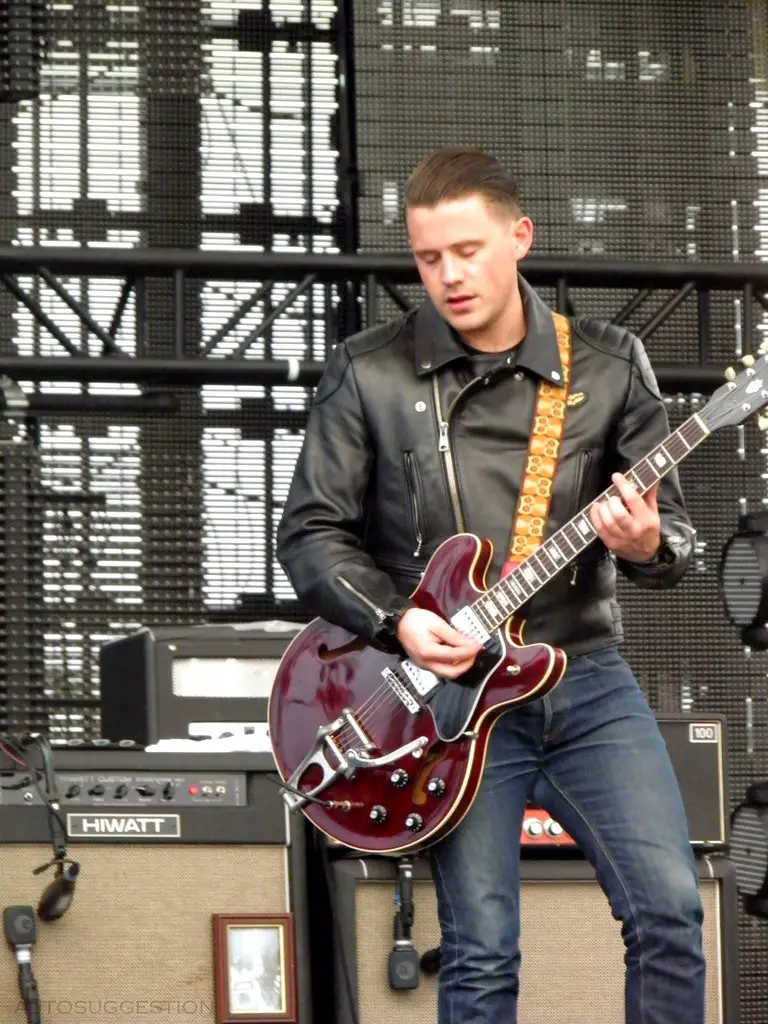
What truly sets Jamie Cook apart is his refusal to stay in one lane. From the frantic down-strokes of “I Bet You Look Good on the Dancefloor” to the baritone growls and space-age tremolo of his later work, Cook’s journey is a lesson in artistic growth. He uses the guitar as a tool for texture rather than ego, proving to aspiring musicians that finding your own voice is more important than “practicing scales.”
The Josh Homme Influence and “Humbug”

A pivotal moment in Jamie’s career was the collaboration with Josh Homme on the album “Humbug.” This era saw Cook transition from garage-rock grit to heavier, desert-rock-inspired tones. By incorporating an innovative approach to guitar effects and experimenting with heavier string gauges and darker melodies, he helped shape his guitar tone into something far more cinematic.
His atmospheric playing also shone through on projects like the “Submarine” soundtrack, earning him critical acclaim and eventually the NME Award for Best Guitarist. Whether he is channeling the blues-rock soul of his idols or the precision of modern legends like Steve Lukather and Eddie Van Halen, Cook always keeps the song’s needs first.
Conclusion: The Legacy of a Modern Guitar Icon
Jamie Cook’s journey as a guitarist is a masterclass in evolution. From his early days strumming in a Sheffield garage to his current status as a tone-smith for one of the world’s biggest bands, Jamie has consistently pushed the boundaries of indie rock. His ability to evoke powerful emotions through texture and restraint continues to inspire guitarists worldwide.
For those looking to master guitar techniques, Jamie’s story offers the ultimate advice: stay curious, prioritize the band, and never be afraid to change your sound. Whether he is unearthing timeless tones or exploring new sonic frontiers, Jamie Cook remains a vital force in the world of music.
Continue Jamies Guitar Journey with us on X
Decoding Jamie Cook's Guitar Style: The Arctic Monkeys Maestro Who Redefined Indie Rock https://t.co/swIXYK19xI
— Guitardoor (@guitardoor) January 20, 2026
Cover Photo Credit
“Arctic Monkeys #16” by bloglounge2007 is licensed under CC BY-NC 2.0