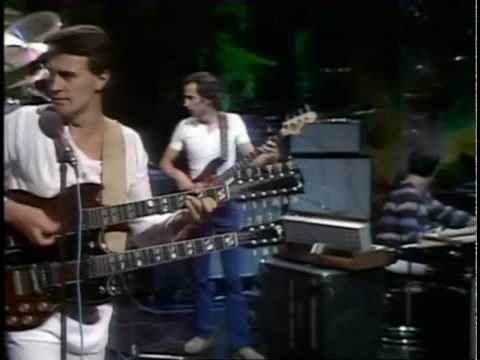
Otherworlds and entirely different lives, written across chapters of notes that define distinct identities the guitarist John McLaughlin is the very definition of musical exploration and the door to radical stylistic changes. You could try to categorise his work under Jazz, Rock, or any specified sub-genre and you would still completely miss the mark. His music cannot be confined to a shelf; it can only truly be called his own.

The Foundations of a Musical Theologist
The origins of his expansive view of musical realms first came from learning Classical piano as a child, before eventually picking up the guitar to learn the deep, emotional foundations of the Blues like so many of his British peers. During his formative years, he closely studied the acoustic wizardry of gypsy jazz pioneer Django Reinhardt. More importantly, he studied music in all of its global facets.
In McLaughlin’s view, Jazz owes an eternal debt to Classical music due to its profound historic influence on complex chord structures and harmonic movement. Simultaneously, he believes that modern classical composition has been deeply altered by what Jazz became. These full circles of artistic cross-pollination form much of the vital foundation of who he is as a player and an unconventional musical theologist.
Then came the heavy exposure to the revolutionary bebop lines of Charlie Parker, Dizzy Gillespie, and eventually, Miles Davis. Even though the electric guitar was his chosen instrument of expression, all musical influence was fair game. For McLaughlin, it was never about some staunch, rigid rule of the instrument you happened to hear playing the note; it was just about the weight of the note itself. It is all just universal music, flowing from different cultures through different open souls.

The Miles Davis Era and Stepping Into the Fusion Fire
All of his intense, varied studies came into direct practical use when he moved to the United States and was offered a membership in the groundbreaking jazz-rock trio Tony Williams Lifetime in 1968. This career-defining move almost immediately brought him into the inner circle of Miles Davis. The iconic albums “In a Silent Way” and “Bitches Brew”—as well as a few brilliant subsequent studio tracking dates with Davis—were my personal first experiences hearing John’s visionary fretwork. His contributions recorded decades ago remain just as vital, revolutionary, and modern today.
Miles Davis was always remarkably keen to spot someone’s future path, even when the musician themselves couldn’t see it or would have been perfectly content staying within Miles’ employment. Sensing that his young English guitarist was bursting with unreleased compositions, Miles directly told John McLaughlin that the time had come to step out of the sideman role.
Mahavishnu Orchestra: Meeting Of The Spirits
An excerpt from McLaughlin’s personal reflections perfectly captures this historical turning point:
“After a club date in Boston in 1970 with Miles, he tells me it’s time to form my own band. By this time Miles’ recordings are definitely jazz fusion or jazz-rock. His recording ‘Bitches Brew’ confirmed this in no uncertain terms. My work and writing with Tony Williams were more and more rock, R&B, and funk-influenced. Also, I was increasingly influenced by the philosophical and musical ideas coming out of India at that time.”
“These spiritual influences can be seen in that another name ‘Mahavishnu’ was given to me by my guru Sri Chinmoy. The highly sophisticated rhythmical concepts integrated into Indian classical music, both north and south, directly influenced the complex compositions I was writing for The Mahavishnu Orchestra. The band became really popular over a incredibly short period of time, maybe too successful since by 1973 the atmosphere in the band had become untenable for me and we ended it at the end of that year.”
The Second Lineup and the Shift to Shakti
McLaughlin continue his recollections regarding the rapid evolution of his tone and lineup changes:
“The second Mahavishnu Orchestra lineup was quite different but a wonderful band all the same. With powerhouse drummer Michael Narada Walden, violin virtuoso Jean-Luc Ponty, and bassist Ralphe Armstrong, that band was absolutely kicking! We had a spectacular creative experience recording with the London Symphony Orchestra under Michael Tilson Thomas, with the entire production overseen by the legendary Beatles producer George Martin.”
“At the same time, that deep Eastern acoustic influence was having its permanent effect on my writing. By 1973–74, Shakti was functioning as a kind of acoustic underground band that played small, intimate concerts in local churches and schools while I simultaneously continued touring with Mahavishnu. By the end of 1975, Shakti had become increasingly important to my spiritual well-being, and by the end of the year, it became my only band.”
An Enduring Legacy of Restraint and Substance
John McLaughlin’s complete history and total body of recorded work is staggering. Whether collaborating with the likes of Carlos Santana or leading literally dozens of his own ensembles, he remains a relentless force. He continues to release vital music, boasting a massive discography that spans from 1969 to the present day, proving that his creative fire hasn’t dimmed over a fifty-year career.
To try and write this man’s full, unabridged biographical story would keep you and me sitting here for hours or even days. Therefore, my focus is to be highly specific to the exact period of time and artistic philosophy that deeply speaks to my own musical journey.
I first encountered John’s playing on the landmark “Bitches Brew,” which easily sits in my personal top ten albums of all time if I were ever forced to choose. Yet, during those initial listens, I had absolutely no idea I was hearing John’s guitar work because my entire focus was completely locked onto Miles’ trumpet. Much like McLaughlin himself famously observed about listening to John Coltrane’s “A Love Supreme,” it took me over a year of consistent, dedicated listening to fully grasp the technical brilliance of what was happening within those dense sonic arrangements.
I still regularly revisit “Bitches Brew” and the fascinating alternative session takes to discover new layers. What I’ve ultimately concluded is that his electric guitar didn’t get in the way of the other instruments. He never overplayed to feed an ego; instead, he left breathing room for the ensemble. That level of restraint is the ultimate hallmark of a truly wise, seasoned guitar player.
Delving deep into “The Mahavishnu Orchestra” catalog means uncovering another brilliant chapter of his genius. Classic records like *The Inner Mounting Flame* carry a timeless energy. That is the true power of creating pure music of substance—it never grows old, stale, or dated. It is my sincere intention to approach this legendary music with a completely fresh perspective, acting not as an imposing, academic authority, but simply as an enthusiastic catalyst for our readers to discover these sonic masterpieces for themselves.
The Mark of an Undeniable Legend
Throughout his storied career, John McLaughlin has seamlessly transitioned through every corner of the music industry. He has been a hardworking session player, a commercial jingle composer, and an avant-garde pioneer. He has painted vibrant sonic colors alongside an uncounted list of historic musical figures before firmly setting his own course to become an absolute legend himself. Iconoclastic heavyweights like Jack Bruce, Ginger Baker, and Jimi Hendrix all jammed or collaborated with him during the golden eras of the late sixties and early seventies.
The late, great guitar innovator Jeff Beck beautifully summarized his impact by stating, “John McLaughlin is the greatest guitarist alive today.” I urge you to dig directly into his catalog and find out exactly why that praise is so thoroughly deserved.
John McLaughlin’s Recommended Reading List
McLaughlin frequently cites classic literature and spiritual philosophy as being entirely equal to musical theory for his personal creative inspiration. To help you understand the mindset behind his revolutionary compositions, here is his personally recommended reading list:
Ray Bradbury: The Martian Chronicles
Theodore Sturgeon: More than Human
Philip K. Dick: The Transmigration of Timothy Archer / A Handful of Darkness
Mount Sadhu: The Life of Ramana Maharshi
Anonymous: The Philosophy of the Tarot
Hazrat Inayat Khan: The Sufi Message (Vol. 2: Music)
D.E. Harding: The Hierarchy of Heaven and Earth
Khalil Gibran: The Prophet
Lobsang Lhalungpa: The Life of Milarepa
Swami Vivekananda: The Complete Works of Vivekananda
Carlos Castaneda: The Teachings of Don Juan
Robert M. Pirsig: Zen and the Art of Motorcycle Maintenance
Father Thomas Merton: The Way of Chuang Tzu / New Seeds of Contemplation
Alan Watts: The Way of Zen
Nisargadatta Maharaj: I Am That
Aldous Huxley: The Perennial Philosophy
Karen Armstrong: A History of God