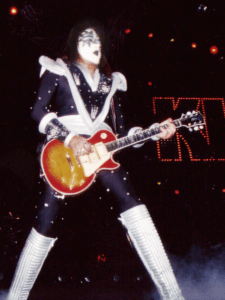

Welcome back to Guitardoor.com, where we celebrate the guitar heroes who defined the sound of an era. Today, we turn up the volume on a player who took on one of the most daunting tasks in rock history and emerged as a legend in his own right: the incredible Jake E. Lee. As the guitarist who stepped into Ozzy Osbourne’s band after the tragic loss of Randy Rhoads, Jake E. Lee not only honoured a legacy but forged his own, with a fiery, blues-infused, and undeniably cool style that powered some of the biggest metal anthems of the 1980s.
The Sunset Strip Samurai
Jake E. Lee’s musical style was a perfect and powerful bridge between the classic hard rock of the ‘70s and the emerging “shred” scene of the ‘80s. His playing was steeped in the swagger and feel of heroes like Ritchie Blackmore and Leslie West, but it was supercharged with the flash, speed, and technical bravado of the post-Van Halen era. He was a master of the powerful, groovy, and unforgettable riff, which served as the foundation for his songwriting contributions on Ozzy’s classic albums, Bark at the Moon and The Ultimate Sin.
His lead playing was a thrilling blend of raw power and sophisticated flash. While he could certainly play at blistering speeds, his solos were always rooted in a bluesy, melodic sensibility. He had a unique and slightly “outside” note choice that gave his playing a distinctive, unpredictable character, setting him apart from many of his peers who relied more heavily on standard scales. After his time with Ozzy, he formed the blues-rock supergroup Badlands with singer Ray Gillen, where he stripped back the metal flash and fully embraced his love for gritty, soulful, 1970s-style hard rock.
Anatomy of a Rock ‘n’ Roll Rebel: Technique and Tone
Jake E. Lee’s technique is as unique as his sound. He is known for an unorthodox picking grip, holding the pick between his thumb and the side of his curled index finger, with his other fingers often splayed out. This contributed to his sharp, aggressive attack and distinctive feel. His playing is a controlled explosion of energy, combining lightning-fast alternate picking runs, wide and wild string bends, screaming pinched harmonics, and a powerful, expressive vibrato.
His gear during his ‘80s heyday is iconic. He is forever associated with his white Fender Stratocaster, which became a symbol of his electrifying performances and unique sound, complemented by his flamboyant stage presence and distinctive style that captivated audiences worldwide., which was heavily modified into a hard rock machine. With a black pickguard, a slanted DiMarzio humbucker in the bridge, and two single-coil pickups, this guitar was often mistaken for a Charvel “super-strat” and became synonymous with his look and sound. This simple, effective instrument was the perfect tool for his raw, aggressive style.
To get his signature high-gain tone, Jake was a famous user of Laney Pro-Tube AOR amplifiers and later, heavily boosted Marshall JCM800 heads. A crucial ingredient in his sonic formula was a Boss OD-1 Overdrive pedal. He didn’t use it for its own distortion but as a clean boost to slam the front end of his tube amps, tightening up the low end and pushing the preamp tubes into a searing, saturated, and articulate distortion. It was a classic ’80s metal setup that delivered a tone that was both powerful and clear, allowing every note of his fiery solos to be heard.
Essential Lee: The Ozzy and Badlands Years
Jake E. Lee’s career is defined by iconic riffs and explosive solos. To fully appreciate his impact on ’80s hard rock and metal, these three tracks are absolutely essential.
“Bark at the Moon”
“The Ultimate Sin”
“High Wire” (by Badlands)
Jake E. Lee is a true and often unsung hero of ’80s rock guitar. He stepped into an impossible situation and created a legacy all his own with world-class songwriting, a unique style, and an undeniable rock star swagger. He was a pivotal figure who blended classic feel with modern fire, influencing a generation of players and cementing his place as one of the coolest and most formidable guitarists of his era.
Cover Photo Credit “Jake E. Lee” by Photozrus is licensed under CC BY-NC-ND 2.0