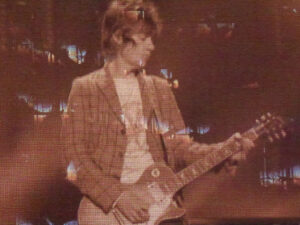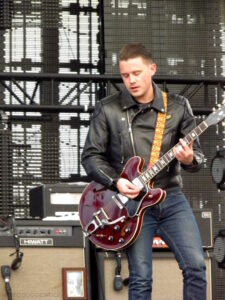

Welcome back to Guitardoor.com, where we celebrate the players whose unique sonic palettes defined an era. Today, we’re focusing on one of the most distinctive and influential guitarists of the 90s British music scene: the brilliant Graham Coxon of Blur. As the sonic architect and a crucial co-founder of the band, Coxon was the experimental, art-school heart of the Britpop sound. He possessed a truly singular style, blending melodic complexity with abrasive noise, marrying pop sensibility with avant-garde dissonance, to create a sound that was instantly recognizable and vital to Blur’s success.
The Sound of Contradiction
The genius of Graham Coxon lies in his ability to make the beautiful and the ugly coexist perfectly. While Blur’s music was known for its quintessential British pop hooks and wry social commentary, it was Coxon’s guitar playing that gave it a unique edge, preventing the band from sounding merely nostalgic. He was the experimental foil to Damon Albarn’s melodic pop instincts. He wasn’t afraid to use feedback, dissonance, and fuzz to create jarring, aggressive textures, which he would often layer over Albarn’s bright, poppy chord structures. This tension between pure pop and pure noise defined much of Blur’s best work.
Anatomy of an Art-School Guitarist
Graham Coxon’s playing is a masterclass in tone, texture, and creative effects usage. He is a player who treats the electric guitar less like a traditional rock instrument and more like a tool for sound sculpture, capable of making anything from a gentle chime to a horrific screech.
The Tone Tamer: Coxon’s tonal approach is instantly recognisable. He is a famous user of fuzz, distortion, and octave pedals to create unique, often square-wave-like synth tones. He loves his dirt boxes, giving even simple passages an underlying grit and aggression.
The Effects Auteur: Effects are central to his sound. He masterfully uses delay, flanger, and tremolo to add movement, space, and a psychedelic swirl to his parts. His ability to craft specific, bizarre, yet instantly memorable guitar sounds for each song is unparalleled in Britpop.
The Melodic and Angular: He’s brilliant at crafting angular, anti-solo parts that sound less like typical guitar leads and more like a second, often distorted, vocal line. When he does solo, he favors melody and texture over speed, often using chromatic or dissonant notes to add a brilliant, jarring color.
The Telecaster Man: Coxon is most famously associated with the Fender Telecaster , which he favours for its punchy, articulate tone that cuts through even the heaviest distortion. His primary amp setup has historically relied on Marshall and Vox amplifiers to achieve a tight, chimey clean tone and a powerful overdrive.
The Essential Dissonance
Graham Coxon’s guitar parts are the defining element of these Blur classics. To understand his mastery of noise and texture, these three tracks are essential.
Song 2
This iconic track is a lesson in minimalist power and massive tone. Coxon’s main riff is a two-note sledgehammer. To approach playing it, you need an enormous, thick, and over-the-top fuzz/distortion tone. The key is the simplicity and the sheer aggression of the sound, playing the main riff with relentless downstrokes to give it that punchy, unforgettable power.
Girls & Boys
A brilliant example of his rhythmic and textural genius. The main guitar hook isn’t a riff in the traditional sense; it’s a clean, flanged/chorused arpeggio played over the driving rhythm section. To play this, the tone must be clean and bright, but the use of a subtle modulation effect (like an MXR Flanger) is crucial to give it that hypnotic, swirling movement that makes the song so infectious.
Beetlebum
This track showcases his brilliance with atmosphere and dissonance. The guitar is used to create a melancholic, slightly uncomfortable mood. The key is the ringing, sustained chord work and the unpredictable, nasty guitar lines that emerge throughout the verses and chorus. These often feature bent notes and heavy distortion, cutting through the acoustic guitar and piano textures to create that unsettling, drug-haze atmosphere.
In the end, Graham Coxon’s legacy is that of one of the most innovative guitarists of the 90s. He refused to be boxed in by the expectations of Britpop, constantly pushing the boundaries of what a commercial rock band’s guitar sound could be. He is the master of the ugly, the dissonant, and the beautifully strange, proving that the most compelling sounds are often found where pop meets punk, and melody collides with mayhem.
Cover Photo Credit “Graham Coxon” by HelDavies is licensed under CC BY 2.0