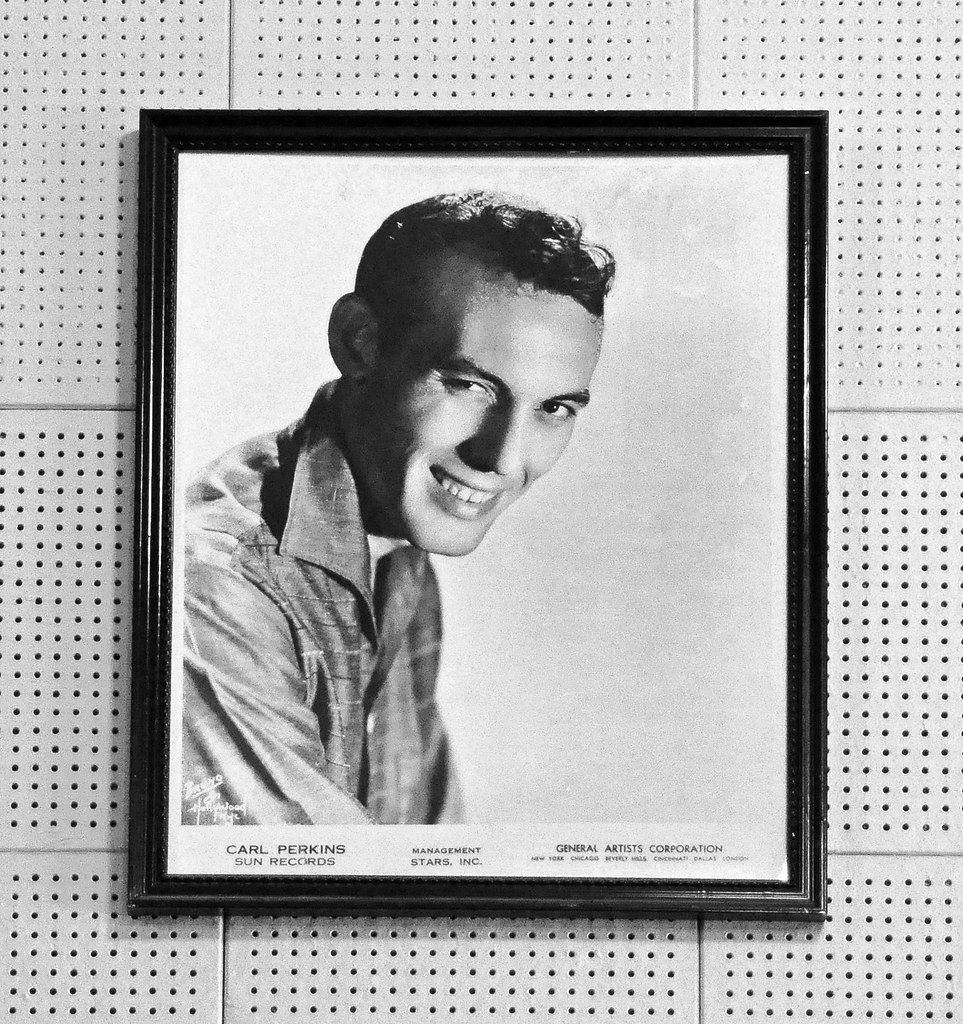
Welcome back to Guitardoor.com, where we pay tribute to the true founding fathers of our favorite music. Today, we go back to the explosive birth of rock and roll at the legendary Sun Studio in Memphis to celebrate one of its most important and influential architects: the one and only Carl Perkins. A brilliant songwriter, a charismatic singer, and a revolutionary guitarist, Perkins was a true pioneer of the rockabilly sound. His unique, fingerpicking-based guitar style and timeless anthems would profoundly influence a generation of musical titans, most notably The Beatles.
The Birth of Rockabilly
Carl Perkins was one of the original members of the “Million Dollar Quartet” at Sun Records, alongside Elvis Presley, Johnny Cash, and Jerry Lee Lewis. While Elvis was the electrifying performer, Perkins was the complete package—a true “triple threat.” He wrote his own songs, sang them with a passionate country-and-blues-infused voice, and played lead guitar with a style that was completely new and exciting. He was a primary creator of the rockabilly sound: a high-energy fusion of the storytelling and twang of country music with the raw, syncopated energy of rhythm and blues. His music was the sound of a new, rebellious teenage generation, and his songs became instant classics.
The Anatomy of a Rockabilly Cat: Technique and Tone
The guitar playing of Carl Perkins was as revolutionary as his songwriting. He took the complex country fingerpicking style of players like Merle Travis and supercharged it with a raw, bluesy, and aggressive rhythm. His technique was the engine of the rockabilly sound:
Fingerpicking Power: He used his thumb (often with a thumbpick) to lay down a driving, alternating bass line while simultaneously muting the strings with his palm, creating the classic, percussive “boom-chicka-boom” rhythm.
Melody and Licks: At the same time, his fingers would pluck out syncopated chords, twangy double-stops, and stinging, blues-infused single-note licks on the higher strings. He was a master of weaving his lead fills in and around his own vocal lines, a technique that George Harrison of The Beatles would study and adopt as a cornerstone of his own style.
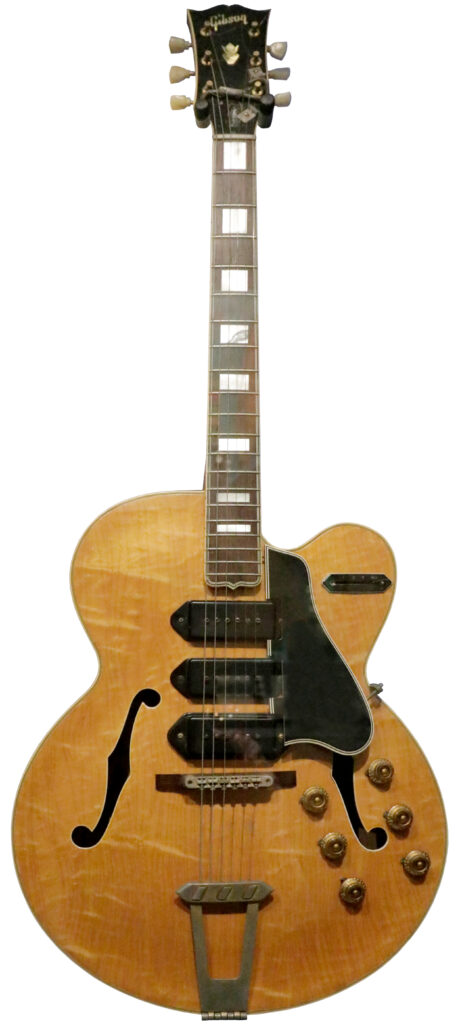
His choice of gear was instrumental in creating the classic Sun Studio sound. In his early, most influential period, he often played a 1955 Gibson Les Paul with P-90 pickups, which gave him a raw, biting tone. Later, he would also be associated with large Gibson archtops like the ES-5 Switchmaster.
A crucial part of his signature sound came from his amplifier, a rare, custom-built Ray Butts EchoSonic. This was one of the first amplifiers ever to have a built-in tape echo, and it was the secret to the classic “slap-back echo” that defined the rockabilly sound of the 1950s, also used by Elvis Presley’s legendary guitarist, Scotty Moore.
Essential Perkins: The Rockabilly Bible
Carl Perkins’s recordings for Sun Records are foundational texts of rock and roll. To understand his incredible impact as a songwriter and a guitar innovator, these three tracks are absolutely essential.
“Blue Suede Shoes”
This is the quintessential rockabilly anthem and Perkins’s most famous song. A smash hit that crossed over to the pop, country, and R&B charts, it was a cultural phenomenon. The track is built on one of the most iconic guitar licks in history, a perfect example of his ability to blend a bluesy phrase with a country twang, all driven by his relentless, shuffling rhythm.
“Honey Don’t”
A perfect showcase of his driving, fingerpicked rhythm style and his charismatic vocal delivery. This track is a masterclass in how to create a full, exciting sound with just one guitar. It’s no wonder The Beatles, with George Harrison taking the lead, famously covered this song, paying direct tribute to one of their most important influences.
“Matchbox”
Another blues-infused rockabilly classic that demonstrates the raw, authentic power of his playing. The guitar work is pure, unadulterated Perkins, full of clever fills and a chugging rhythm that is impossible not to move to. Like “Honey Don’t,” this song was also famously recorded by The Beatles, further cementing Perkins’s profound impact on the British Invasion and the future of rock and roll.
Carl Perkins was a true architect of rock and roll. While others may have achieved greater fame, his contribution as a songwriter and, crucially, as a guitar innovator is immeasurable. He wrote the songs and played the licks that a generation of future legends would study and build upon. His influence is so deeply woven into the fabric of popular music that his sound is, and will forever be, timeless.
Cover Photo Credit “Carl Perkins” by Snap Man is licensed under CC BY-NC 2.0