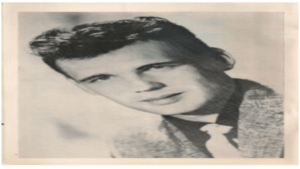

Welcome back to Guitardoor.com, where we celebrate the “secret weapons” and true virtuosos who elevated legendary bands to new heights. Today, we focus on one of the most purely gifted and revered guitarists to emerge from the 1960s British blues boom: the incredible Mick Taylor. Best known for his brilliant, albeit brief, tenure as the lead guitarist for The Rolling Stones during their absolute creative zenith (1969-1974), Taylor was a lyrical gunslinger, a true virtuoso whose fluid, melodic, and deeply soulful playing helped craft some of the greatest rock and roll ever recorded.
The Alchemist of the Blues
Mick Taylor’s pedigree was impeccable. As a teenager, he was hand-picked to fill a role previously held by both Eric Clapton and Peter Green in the legendary finishing school for British bluesmen, John Mayall’s Bluesbreakers. This alone cemented his status as a world-class talent. When he joined The Rolling Stones, he brought a level of technical and melodic sophistication that transformed their sound. He was a true lead guitarist, an improvisational force whose brilliance allowed the band to stretch out on long, beautiful, and musically adventurous jams. His style was a sophisticated and potent brew of pure blues phrasing, a touch of jazz harmony, and a beautiful, vocal-like melodic sense that was all his own.
Anatomy of a Golden Age Tone
The genius of Mick Taylor’s guitar playing lies not in blistering speed or aggressive pyrotechnics, but in his profound and intuitive command of taste, tone, and pure, unadulterated feel. In an era often defined by rock excess, his playing was a masterclass in lyrical construction and deep, soulful emotion. He was a true artist whose guitar sang with a maturity and grace that belied his young age, crafting lines that were as memorable and moving as any vocal. His sound was the warm, golden thread that was woven into the fabric of the Stones’ greatest works.
The Fluid Soloist: Taylor’s lead playing is the definition of lyrical grace. His most celebrated attribute is his slow, wide, and incredibly expressive vibrato, one of the most beautiful and recognizable of his generation. He was a master of crafting solos that felt like complete vocal melodies, full of perfectly timed string bends and an innate sense of tension and release.
Masterful Slide Guitar: He was also a phenomenal slide guitarist. His slide work was not raw or aggressive; it was smooth, sweet, and incredibly melodic, becoming a key texture on many classic Stones tracks.
The Gibson Les Paul: Mick Taylor is one of the ultimate icons of the Gibson Les Paul. The combination of his hands and a late-50s Les Paul Standard created one of the most revered and sought-after guitar tones in rock history: thick, warm, creamy, and with seemingly infinite, singing sustain.
The Ampeg Tone: During his time with the Stones, he famously used Ampeg amplifiers, like the V4 and VT-22. This gave him a unique sound that was different from the more common Marshall roar of his contemporaries. His tone was fat, round, and powerful, with a rich midrange that allowed his lyrical lead lines to sit perfectly in the mix.
Essential Taylor: The Stones’ Masterpieces
Mick Taylor’s time with The Rolling Stones produced what many consider to be the greatest run of studio albums in rock history. His stunning guitar work is a defining feature of this golden age. To hear his genius, these three tracks are absolutely essential.
“Sway”
A deep cut from the masterpiece album Sticky Fingers, this track features what many fans and critics consider to be Mick Taylor’s single greatest guitar solo. It is a perfectly constructed, soaring, and incredibly emotional piece of lead guitar, building from a simple melody into a passionate and unforgettable climax. It is pure, lyrical perfection.
“Can’t You Hear Me Knocking”
The legendary, extended instrumental jam that closes this track is the ultimate showcase of Taylor’s improvisational brilliance. Over a hypnotic, Latin-tinged groove, he weaves a long, fluid, and harmonically sophisticated solo that is a stunning display of his “in the moment” creativity. It is one of the greatest guitar moments in the entire Rolling Stones catalogue.
“Winter”
This beautiful and somewhat underrated ballad from Goats Head Soup is arguably the ultimate showcase for Taylor’s melodic and atmospheric playing. His gorgeous, weeping lead lines are not just a solo; they are the heart and soul of the entire track, a perfect example of his incredible ability to convey deep, melancholic emotion with his guitar.
Mick Taylor’s legacy is forever cemented by his monumental contributions to The Rolling Stones during their most iconic period. He was the secret ingredient, the virtuoso alchemist who helped elevate the “Greatest Rock and Roll Band in the World” to unprecedented heights of musical artistry. He is, without question, one of the most purely gifted and tasteful blues-rock guitarists of all time, a master whose beautiful, lyrical playing remains a timeless benchmark for melodic rock guitar.
Cover Photo Credit “Mick Taylor-and guitar” by Dina Regine is licensed under CC BY-SA 2.0