
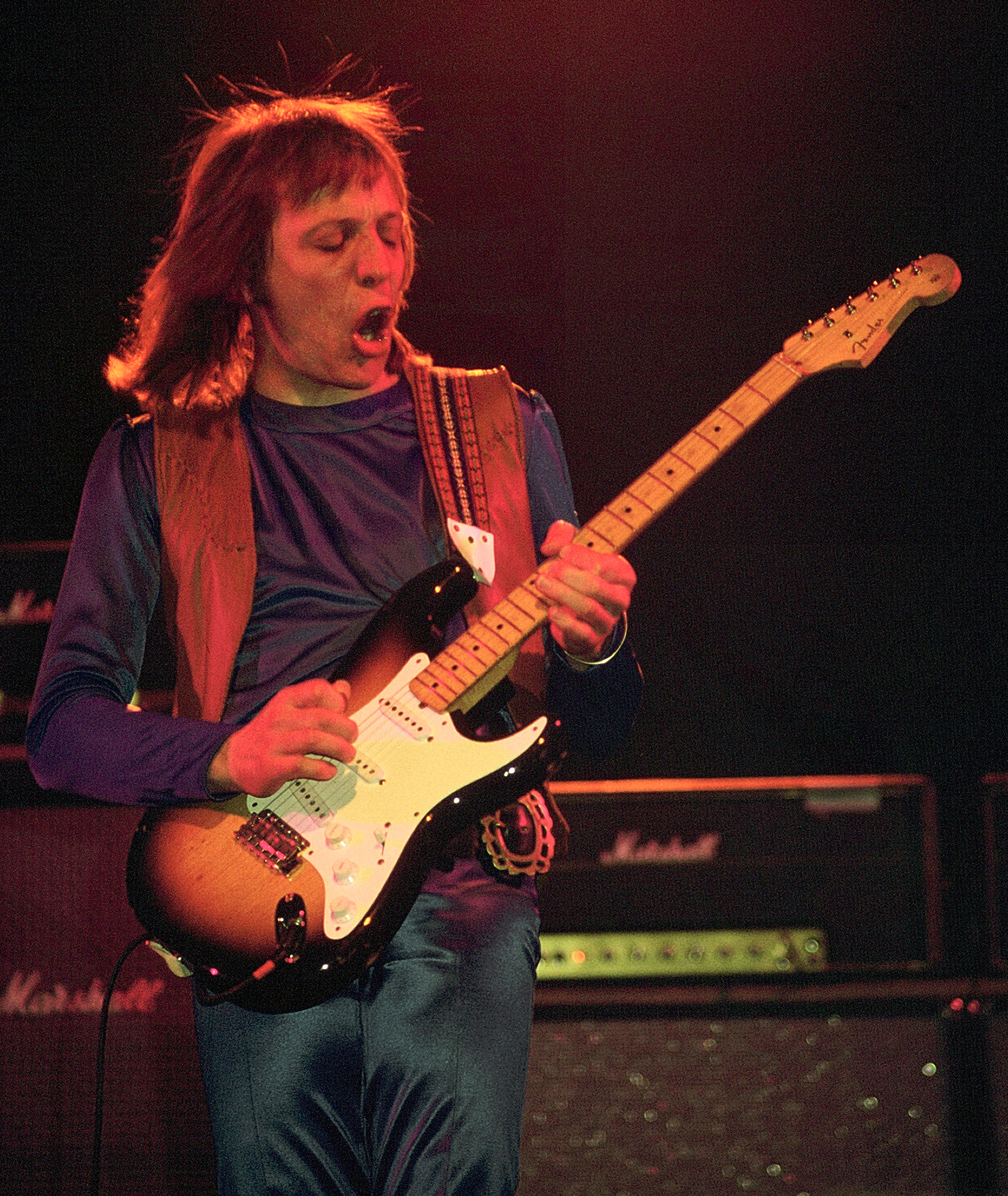
Robin Trower, a name synonymous with deeply emotive, blues-drenched rock, carved a unique sonic path that continues to captivate guitarists and music lovers alike. Emerging from his formative years with Procol Harum, Trower launched a solo career in the early 1970s that quickly established him as a formidable force, often drawing comparisons to Jimi Hendrix but ultimately possessing a voice all his own. His masterful use of effects, soulful string bending, and spacious, atmospheric soundscapes became hallmarks of his influential style. We delve into the magic of Trower by exploring three of his most iconic tracks and offering insights into approaching his distinctive guitar work.
The title track from his 1974 landmark album, “Bridge of Sighs,” stands as a monumental piece in the Trower canon. From its ethereal, Leslie-speaker-infused opening chords, the song transports the listener to a realm of profound melancholy and introspection. Trower’s guitar work is a study in sustain and texture, with each note carefully chosen and impeccably phrased. The slow, heavy groove laid down by bassist James Dewar (whose soulful vocals are an equally crucial element) and drummer Reg Isidore provides a powerful foundation for Trower’s soaring, mournful Les Paul lines. The genius of “Bridge of Sighs” lies in its ability to create an almost visual landscape through sound, with Trower’s guitar painting broad, echoing strokes that resonate long after the song concludes. The track’s unique, immersive sound was significantly shaped by engineer Geoff Emerick, who employed innovative miking techniques to capture Trower’s expansive guitar tones.
Venturing back to his 1973 debut solo album, “Twice Removed from Yesterday,” “Sinner’s Song” showcases a grittier, more overtly blues-rock facet of Trower’s burgeoning sound. The song kicks in with a compelling, heavy riff, characterized by Trower’s thick, fuzzed-out tone and his distinctive, slightly behind-the-beat phrasing. “Sinner’s Song” is a powerful testament to the classic power trio format, with each instrument given space to breathe yet contributing to a potent, unified whole. Trower’s soloing here is raw and impassioned, filled with aggressive bends and a palpable sense of bluesy angst. It’s a track that highlights his early embrace of Hendrix-inspired vocabulary while still hinting at the more spacious and effects-laden textures that would become even more prominent in his later work. The interplay between Trower’s guitar and Dewar’s melodic bass lines is particularly noteworthy, creating a rich harmonic and rhythmic tapestry.
Returning to the “Bridge of Sighs” album, “Too Rolling Stoned” offers a different, more up-tempo and funk-infused energy. The song is instantly recognizable by its driving, wah-drenched main riff, a masterclass in rhythmic precision and tonal colour. Trower’s playing throughout is dynamic, shifting from tight, choppy rhythmic figures to fluid, expressive lead lines. The lyrics, alluding to the pressures and excesses of the rock and roll lifestyle, are delivered with soulful conviction by Dewar. “Too Rolling Stoned” is celebrated for its extended instrumental sections where Trower truly cuts loose, demonstrating his improvisational prowess and his ability to build solos to exhilarating climaxes. The track’s infectious groove and Trower’s fiery guitar work have cemented its status as a fan favourite and a cornerstone of his live performances. Some have noted a James Brown influence in the chord changes, showcasing Trower’s diverse inspirations.

Aspiring guitarists looking to capture the essence of Robin Trower’s style should focus on several key areas. Firstly, his mastery of string bending and vibrato is paramount. Trower’s bends are not just about hitting the right pitch but also about the vocal quality and emotional weight he imparts to each one. His vibrato is often wide and controlled, adding a singing quality to his sustained notes. Secondly, understanding his use of effects is crucial. The Uni-Vibe pedal is perhaps most famously associated with his sound, creating that watery, swirling texture prominent on tracks like “Bridge of Sighs.” He also made significant use of fuzz/overdrive (often from Fulltone pedals later in his career) and wah-wah. Experimenting with these effects, particularly how they interact with a Fender Stratocaster (his preferred instrument) and a Marshall-style amplifier, is key. Trower often utilized heavy gauge strings and sometimes tuned down a semitone or a whole step, which contributed to his thick tone and ability to execute wide bends. Beyond the gear and techniques, however, is Trower’s profound sense of melody, his use of space, and his deep blues feeling – elements that can be studied by immersing oneself in his discography and striving to play with similar passion and intent
Cover Photo Credit “Robin Trower 3 – Robin Trower Band – 1975” by Jim Summaria is licensed under CC BY-SA 3.0