Welcome back to Guitardoor.com, where we celebrate the true virtuosos who defined their genres. Today, we’re taking a deep dive into the 1980s Sunset Strip to celebrate one of the most brilliant, fluid, and criminally underrated players of the entire glam metal era: the legendary “Torch,” Ratt’s lead guitarist, Warren DeMartini. In a decade filled with flashy guitarists, DeMartini was a true cut above—a world-class virtuoso whose incredible technique, unique phrasing, and brilliantly composed solos made him the “guitarist’s guitarist” of the 80s rock scene.
The Sound of the Ratt ‘n’ Roll Machine
The sound of Ratt was the definitive sound of 1980s Sunset Strip hard rock—sleek, sexy, and built on a foundation of massive, infectious hooks. But while the songs were catchy party anthems, it was DeMartini’s guitar work that gave the band its lethal bite. He was their ultimate secret weapon. While his co-guitarist, the great Robbin Crosby, held down the powerful rhythm, DeMartini (who took over from a pre-Ozzy Jake E. Lee) elevated every single song from a simple rock tune to a masterclass in lead guitar. His solos were never just a fast, obligatory section; they were perfectly crafted, “song within a song” highlights that were melodic, memorable, and technically breathtaking.
Anatomy of a Shred Virtuoso
The guitar playing of Warren DeMartini was a thrilling and unique blend of blistering speed, fluid legato, and a quirky, almost exotic melodic sensibility that set him far apart from his peers. While many 80s players relied on pure pentatonic flash, DeMartini was a far more sophisticated and precise musician. To listen to his solos is to hear a player who combined the explosive flash of Eddie Van Halen with a level of control and melodic composition that was all his own. He was a true virtuoso who made the incredibly difficult sound impossibly smooth and effortless.
Fluid Fire: DeMartini is a true master of both alternate picking and legato. His greatest signature is his “snake-like” phrasing, where he would seamlessly blend lightning-fast picked passages with incredibly smooth, fluid legato runs, often using wide, difficult intervals that gave his playing a unique, unpredictable quality.
The Exotic Phrasing: He frequently used outside-the-box note choices, including diminished arpeggios and chromatic runs, which gave his solos a slightly “classical” or “exotic” flavor. This harmonic sophistication was a key ingredient that made his solos sound so intelligent and composed.
The Floyd Rose Master: He was a complete master of the Floyd Rose locking tremolo. He didn’t just use it for “dive bombs”; he used it with precision, for high-speed, melodic trills, expressive, vocal-like vibrato, and his signature, perfectly-pitched “squeals” that acted as punctuation.
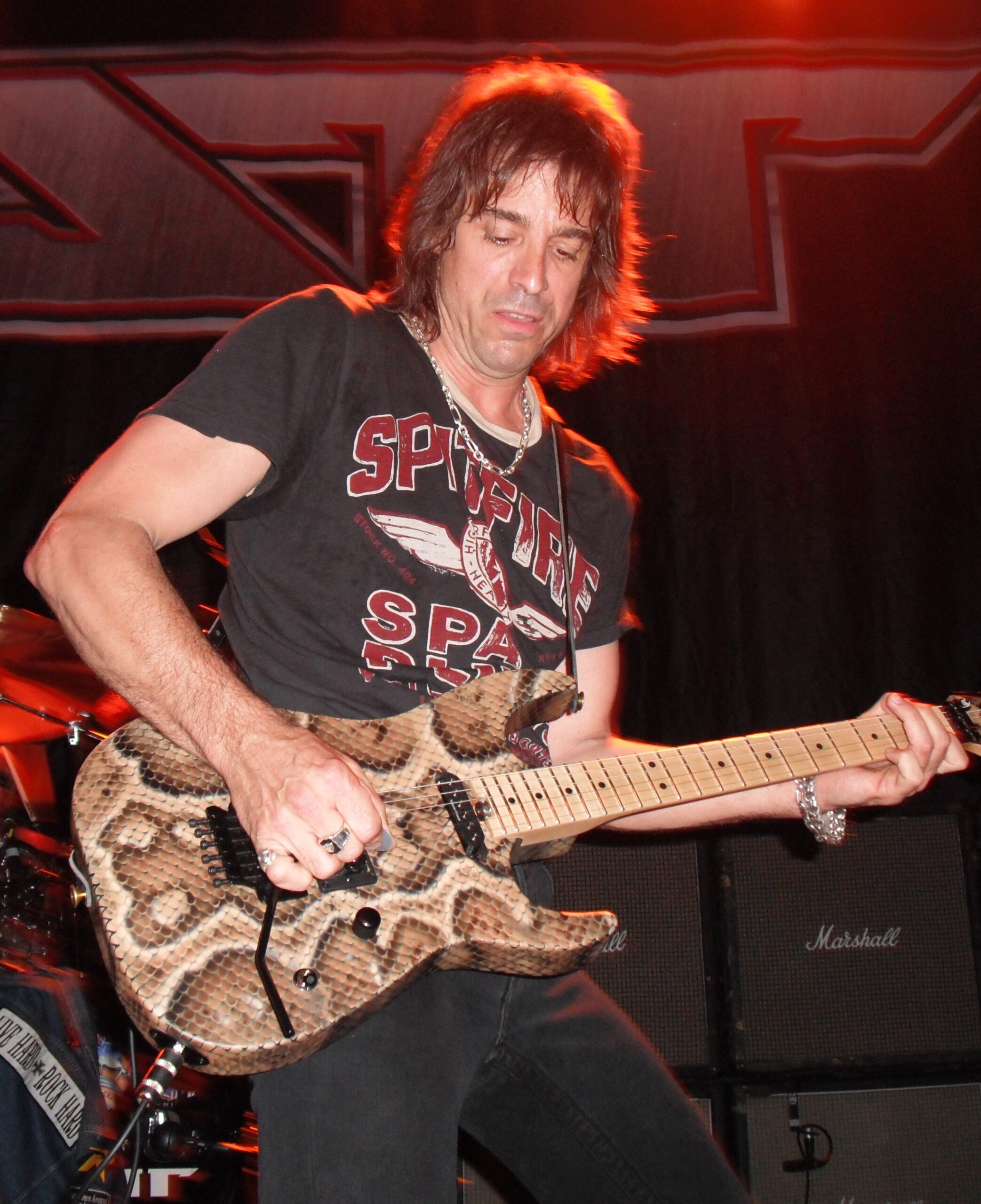
The Dinky and the Serpent: DeMartini is a true icon of the Charvel “Dinky” super-strat. His collection of custom Charvels, adorned with iconic graphics like the snakeskin finish of his “Serpent” guitar, defined the look of the 80s shred machine. His sound was almost always a single high-output Seymour Duncan JB humbucker plugged straight into a wall of roaring, hot-rodded Marshall amplifiers.
The Essential Ratt Solos
Warren DeMartini’s solos are the highlight of every major Ratt hit. They are perfectly constructed lessons in melodic, high-speed rock guitar.
Round and Round
This is it. His masterpiece. One of the single greatest and most iconic guitar solos of the 1980s. It is a perfect composition from start to finish. To approach playing it, you must learn it note-for-note. It is a masterclass in building tension, starting with a memorable melody before exploding into his signature, rapid-fire alternate picking and flawlessly executed runs. The challenge is the sheer precision required at that speed.
Lay It Down
A heavy, swaggering anthem that features another all-time-great DeMartini solo. The approach here is to master his signature legato technique. The solo is full of those smooth, “snake-like” runs that slide up and down the neck. The key is to have a light touch with your fretting hand to keep the legato notes fluid and even, and to practice the precise, melodic “pull-ups” with the Floyd Rose bar that give the solo its vocal-like quality.
Way Cool Jr.
This track showcases a different, bluesier side of his playing. It’s all about swagger and feel, not just speed. The key to this song is mastering the Talk Box. To approach the solo, you must think like a blues singer, using the Talk Box to “enunciate” the bluesy, pentatonic phrases and make the guitar “talk” with a sleazy, laid-back attitude that perfectly matches the song’s swampy groove.
In the end, Warren DeMartini’s legacy is that of one of the true, elite guitar heroes of the 1980s. In an era of copycats, he was a true original, a player whose incredible technical command, unique melodic phrasing, and brilliant gift for composition set a new standard for melodic hard rock. He wasn’t just a “glam metal” guitarist; he was, and is, a world-class virtuoso.
Cover Photo Credit “Warren DeMartini 2010 (cropped)” by Ted Van Pelt is licensed under CC BY 2.0