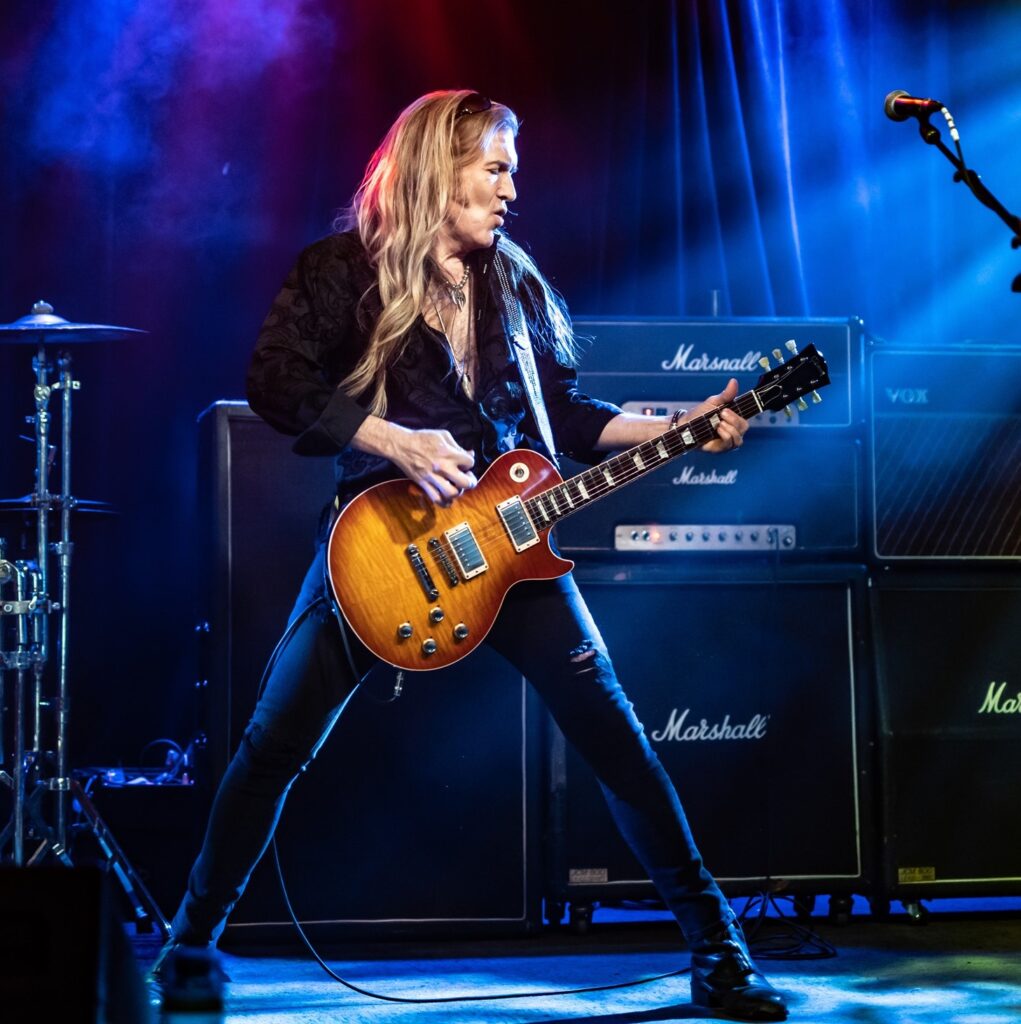
Welcome back to Guitardoor.com, where we celebrate the true guitar heroes who defined their era. Today, we’re shining a long-overdue spotlight on one of the most brilliant, melodic, and criminally underrated virtuosos of the 1980s: the legendary White Lion guitarist, Vito Bratta. In a decade dominated by flashy, high-speed shredders, Vito Bratta was the complete package—a player with the technical command of a master and the melodic sensibilities of a pop genius. He was the “song within a song” soloist, a master of composition who, for a few brilliant years, burned brighter than almost anyone before vanishing from the public eye.
The Sound of Pride
The sound of White Lion was a perfect, radio-friendly blend of European-influenced pop-rock (courtesy of Danish singer Mike Tramp) and pure, high-voltage American hard rock. The ingredient that made them truly special, and elevated them far above their “hair metal” peers, was Bratta’s incredible guitar work. While often compared to Eddie Van Halen, Bratta quickly transcended the comparison to create a style that was entirely his own. It was a sophisticated, elegant, and almost “balletic” approach to shred. His solos were never just a burst of noise; they were intricate, immaculately crafted compositions, full of soaring melodies, complex harmonies, and breathtaking technicality.
Anatomy of an 80s Master
The guitar playing of Vito Bratta was a masterclass in making the incredibly complex sound effortlessly beautiful. He was a true compositional soloist, a player who, like Elliott Easton of The Cars, built his leads to be as catchy and essential as the vocal hooks. His genius was in his ability to blend cutting-edge shred techniques with an almost classical melodic structure, creating a sound that was both technically dazzling and incredibly musical. To listen to a Bratta solo is to hear a perfectly constructed piece of art.
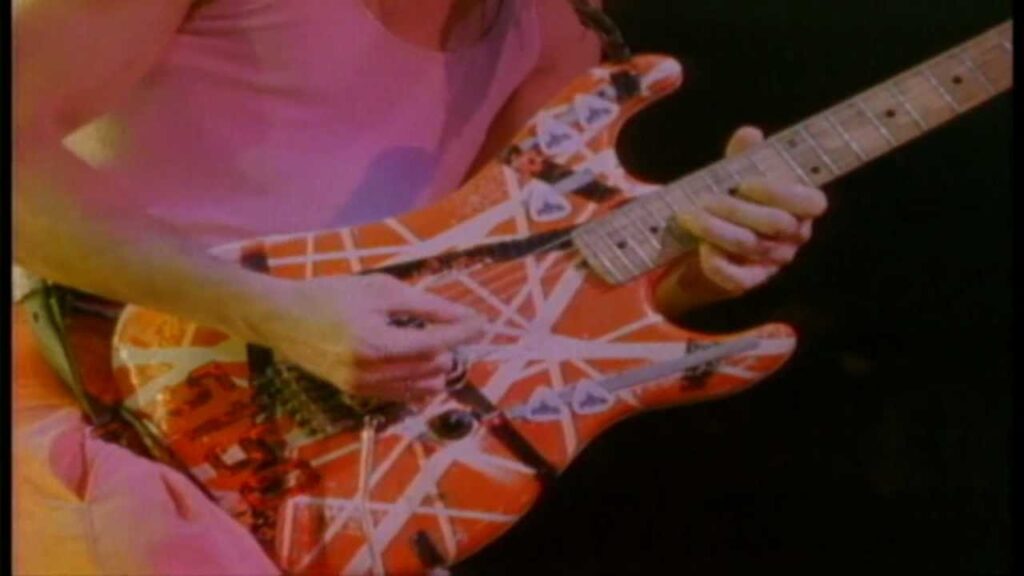
The Tapping King: While Eddie Van-Halen introduced two-handed tapping, Vito Bratta took it to a new, hyper-melodic level. He was a master of intricate, multi-fingered tapping patterns and arpeggios, using them not just for speed but to create beautiful, flowing, piano-like melodies. Zakk Wylde himself has famously said that Bratta is one of the only guitarists whose tapping “sounds cool.”
Fluid Fire: His technique was flawless. He had a buttery-smooth legato style and could sweep pick complex arpeggios with jaw-dropping speed and precision, all while making it sound as smooth and effortless as a simple melody.
The Whammy Bar Composer: Like Warren DeMartini, Bratta was a master of the Floyd Rose bridge, but he used it with a unique, lyrical touch. He was known for his “flutter” technique and his incredible ability to use the bar to add a beautiful, vocal-like shimmer to his tapped and fretted notes.
The Steinberger Icon: While he used ESPs and Strats, his most iconic look was his white, headless Steinberger guitar. This high-tech, minimalist instrument was the perfect visual for his clean, precise, and futuristic playing style. His tone was a classic 80s high-gain sound, often achieved with Marshall amps or an ADA MP-1 preamp, which gave him that perfect, articulate, and saturated lead voice.
The Essential Solos
Vito Bratta’s solos were the highlight of every White Lion song, each one a perfectly crafted, memorable composition. To understand his melodic and technical genius, these three tracks are absolutely essential.
Wait
This is his masterpiece and one of the single greatest guitar solos of the 80s. It is a tour de force of his entire style. To approach playing it, you must treat it as a complete, three-part composition. It begins with a beautiful, soaring, and melodic phrase before exploding into one of the most iconic, complex, and musical two-handed tapping passages ever recorded. The key is to practice that tapping section slowly to master the intricate fingerings and the precise, melodic flow.
Little Fighter
A brilliant, driving anthem, this song features a solo that is a masterclass in melodic, high-speed playing. The approach here is to master the blend of fast, articulate alternate-picked runs with his signature, fluid legato passages. The solo’s climax, a series of lightning-fast, ascending, tapped arpeggios, is a perfect exercise in building excitement and technical precision.
When the Children Cry
This massive power ballad showcased his incredible taste and his ability to serve the song. The solo is not a shred-fest; it’s a beautiful, lyrical, and perfectly composed acoustic piece (played on an electric guitar with a clean tone). To approach this, the focus is 100% on melody and phrasing. It’s a lesson in using simple, arpeggiated figures and melodic runs to create a powerful, emotional statement without a single wasted note.
In the end, Vito Bratta’s legacy is that of a true “phantom of the fretboard.” He was a guitarist of immense talent and sophistication who, at the peak of his powers, walked away from the music industry to care for his family, never to return. His abrupt departure has only added to his mythic status. For a few short years, he set a new standard for melodic and technical excellence in rock guitar, leaving behind a small but perfect catalogue of work that continues to awe and inspire guitarists to this day.