If a song could capture the exact moment a band was falling apart, it would be The Beatles’ “While My Guitar Gently Weeps.” This track is not just a masterpiece of songwriting from George Harrison; it’s the sonic documentation of a friendship that saved a song from the band’s own apathy.
In 1968, as The Beatles recorded the sprawling, chaotic “White Album,” internal tensions were at their peak. Harrison, growing into a mature and spiritual songwriter, was constantly frustrated by the dismissal and lack of attention given to his songs by John Lennon and Paul McCartney. When he presented “While My Guitar Gently Weeps,” the sessions were uninspired and listless.
The solution? A move that was, at the time, virtually unprecedented: Harrison called in an outsider, his close friend and fellow guitar icon, Eric Clapton. This is the story of the greatest guitar collaboration born not of rivalry, but of necessity and deep friendship.
II. The Catalyst: Diffusing the Tension
Harrison’s initial attempts to record the song were met with indifference. The early takes lacked fire and soul. Frustrated, George decided to take drastic action. Knowing he needed a powerful presence to shake the session musicians out of their slump, he asked Clapton to come in.
Clapton was initially hesitant, famously saying, “The Beatles don’t have outside players.” But Harrison insisted, arguing, “It’s my song, and I want you on it.” On September 6, 1968, Clapton walked into Abbey Road, and everything changed.
The Shock Effect: Clapton’s presence immediately diffused the tension among the band members, who were suddenly on their best behavior in the presence of an outside superstar.
The Tone Shift: George, taking a break from lead duties, asked Clapton to perform the famous solo. The result was a dramatic shift in the song’s texture, adding a genuine blues depth that Harrison’s previous takes couldn’t quite reach.
III. The Solo: Playing the Part of the Weeper
The lead guitar performance on “While My Guitar Gently Weeps” is unique in Eric Clapton’s legendary catalogue because it lacks the typical flash and fiery speed of his work with Cream. Harrison specifically requested that Clapton’s solo “didn’t sound too much like Clapton.”
Clapton obliged, delivering a solo that perfectly embodies the title of the song:
The Sound: He used a Gibson Les Paul guitar (a model Clapton popularised) through a heavy dose of tremolo/vibrato. Harrison reportedly insisted on this processing to make the guitar sound “crying” and “less Eric Clapton-y.”
The Phrasing: The solo is incredibly controlled, mournful, and profoundly melodic. Clapton’s lines are more focused on emotional sustain and pitch bending, sounding strained and beautiful more than a typical showing off technique. The guitar is literally weeping a melody.
Harrison’s Role: This session reinforced Harrison’s importance. By bringing in a recognized legend, he simultaneously elevated his own song and forced his bandmates to respect his musical vision. It stands as one of the few instances where an outside lead guitarist appears on a canonical Beatles track.
IV. Conclusion: A Legacy Born of Friendship
The collaboration between George Harrison and Eric Clapton on “While My Guitar Gently Weeps” is one of the most significant guest performances in rock history. It is a timeless example of how a collaborative spirit, driven by personal friendship, can inject the exact emotional resonance a song needs to achieve immortality. The sound of that solo is the sound of a heart breaking—both Harrison’s over his failing band, and the guitar itself, gently weeping into the ether.
Watch the Essential Collaboration: George Harrison and Eric Clapton
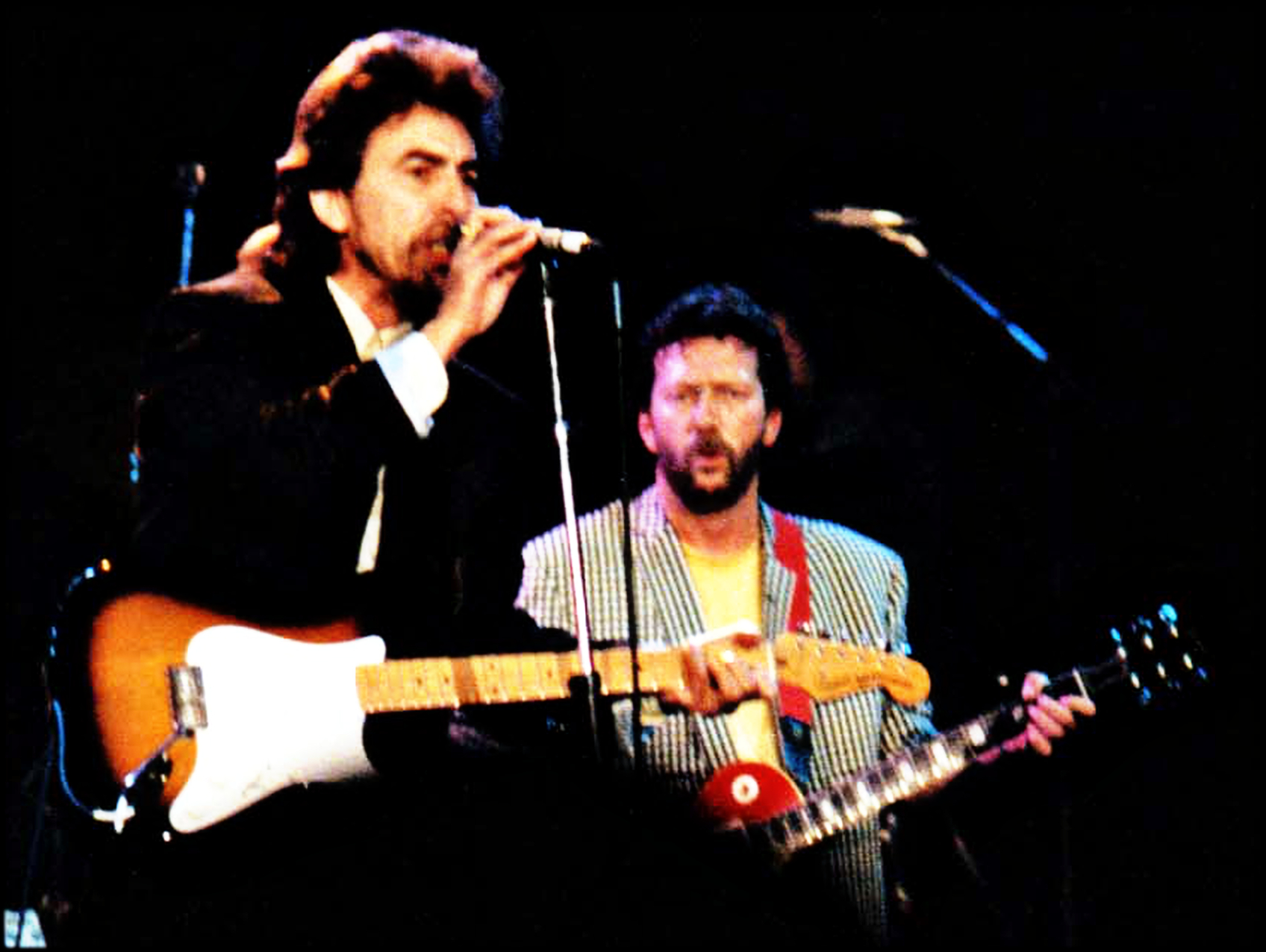
Cover Photo Credit “Harrison and Clapton (clip)” by Harrison and Clapton.jpg: Steve Mathieson derived work: Clusternote is licensed under CC BY-SA 3.0