5 Legendary Irish Guitarists Who Reshaped Music History
Ireland is a nation globally celebrated for its rich lineage of poets, lyricists, and traditional storytellers. However, the Emerald Isle has also birthed some of the most influential, boundary-pushing, and deeply revered six-string masters in modern musical history. From raw, blistered blues-rock and sophisticated bebop jazz to revolutionary acoustic folk arrangements, prominent Irish guitarists have done far more than simply play the music—they have fundamentally altered the structural foundations of global genres. Their enduring artistic influence stretches far beyond the island’s shores, leaving an indelible mark on countless generations of global musicians who have picked up the instrument in their wake.
The distinctive sound of Ireland’s guitar heritage relies on an authentic blend of deep emotional honesty, melodic precision, and a relentless work ethic. Whether performing in packed local clubs or selling out massive international stadiums, these players established a completely unique standard for performance. Here, we dive deep into the lives, techniques, and setups of five masters who define the rich, multi-layered tapestry of Irish guitar mastery.
1. Rory Gallagher: The People’s Hero of the Blues
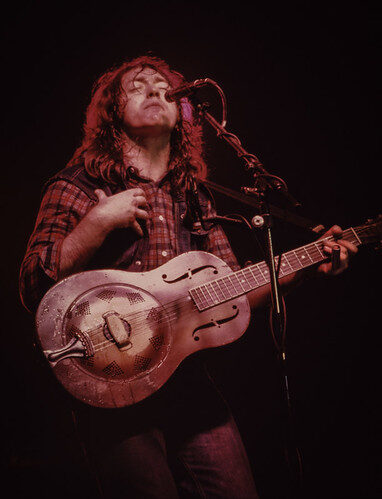
If a single human being completely embodies the raw, unadulterated spirit of passionate rock guitar in Ireland, it is Rory Gallagher. Hailing from Ballyshannon, County Donegal, and raised in the working-class musical hub of Cork, Gallagher was a literal force of nature on stage. His primary weapon of choice was an aggressively weathered, paint-stripped 1961 Fender Stratocaster—a sunburst instrument whose worn aesthetic became a visual symbol of his tireless touring schedule, making it a guitar as iconic as the legend who played it.
Rory Gallagher did not simply interpret standard chord progressions; he lived them completely. He proved to the world that elite Irish guitarists could play the blues with the exact same authenticity, pain, and fire as the Chicago masters. Famous worldwide for legendary marathon live sets that frequently stretched on for hours, Gallagher seamlessly married the high-octane drive of early hard rock with the foundational soul of traditional delta blues. Even though he was routinely praised by his direct peers—including icons like Jimi Hendrix and Eric Clapton—as an elite tier musician, he remained fiercely working-class and anti-commercial. He regularly rejected corporate music industry trends and flashy stardom to keep his focus entirely on the music. His blistering slide technique, acoustic fingerstyle dexterity, and deep vocal delivery remain a golden standard for guitarists globally.
2. Gary Moore: The Master of Fire and Soul
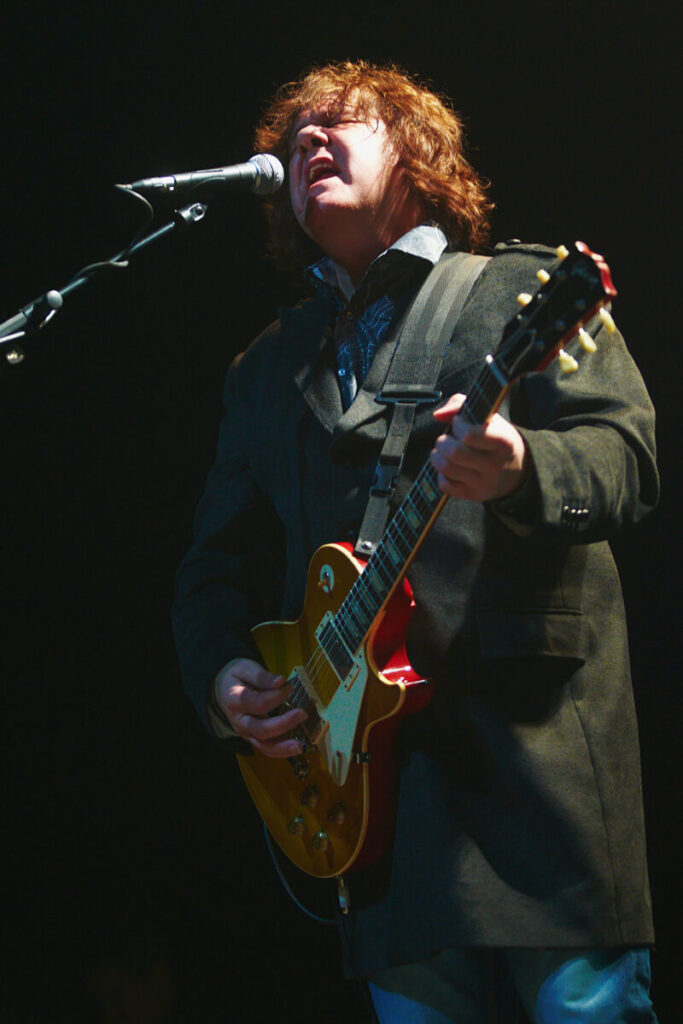
Belfast’s native son Gary Moore stands tall as one of the most technically formidable and emotionally explosive guitarists of the 20th century. Moore’s musical timeline is a masterclass in creative versatility. He initially achieved international mainstream acclaim alongside Phil Lynott in the legendary hard-rock outfit Thin Lizzy, before showcasing mind-bending technical speed in high-wire jazz-fusion projects. However, it was his triumphant, late-career return to classic blues forms that forever solidified his status among elite Irish guitarists.
Moore’s undeniable sonic trademark was his earth-shaking, infinitely sustaining lead tone. Utilizing his famous “Greeny” 1959 Gibson Les Paul Standard, he could transition instantly from lightning-fast alternative picking patterns to massive, soaring melodic bends. He didn’t just construct a standard solo; he actively extracted raw emotion from the fretboard, making his guitar cry, scream, and wail with an intensity that regularly moved concert audiences to tears. His fluid stylistic evolution proved that true virtuosity isn’t just about speed—it is about having the structural control to articulate human emotion at any volume.
3. The Edge (David Evans): The Sonic Architect
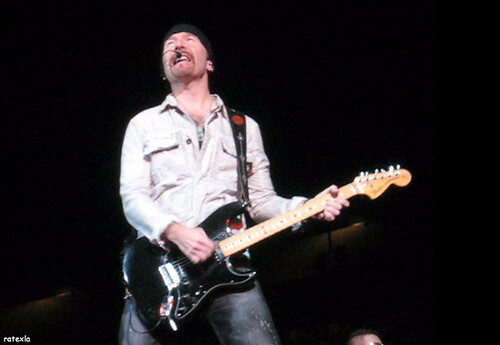
While traditionalists often measure guitar greatness purely by speed, scale patterns, and flashy soloing, David Evans—known universally across the globe as The Edge—fundamentally reimagined the instrument’s role within popular rock music. As the mastermind behind U2’s instantly recognizable and iconic sound, he purposefully turned away from standard blues-based rock clichés, opting instead to treat complex electronic effects processing as an instrument in its own right.
The Edge pioneered a highly influential style built heavily on vintage digital delay pedals, modulated echoes, and rhythmic dotted-eighth-note repeats. Instead of filling empty sonic space with dense lead lines, he relied on minimalist textures, ringing arpeggios, and open-string drones to craft cavernous, atmospheric landscapes. He made a single clean Fender Stratocaster or Gibson Explorer sound like a massive, chiming church choir. This texturally driven approach to songwriting proved that restraint and spatial awareness can be incredibly powerful, completely changing the direction of modern rock arrangements for decades to come.
4. Louis Stewart: Ireland’s Jazz Maestro
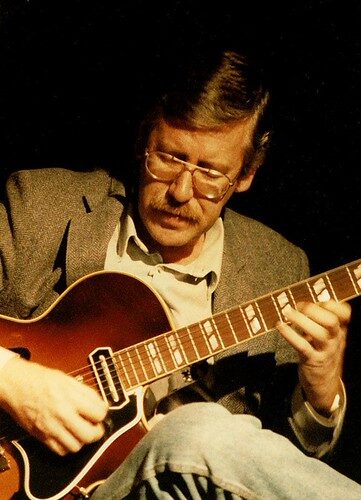
For dedicated students of music theory and performance, Dublin-born Louis Stewart was not only Ireland’s finest jazz guitarist, but also a globally recognized master of the genre. He earned deep professional admiration from world-class luminaries like Joe Pass, Tubby Hayes, and George Shearing. While his name may not carry the same mainstream commercial recognition as his rock counterparts, his structural contributions to the international jazz landscape were absolutely massive.
Stewart’s playing style was incredibly sophisticated, structurally clean, and blindingly fast, heavily rooted in the complex harmonic languages of the mid-century bebop masters. Armed with an archtop hollow-body guitar, his flawless internal clock and uncanny ability to navigate highly complex jazz chord changes with fluid grace made him a legend across the global music community. Listening to Louis Stewart provides an educational look at a player who achieved complete, uncompromised control over the fretboard.
5. Paul Brady: The Revolution of Acoustic Folk
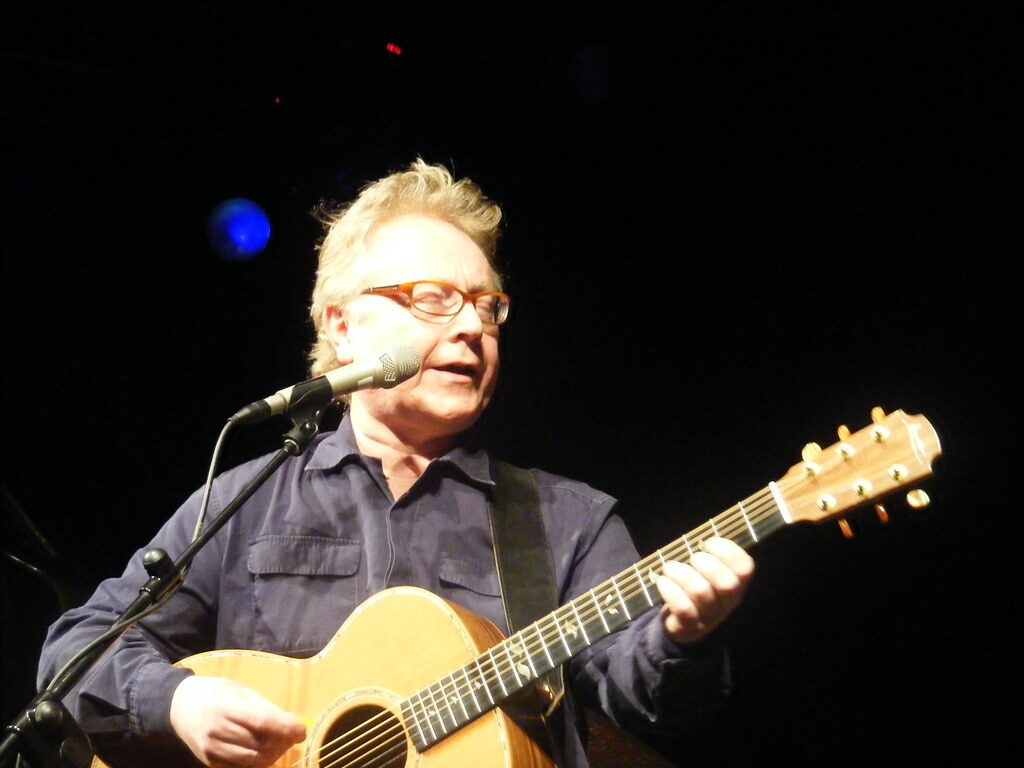
Paul Brady is celebrated all over the world as one of Ireland’s most gifted singer-songwriters, penning tracks covered by elite global artists. However, his historic, revolutionary impact on the guitar stems directly from his work in the 1970s. During this era, particularly during his landmark collaboration with Andy Irvine, he fundamentally reshaped the landscape of traditional Irish acoustic accompaniment forever.
During a time when acoustic guitars were often limited to basic open-chord strumming in folk clubs, Brady developed a fiercely original, high-energy, percussive fingerstyle technique. Utilizing open tunings and an incredibly aggressive, driving right-hand flatpicking attack, his complex rhythmic structures elevated the acoustic guitar from a passive backing instrument into a powerful driving force. His pioneering rhythm style inspired a generation of folk and trad guitarists, establishing the structural blueprint for traditional Celtic accompaniment that remains the absolute standard today.
The Lasting Legacy of the Emerald Isle
What truly unites this diverse group of players is an unyielding commitment to individuality. None of these musicians achieved greatness by merely copying what came before them. Instead, they took their respective instruments and forced them to speak a completely new language. Whether it was Rory’s raw blues passion, Gary’s unmatched vocal sustain, The Edge’s pristine delay patterns, Louis’s intricate bebop lines, or Paul’s driving folk rhythms, these artists built a monumental legacy.
This dedicated video playlist brings together iconic performances from each of these five masters. It serves as an educational journey through the heart of Irish guitar, highlighting the grit, soul, structural innovation, and technical brilliance that defined their legendary paths.