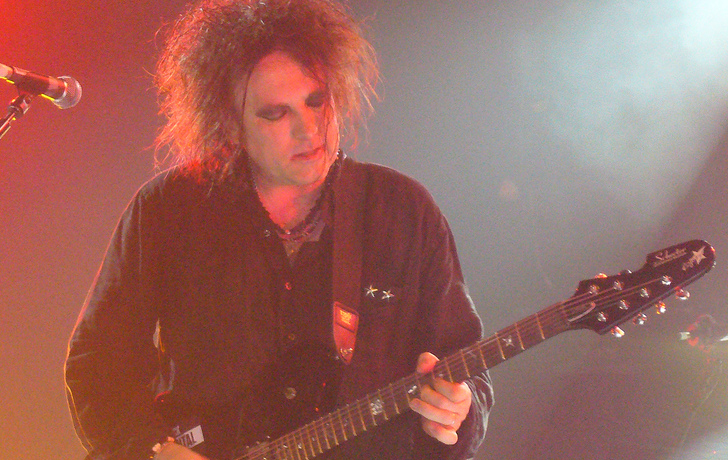
Welcome back to Guitardoor.com, where we celebrate the true sonic visionaries who created their own musical universes. Today, we explore the vast, emotional, and deeply influential world of one of the most important figures in alternative music: the iconic Robert Smith. As the frontman, primary songwriter, and singular guitar voice of the legendary band The Cure, Smith is not a guitar hero in the traditional sense of speed and pyrotechnics. He is a master of mood, an architect of atmosphere who uses his guitar to paint vast, emotional landscapes of longing, love, and melancholic beauty.
How did Robert Smith get his sound?
The sound of The Cure, crafted and guided by Robert Smith, is a genre unto itself, spanning from the stark, minimalist landscapes of post-punk and the brooding, cavernous depths of gothic rock to the shimmering, dizzying heights of perfect dream-pop. As the band’s primary sonic architect, Smith’s guitar is the central voice that defines their sound, weaving unforgettable melodies and creating immense textural depth.
Emerging from the same fertile UK post-punk scene that produced innovators like Bernard Sumner of Joy Division, Smith took the era’s rejection of blues-based rock and infused it with his own unique sense of dark romanticism. His sound was less about the industrial tension of Manchester and more about vast, internal, emotional spaces. He created a new language for the guitar, one that could express profound sadness and ecstatic joy with equal, breathtaking power.
Anatomy of an Atmosphere
The genius of Robert Smith’s guitar work lies not in overt complexity or blistering speed, but in his profound and intuitive understanding of how to use simple tools—space, melody, and, crucially, effects—to create a massive and immediate emotional impact. His sound is a masterclass in texture, a perfect example of how the feel and atmosphere of a note can be infinitely more powerful than the note itself. He built a unique and instantly recognizable sonic universe with a deceptively simple toolkit, proving that the right combination of melody and mood could be as heavy and impactful as any distorted power chord.
The Melodic Voice: Smith’s lead lines are rarely conventional “solos.” They are simple, memorable, and incredibly effective single-note melodies that act as a second vocal, often full of space and drenched in reverb and delay. These lines are the unforgettable hooks that define many of The Cure’s most famous songs.
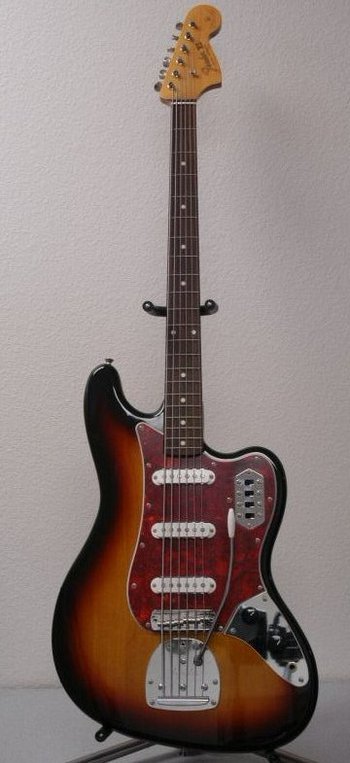
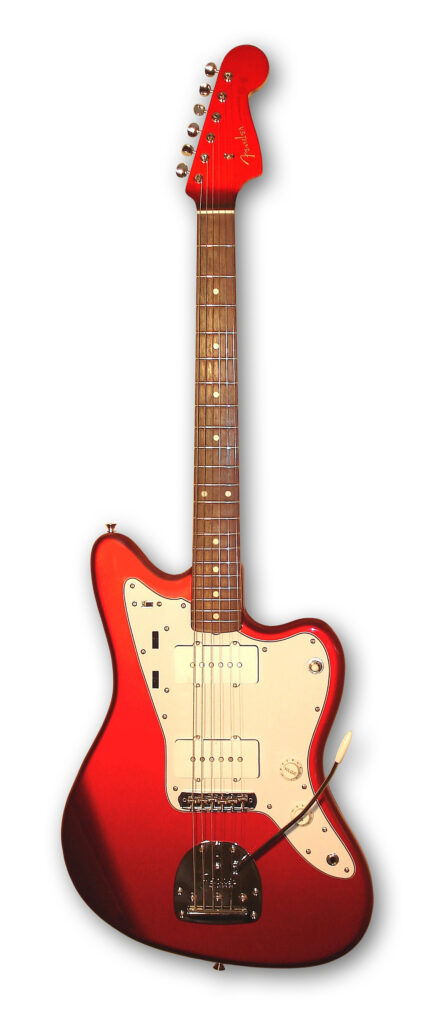
The Fender Sound: He is a true icon of alternative and offset guitars. His sound is inextricably linked to the Fender Jazzmaster and, most famously, the Fender Bass VI—a six-string bass tuned like a guitar but an octave lower. He used the Bass VI to create many of his most iconic, deep, and resonant lead melodies.
The Effects Trinity: Robert Smith’s tone is defined by his masterful use of a holy trinity of effects pedals. The shimmering, watery sound of a Boss CE-2 Chorus, the sweeping, jet-plane whoosh of a Boss BF-2 Flanger, and various analog and digital delay pedals are the absolute secret to his signature atmospheric sound. This combination created the sonic foundation for goth, shoegaze, and dream-pop.
Essential Smith: The Cure’s Sonic Signatures
Robert Smith’s guitar has provided the voice for some of the most iconic songs in alternative music. To understand his incredible ability to create mood and melody, these three tracks are absolutely essential.
“A Forest”
This is the definitive early Cure track and a masterclass in building tension. The song is a sparse, hypnotic journey built on a simple bass line, and Smith’s guitar work is brilliantly minimalist. His flanger-drenched, two-note motif slowly builds in intensity, becoming more frantic and desperate as the song progresses, perfectly evoking the feeling of being lost and pursued in the dark.
“Just Like Heaven”
A perfect and timeless piece of dream-pop, this track showcases Smith’s genius for creating a sound of pure, dizzying romantic euphoria. The song is built on layers of his shimmering, chorused guitars, and the beautiful, descending single-note lead line that opens the song is one of the most recognizable hooks in all of alternative music. His short, fuzzy solo is a perfect, concise melodic statement.
“Pictures of You”
This epic, melancholic ballad is the ultimate showcase for Smith’s innovative use of the Fender Bass VI as a lead instrument. The long, beautiful, and heartbreakingly sad lead melody that weaves throughout the entire song is played on the Bass VI, creating that iconic deep, resonant, and incredibly emotional tone. It is one of the most beautiful and defining guitar parts of his career.
Robert Smith is a monumental figure in modern music. He created a completely new and emotionally resonant language for the guitar, one that has profoundly influenced countless artists and entire genres, from goth and shoegaze to indie and alternative rock. He is a true artist and a sonic pioneer, a player who proved that the guitar could be a brush to paint with, creating deep, introspective, and profoundly beautiful portraits of the human heart.
Cover Photo Credit “Robert Smith of The Cure live in Singapore 1 August 2007” by Jeffcampion is licensed under CC BY 3.0