Welcome back to Guitardoor.com, where we celebrate the true rock and roll lifers, the players whose journey spans genres and generations. Today, we’re focusing on one of the coolest, most enduring, and instantly recognizable figures in punk and alternative rock: the legendary Pat Smear. From co-founding the seminal LA punk band The Germs to serving as a crucial second guitarist in Nirvana during their peak, and finally becoming a cornerstone member of the stadium-conquering Foo Fighters, Smear is the ultimate survivor, a master of the powerful rock riff and a walking embodiment of punk rock attitude.
The Sound of Survival
The sound of Pat Smear is the sound of pure, unadulterated rock and roll energy, filtered through a punk rock lens. His journey is remarkable. With The Germs, his playing was raw, chaotic, and perfectly captured the nihilistic fury of early LA punk. It wasn’t about precision; it was about power and attitude. When he joined Nirvana for their final tours, including the iconic MTV Unplugged in New York performance, he brought a grounding, solid presence, adding texture and reinforcing the power of Kurt Cobain’s songs without ever overshadowing them. And in the Foo Fighters, he is the essential rhythm anchor, the veteran presence whose driving, no-nonsense guitar work provides the solid foundation for Dave Grohl’s and Chris Shiflett’s parts.
Anatomy of a Punk Rock Powerhouse
The guitar playing of Pat Smear is a masterclass in the power of simplicity and the importance of pure rhythm. He is not a flashy soloist or a technical wizard; he is the ultimate rhythm guitarist. His genius lies in his ability to lock into a groove, deliver powerful, driving riffs with perfect timing, and inject every song with an undeniable punk rock energy. To watch Smear play is to see a musician who is all about the feel, the power chord, and the sheer joy of rocking out.
The Power Chord King: Smear’s style is built on the foundation of punk rock: loud, driving power chords, often played with relentless downstrokes to maximize their percussive impact.
The Rhythmic Anchor: He has an incredible sense of timing and groove. His role is to provide the solid, unwavering rhythmic foundation that allows the other musicians to shine. He is the engine room.
No Frills, All Thrills: His playing is efficient and powerful. He rarely plays overly complex parts, opting instead for the perfect, driving riff that serves the song. His focus is on energy and impact.
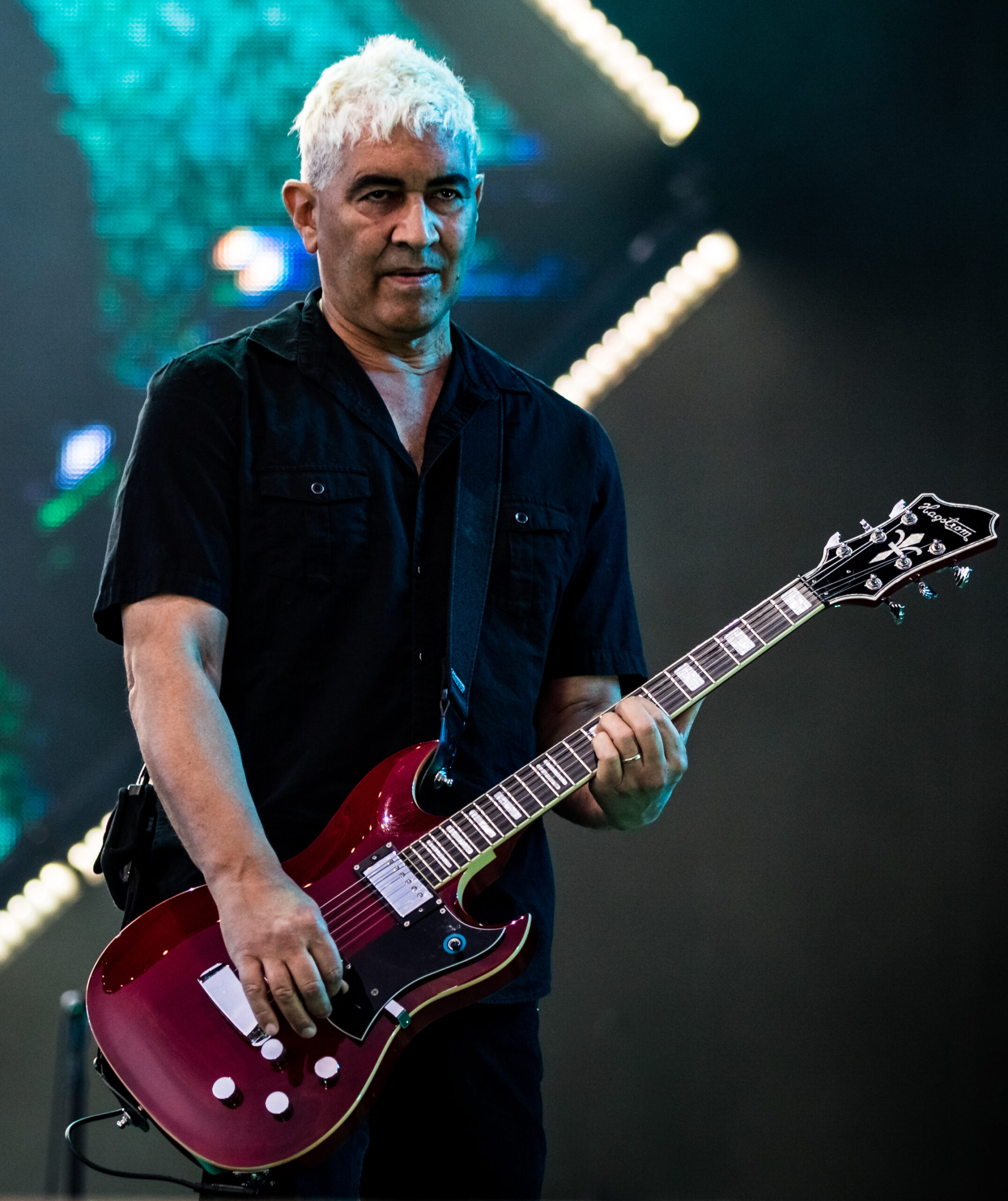
The Hagstrom Hero: Smear is famously associated with Hagstrom guitars, particularly vintage models like the Hagstrom III. He loves their unique look and powerful sound. He also frequently uses Gibson SG and Explorer models. His tone is typically a straightforward, powerful, high-gain rock sound, often achieved through Marshall or similar classic tube amps.
The Essential Moments
Pat Smear’s contributions are often felt as much as heard, providing the essential backbone to iconic songs across different eras.
Lexicon Devil (by The Germs)
This is pure, uncut LA punk rock fury. To approach playing this, the key is speed, aggression, and simplicity. It’s built on a few fast, raw power chords played with maximum energy and minimal finesse. Forget technique; this is all about capturing the chaotic, nihilistic spirit of early punk.
The Man Who Sold The World (with Nirvana on MTV Unplugged)
This iconic performance showcased a completely different side of Smear. His role here was crucial but understated. The approach is about providing solid, clean acoustic rhythm playing that perfectly supports Kurt Cobain’s lead vocal and acoustic work. It’s a masterclass in being the perfect sideman, adding texture and foundation without drawing attention away from the song’s core. His steady presence was vital during this legendary performance.
Monkey Wrench (by Foo Fighters)
This high-energy Foo Fighters anthem features one of their most iconic and driving riffs, often played by Smear live. To approach this, the key is relentless rhythmic precision and stamina. The main riff is a fast, alternate-picked pattern played with palm-muting. The challenge is to maintain that driving energy and perfect timing throughout the entire song, providing the powerful engine that makes the track explode.
In the end, Pat Smear’s legacy is that of a true rock and roll survivor and a punk rock icon. He is the crucial link connecting multiple generations of rock, from the dangerous alleys of LA punk to the biggest stadiums in the world. He is living proof that you don’t need blistering solos to be a guitar hero; sometimes, the most powerful thing you can do is lay down a killer riff with perfect timing and a whole lot of attitude. He is, and always will be, one of the coolest players in the game.
Cover Photo Credit “Pat Smear – Foo Fighters – Rock am Ring 2018 (cropped)” by Andreas Lawen, Fotandi is licensed under CC BY-SA 4.0