
Gordon Lightfoot’s 1976 masterpiece “The Wreck of the Edmund Fitzgerald” stands as one of the greatest story-driven folk ballads ever recorded. Built on an atmospheric acoustic arrangement and a driving modal rhythm, the song relies on a hypnotic progression that repeats across its narrative verses. Mastering this track is an incredible exercise in steady picking dynamics, bass note walks, and acoustic pacing as part of our broader features on mastering Gordon Lightfoot songs on guitar.
Before diving into the mechanics, listen to the original studio recording below to absorb Gordon Lightfoot’s signature vocal phrasing, timing, and acoustic tone.
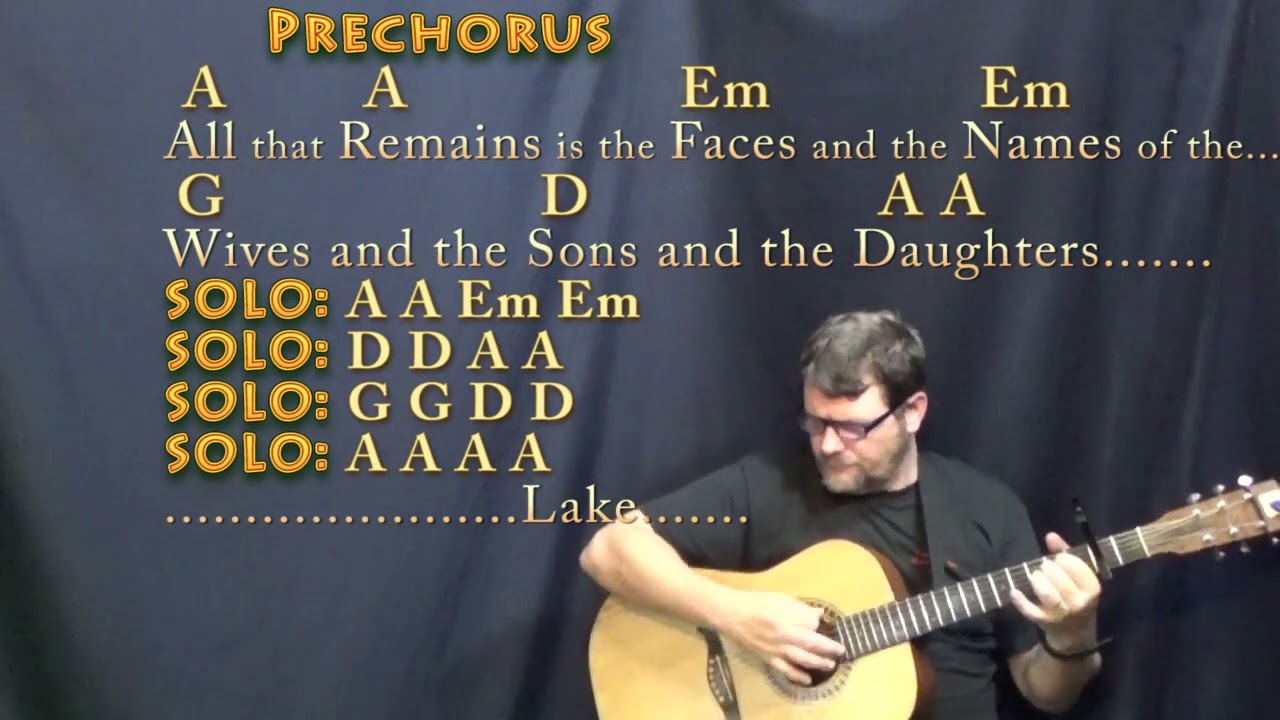
Once you are familiar with the studio track, you can follow along directly with this video chord guide play-along version to track the exact fretboard shapes, chord diagrams, and lyric cues. To play the song accurately, you need to understand its tonal key and master four core open-position chord shapes.
Key and Capo Setup
The song is performed in the key of B minor on the original recording. However, to keep open-position fingering accessible, place your guitar capo on the 2nd fret while keeping your instrument in standard tuning (E A D G B E). Positioning the capo at the 2nd fret allows you to play relative chord shapes in the key of A minor.
Chords You Need to Know
A Major (x02220): The primary modal anchor and home tonic chord of the song, providing the bright, ringing foundation that opens each verse phrase.
Em (022000): Delivers the moody, minor-key shift that moves the verse into its introspective storytelling progression.
G Major (320003): Acts as the harmonic lift in the middle of the chord sequence before stepping downward.
D Major (xx0232): Functions as the primary turnaround chord, guiding the rhythm back cleanly toward the home A tonic shape.
Quick Reference Chart
| Chord Name | Fret Diagram (Rel. to Capo) | Difficulty | Role in Progression |
| A | x 0 2 2 2 0 | Beginner | Home Key / Tonic Anchor |
| Em | 0 2 2 0 0 0 | Beginner | Minor Verse Transition |
| G | 3 2 0 0 0 3 | Easy | Harmonic Lift |
| D | x x 0 2 3 2 | Easy | Turnaround Chord |
Step-by-Step Song Lesson
Step 1: Master the Arpeggio & Strum Rhythm. The intro and verses rely on a balanced mix of arpeggiated picking and steady rhythmic strumming. Practice plucking the root bass notes on beats 1 and 3 before executing the down-down-up strumming pattern (Down, Down-Up, Down-Up) to lock in that hypnotic folk momentum.
Step 2: Execute the Main Chord Progression. Move smoothly through the core sequence: starting on A, dropping into Em, shifting to G and D, and resolving back to A. Focus on maintaining clean finger pressure so the open strings ring true without buzzing.
Step 3: Incorporate Bass Note Walk-Downs. As demonstrated in the video chord guide, adding specific bass note embellishments transforms the rhythm track. Watch for the designated bass transitions—such as moving from D down through F# into E minor using single-string alternate picking on the D, A, and low E strings.
Step 4: Manage Narrative Pacing. Because the song features numerous verses detailing the historic storm without a traditional chorus hook, dynamic control is everything. Keep the opening verses gentle and reflective, and gradually build your picking attack as the narrative describes the mounting gale.
Tone & Gear Breakdown
Gordon Lightfoot’s signature acoustic sound relies on a bright, resonant dreadnought guitar with clear treble separation.
String Selection: Use light-to-medium phosphor bronze strings to capture the crisp chime necessary for open-position A and Em chords.
Pick Attack: Employ a medium pick (.73mm) for articulate bass plucks and smooth arpeggio sweeps across the middle and treble strings.
Outro: Capturing the Spirit of the Ballad
“The Wreck of the Edmund Fitzgerald” remains a masterclass in folk guitar accompaniment. By combining steady arpeggio picking with thoughtful bass runs, you can recreate the haunting atmosphere of Lightfoot’s original performance and keep listeners engaged through every verse. Be sure to explore more fingerstyle techniques in our guide to mastering Gordon Lightfoot songs on guitar, check out our Songs To Learn directory, or view our full index on the site sitemap.