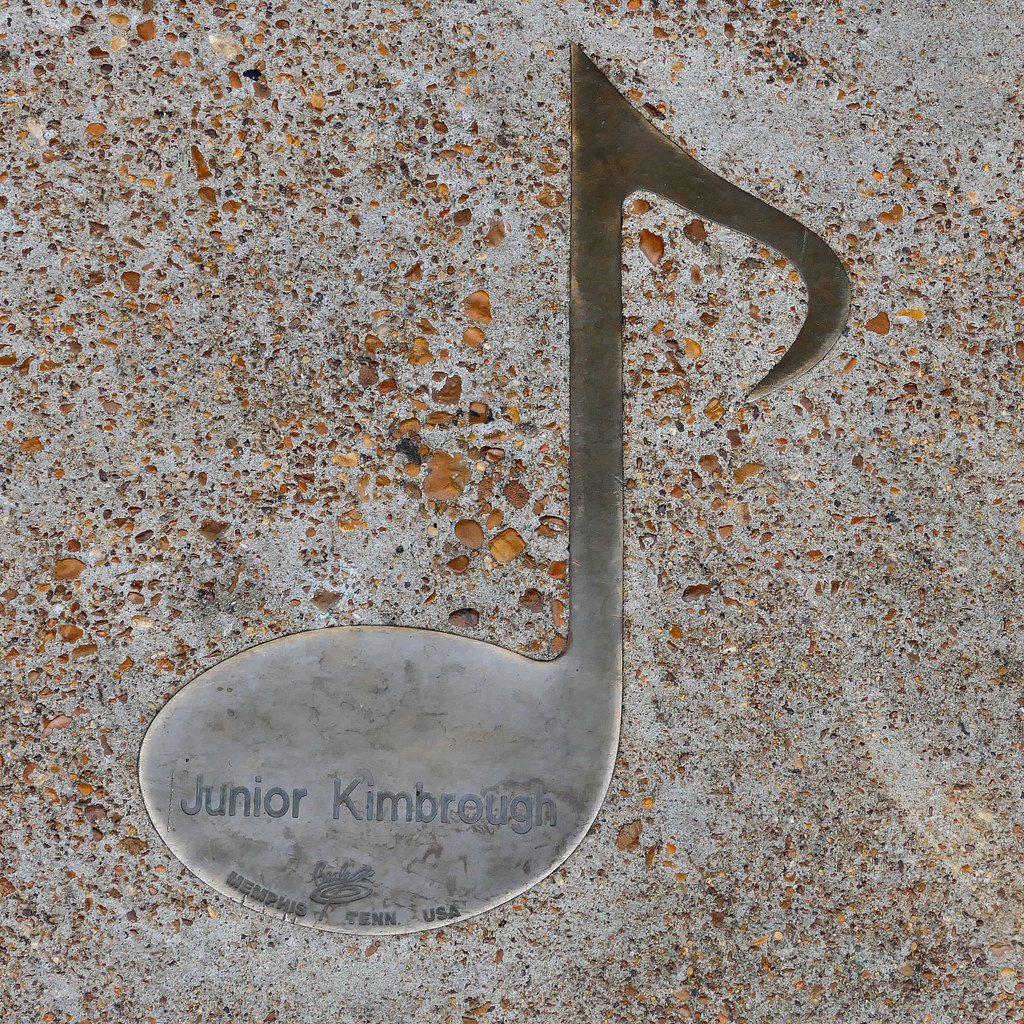
Welcome back to Guitardoor.com, where we celebrate the true, unvarnished originals who created their own musical universe. Today, we journey to the heart of the North Mississippi Hill Country to bask in the raw, hypnotic, and deeply influential sound of a true American original: the one and only David “Junior” Kimbrough. He was not a traditional bluesman in any sense of the word; he was a sonic shaman, the proprietor of his own legendary juke joint, and the master of a dark, mesmerizing, and trance-like style of blues that was as primal and powerful as the earth it came from.
The Sound of the Cotton Patch Drone
The music of Junior Kimbrough was a world away from the structured 12-bar progressions of Chicago or the acoustic storytelling of the Delta. His was the sound of the Hill Country—a raw, droning, and endlessly looping style of blues built on a single, hypnotic groove designed for all-night dancing. It was a dark, modal, and rhythmically complex sound that felt both ancient and futuristic. In the 1990s, the world finally discovered Kimbrough through the pioneering record label Fat Possum, which captured the raw, unadulterated sound of his juke joint. His music would go on to be a profound and direct influence on a new generation of rock artists, from The Black Keys and Jack White to Iggy Pop, who were all captivated by its raw power and uncompromising authenticity.
Anatomy of a Hypnotic Master
The guitar playing of Junior Kimbrough was a completely unique and deeply personal language. It was not born from theory or formal training; it was a raw, intuitive, and incredibly powerful style developed over a lifetime of playing in his own rural juke joint. To listen to Kimbrough is to be drawn into a hypnotic, swirling vortex of rhythm and drone. His playing was not about flashy solos or clean technique; it was about locking into a powerful, trance-like groove and staying there, creating a sound that was less a song and more a powerful, living atmosphere.
The Hypnotic Groove: Kimbrough’s style was built on a unique, thumb-driven fingerstyle technique. He would keep a steady, driving, and often syncopated bass line going with his thumb while his fingers played sharp, repetitive, and often dissonant melodic fragments on top. This created a complex, polyrhythmic effect that was the very heart of his hypnotic sound.
The Modal Drone: He almost never changed chords in the traditional sense. His songs were built on a single, droning, modal vamp that would repeat and evolve over long stretches, creating a powerful, trance-inducing effect.
The Unorthodox Tunings: A key secret to his sound was his use of unorthodox, “back porch” open tunings. While the exact tunings remain a subject of debate, they were essential to his ability to create the dark, droning, and otherworldly textures that defined his music.
The Juke Joint Rig: His gear was simple, functional, and perfectly suited to his raw sound. He often played a variety of pawn-shop electric guitars, most famously a Gibson ES-335. He plugged this into a small, solid-state Peavey amplifier, often a Bandit or a Pacer, and cranked it to get his signature raw, slightly fuzzy, and incredibly honest juke joint tone.
The Essential Trances
Junior Kimbrough’s classic recordings are the foundational texts of the North Mississippi Hill Country sound. To get inside his hypnotic world, these three tracks are absolutely essential.
All Night Long
This is the definitive Kimbrough track, a pure, uncut, immersion into his hypnotic, one-chord boogie. To approach playing it, the key is pure right-hand endurance and a deep understanding of groove. The entire song is a lesson in locking into a trance. The approach is to get the thumb playing that steady, driving bass pattern until it’s second nature, then slowly introduce the sharp, stinging melodic licks with your fingers. The goal is not to play a solo, but to become part of the relentless, hypnotic pulse.
Meet Me in the City
A slightly more structured but no less hypnotic track, this song is built on one of his most iconic and memorable riffs. The approach here is to master that main syncopated riff, which is a brilliant and tricky puzzle of thumb and finger independence. The key is to capture the raw, slightly behind-the-beat feel. The guitar part should have a loose, greasy swagger that is both incredibly cool and full of an underlying, dark tension.
Sad Days, Lonely Nights
This track showcases the deep, mournful, and incredibly soulful side of his playing. It’s a slow, smouldering blues that is pure, raw emotion. To approach this, the key is to focus on feel and space. Use your thumb to keep a slow, deliberate, and almost funereal pulse. The lead lines, played with the fingers, should be sparse, emotional, and full of his signature raw, slightly dissonant note choices. Don’t worry about being perfectly in tune; worry about conveying the deep, aching sadness of the song.
In the end, Junior Kimbrough’s legacy is that of one of the true, uncompromising giants of the blues. He was the undisputed king of his own musical universe, a master of the hypnotic groove whose raw, powerful, and deeply authentic music was a world unto itself. He was the vital link in the chain of Hill Country masters, a direct influence on modern torchbearers like Luther Dickinson, and a true American original whose dark, mesmerizing sound will continue to haunt and inspire for generations to come.
Cover Photo Credit “Junior Kimbrough” by Leo Reynolds is licensed under CC BY-NC-SA 2.0