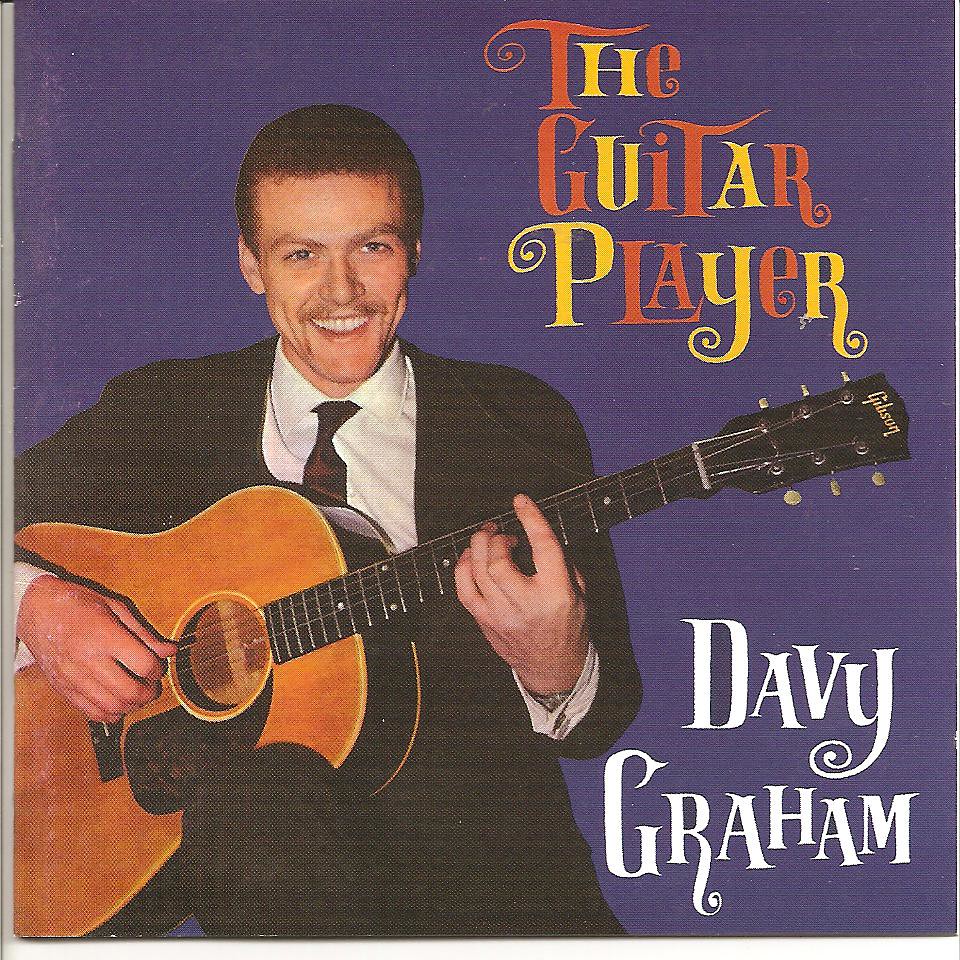
Davy Graham was a groundbreaking British guitarist whose immense influence fundamentally changed the way the acoustic guitar was played in the 20th century. Though often overlooked by mainstream listeners today, Graham is rightly considered the architect of the British folk-baroque style and the father figure of the UK’s acoustic guitar revival. His genius lay in his fearless fusion of traditional British folk melodies with American blues, modal jazz, and, most crucially, musical forms imported from North Africa and the Middle East. Graham was an innovator whose legacy is built on rhythmic complexity, harmonic sophistication, and a restless global curiosity.
The Signature Graham Style: DADGAD and Global Rhythms
Graham’s signature style is defined by two major innovations. First, he popularized and may have invented the DADGAD tuning (D-A-D-G-A-D), now known as Celtic tuning, which fundamentally liberated the instrument from standard tuning and inspired generations of folk, rock, and Celtic players. Second, his playing was rhythmically and harmonically unlike anything heard in the UK before. Inspired by time spent in Morocco, he mastered complex, non-Western rhythms and modal scales, weaving them into his blues and folk work. This style relied on sophisticated, polyrhythmic fingerpicking that often sounded like two guitarists playing at once, giving his music a constantly shifting, ethereal quality.
Three Essential Tracks to Hear the Genius of Davy Graham
To appreciate the depth of Graham’s innovation, these three tracks are essential listening:
First and foremost is “Anji” (1962). This instrumental composition is arguably the most influential British folk guitar piece ever written. It immediately became a standard for nearly every aspiring folk guitarist—including Bert Jansch and Paul Simon, A track showcasing Graham’s unique fingerstyle technique, melodic grace, and complex harmonic movement. It served as a definitive template for the folk-baroque sound.
Next, listen to “Maajun” (1965), which vividly demonstrates his deep immersion in world music. The title is a reference to a Moroccan edible preparation, and the music reflects his dedication to fusing traditional blues guitar with North African modal scales and irregular rhythms. It is a stunning early example of true global fusion played on the acoustic guitar.
Finally, explore “Cocaine” (1966). While the lyrics are traditional, Graham’s arrangement is radical. He transforms this old blues standard into a haunting, slow-burning piece infused with jazz-like improvisations and heavy modal textures. This track shows how he could take familiar material and completely re-imagine it through his unique tuning and cosmopolitan influences.
The Ultimate Rolodex: The Father of the UK Folk Scene
Davy Graham’s primary collaborators were the disciples he directly inspired. He is widely credited with kickstarting the careers of the guitarists who would define the next two decades of British folk. Most notably, he heavily influenced Bert Jansch, who learned “Anji” from him and went on to become an acoustic legend. Through Jansch, Graham’s influence passed to others, including John Renbourn (with whom Jansch formed Pentangle) and later, rock artists like Jimmy Page (who covered “Angie,” mistakenly believing it was “Anji”). Though he often preferred solo performance, his recordings became the blueprint for the entire British folk-baroque movement.
Conclusion: The Quiet Revolutionary
Davy Graham was a quiet, restless revolutionary who gifted the acoustic guitar a completely new musical vocabulary. His introduction of DADGAD and his brilliant fusion of cultures created a new paradigm for the instrument, proving that the modern acoustic guitar could be as rhythmically complex as a drum kit and as harmonically rich as a jazz piano. Though he may not have achieved the same commercial fame as those he inspired, every acoustic guitarist playing in an alternate tuning owes a debt to the brilliant, genre-bending genius of Davy Graham.
Cover Photo Credit “Davy Graham” by svennevenn is licensed under CC BY-NC-SA 2.0