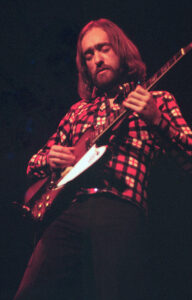

Welcome back to Guitardoor.com, where we celebrate the crucial players whose unique voices helped change the sound of popular music. Today, we focus on the American guitarist who brought a new level of melodic and blues-rock fire to the heart of reggae: the incredible Al Anderson. As the iconic lead guitarist for Bob Marley & The Wailers during their most legendary period of international stardom, Anderson was the soulful bridge, the player whose lyrical, rock-infused lead lines were an essential ingredient in bringing the message of reggae to a massive global audience.
The sound of Bob Marley & The Wailers in the mid-1970s was a powerful and revolutionary force, and Al Anderson’s arrival was a key part of its evolution. An American-born guitarist steeped in blues and rock, Anderson was a unique choice for the world’s premier reggae band. He wasn’t a traditional Jamaican rhythm player; he was a lead guitarist in the classic rock sense. His role was to weave melodic, vocal-like counter-melodies around Marley’s powerful vocals and the band’s hypnotic, deep-pocket groove. His blues-based phrasing and rock-oriented tone were the perfect “translator,” providing a familiar and incredibly soulful entry point for rock fans around the world, helping to catapult the band from a Jamaican phenomenon into a global musical movement.
The guitar playing of Al Anderson is the ultimate lesson in taste, melodic construction, and the art of perfectly fusing two distinct musical worlds. His genius was not just in what he played, but in how his playing served as the perfect emotional and melodic bridge between the raw, deep groove of reggae and the soaring language of rock and blues. He was a master of crafting solos that were not just a collection of licks, but were memorable, singable melodies in their own right, a quality that puts him in the same esteemed category of melodic masters as David Gilmour.
The Melodic Storyteller:
Anderson’s greatest gift is his incredible sense of melody. His solos and fills are always perfectly constructed, lyrical, and full of emotion. He uses his guitar to “sing” a parallel melody that complements and elevates Marley’s vocals.
The Blues-Rock Foundation:
His entire vocabulary is built on a deep foundation of American blues. His signature sound is defined by beautiful, soaring string bends, a sweet and controlled vibrato, and a flawless command of the pentatonic scale, all applied with incredible taste within the unique rhythmic framework of reggae.
The Gibson Sound:
His most iconic instrument from his time with The Wailers was a Gibson Les Paul Special. The thick, warm, and sustaining tone of the P-90 pickups in that guitar became his signature voice, providing the perfect warmth and power for his singing lead lines.
The Reggae-Rock Tone:
His tone was clean but powerful, often pushed with a touch of overdrive for his solos. A crucial element of his sound was his masterful use of effects, particularly the wah-wah pedal and the phaser, which he used to create the classic, swirling, and deeply soulful textures that defined 70s reggae-rock guitar.
To truly understand Al Anderson’s profound and beautiful contribution to the music of Bob Marley, these legendary tracks are absolutely essential.
“No Woman, No Cry” (from Live!)
This is it. The legendary live version from the Lyceum in London features what is arguably the most famous and beloved guitar solo in the history of reggae. It is a masterpiece of melodic construction and pure, unadulterated soul. To approach playing it, the key is to learn the melody note-for-note and focus entirely on the emotional delivery. It’s all about the perfect, soaring string bends and the sweet, singing vibrato. You must make the guitar weep with the same emotion as the lyrics.
“Crazy Baldhead”
This track from the iconic Rastaman Vibration album is a perfect showcase for Anderson’s brilliant and tasteful fill work. The approach here is a lesson in “less is more.” Use a wah-wah pedal and listen intently for the spaces between Marley’s vocal lines. The goal is to “answer” the vocals with short, punchy, and incredibly funky blues licks. It’s a masterclass in rhythmic placement and the art of the perfect, concise guitar statement.
“Rebel Music (3 O’Clock Roadblock)”
A gritty, soulful track from Natty Dread, this song features some of Anderson’s most blues-drenched and expressive playing. The approach here is to dig in with a more aggressive pick attack and a wider, more passionate vibrato. The fills and the solo are pure, raw blues feeling. The challenge is to channel that American blues attitude while staying perfectly locked into the deep, hypnotic, one-drop reggae groove.
In the end, Al Anderson’s legacy is that of the essential bridge builder. He was the perfect player at the perfect time, a soulful American bluesman whose lyrical, melodic, and rock-infused guitar playing was the crucial key that unlocked the door for millions of fans to enter the powerful and beautiful world of Bob Marley and reggae music. His sound is a permanent and beloved part of one of the most important musical legacies of all time.
Cover Photo Credit “Al Anderson 12-28-2013-25” by kevin s morris is licensed under CC BY-ND 2.0