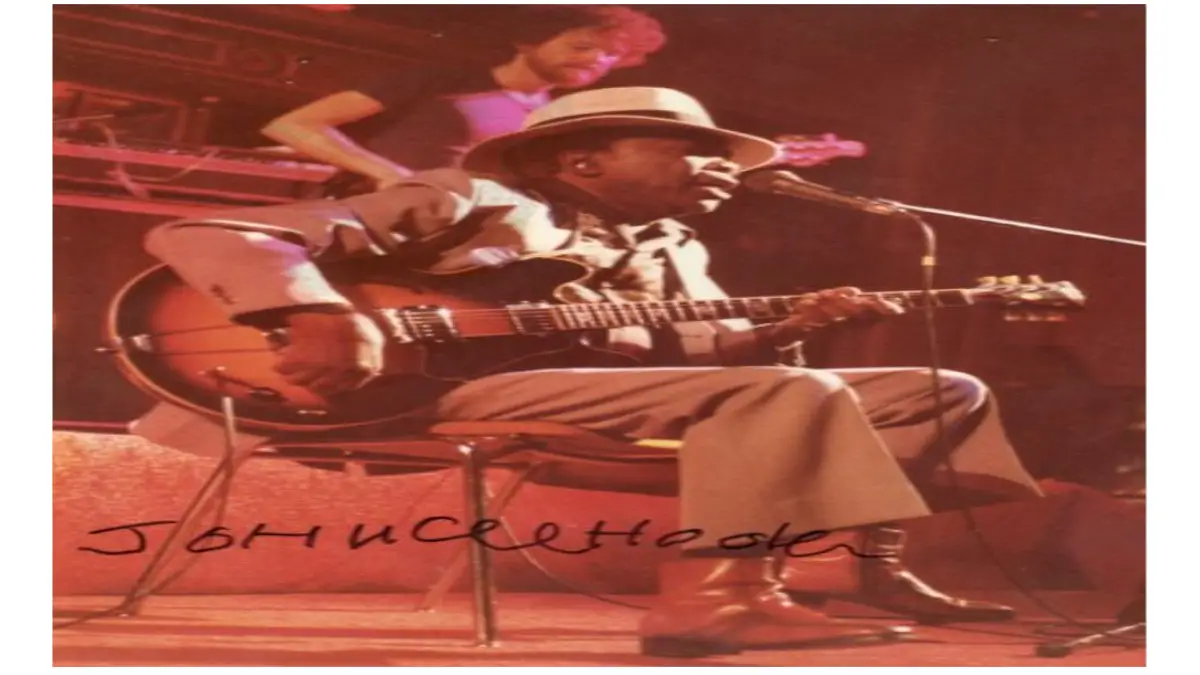
We call John lee Hooker the healer of blues due to the song title and the fact that the bluesman make a dying blues scene spring back into near mainstream. He is one of the most notable figures in blues history is Bluesman Supreme and guitarist legend John Lee Hooker who we are featuring in our guitar greats section Today. Some might even regard him as the co-founder of present-day electric blues, alongside Muddy Waters. Hooker’s style was simple yet unforgettable.
The bluesman could also adapt to changing times, gaining a new fanbase in every era. He inspired different generations of artists, including Dr. Ross in the ’40s as well as Van Morrison, The Yardbirds, Canned Heat, and The Animals in the ’60s. But although he was playing with greats like Robert Cray and Stevie Ray Vaughan in the 1980s, Hooker entered his most successful stint after turning 70. Until his passing, the bluesman was still recording and touring, going stronger than ever before.
The Story of John Lee Hooker Bluesman Supreme
The legend’s birthdate is a topic of discussion. While most believe he was born in August 1917, other sources indicate Hooker’s birth years as 1912, 1915, 1920, and even 1923. His birthplace is also a matter of contention–some claim it was Tutwiler, Tallahatchie County while others say he was born in Clarksdale to sharecropper parents. His father William, who was also a Baptist minister, hated the blues, calling it the “devil’s music”. But despite his father’s stance, Hooker’s earliest musical influence was from the church. He even built his first instrument from a tube and piece of string and with this began his journey as John lee Hooker the healer of the blues.
Video John Lee Hooker The Healer.
Hooker’s parents later divorced and his mother, Minnie, ended up with a local singer Willy Moore. It is Moore who introduced Hooker to the guitar and gifted him one of his first instruments. The bluesman even adopted his stepfather’s one-chord rhythm and owned it for the rest of his career. In a past Billboard interview, Hooker acknowledged his stepfather’s influence and admitted to emulating his style. The young singer would later leave home in search of better opportunities. Although he enjoyed performing with Moore, Hooker knew he couldn’t make it big in Mississippi.
Early Career of John Lee
The bluesman first settled in Memphis and played at house parties because he was too young for nightclubs. His next stop was Cincinnati where he gained stage experience by performing with gospel groups like the Big Six, Fairfield Four, and the Delta Big Four. However, it wasn’t long before Lee Hooker went back to his first love: blues.
By the time he was moving to Detroit, the singer was old enough for club shows. It’s in this city that he picked up the electric guitar and added an urban vibe to his country style. Part of this move was inspired by Elmer Barber, a music shop owner who recorded him in his makeshift studio. Producer Bernard Besman would listen to these recordings and recommend a shift from the acoustic to the electric guitar.
In 1948, Besman’s label Sensation Records released “Boogie Chillen”, marking Hooker’s big break. The demand for this song was too much for Besman to handle so he released it under Modern Records. But although Hooker didn’t receive royalties for the track, “Boogie Chillen” set the pace for the bluesman’s success. He even got the title “King of the Boogie”. The little earnings from his music pushed Hooker to record song variations for multiple studios. Even so, he used various aliases to bypass his contracts, including John Lee, Johnny Lee, Delta John, John Lee Cooker, and Texas Slim.
Musical Success and the Rise of the Bluesman Supreme
Hooker didn’t follow a standard beat. Instead, his tempo changed with every song, making it hard for backing musicians to keep up. Even so, he still played with Eddie Kirkland, Eddie Taylor, and other studio artists who could manage his quirks.
The King of the Boogie gained international acclaim in 1962 when he visited Europe for the American Folk Blues Festival. By 1964, his song “Dimples” had topped the UK charts, years after its release in the U.S. Hooker went on to collaborate with rock bands like the Groundhogs and Canned Heat, even recording joint albums like “Hooker ‘n Heat”, “Never Get Out of These Blues Alive”, and “ Endless Boogie”. By 1980, the bluesman was so big that he landed a role in “The Blues Brothers” as a street musician. The 90s also came with collaborative albums such as “Don’t Look Back”, “Mr. Lucky” and “Chill Out”.
Accolades
Bluesman Supreme Hooker’s career was marked with tons of recognition. For example, he entered the Blues Hall of Fame and Rock & Roll Hall of Fame in 1980 and 1991, respectively. In 1983, the National Endowment for the Arts honored Hooker with a National Heritage Fellowship, the country’s highest recognition in folk arts. This is in addition to his 1997 Hollywood Walk of Fame star, the 1996 Blues Foundation Lifetime Achievement Award, and the Mississippi Musicians Hall of Fame induction.
He also boasts Grammy awards for masterpieces like “I’m in the Mood”, “Chill Out”, and “Don’t Look Back”. That’s not to mention countless nominations and the 2000 Grammy Lifetime Achievement Award. Similarly, his songs “Boom Boom” and “Boogie Chillen” made it to the 500 tracks that influenced rock.
His Legacy Lives on the Best of John Lee Hooker
Although the legend passed away in 2001, blues fans all over the world continue to enjoy his music. That’s not to mention the numerous covers and samples. For example, Drapht, ZZ Top, and the Invincible Bullies have sampled his 1962 hit “Boom Boom”. Most recently, R&B sensation Brandy also sampled the song in her 2016 track “Beggin & Pleadin”.
Cover Photo Credit”Boogie On, John Lee Hooker (1917-2001)” by Mikey G Ottawa is licensed under CC BY-NC-ND 2.0