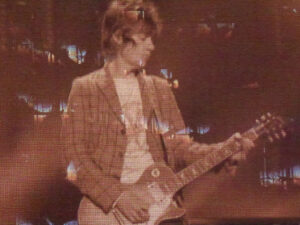
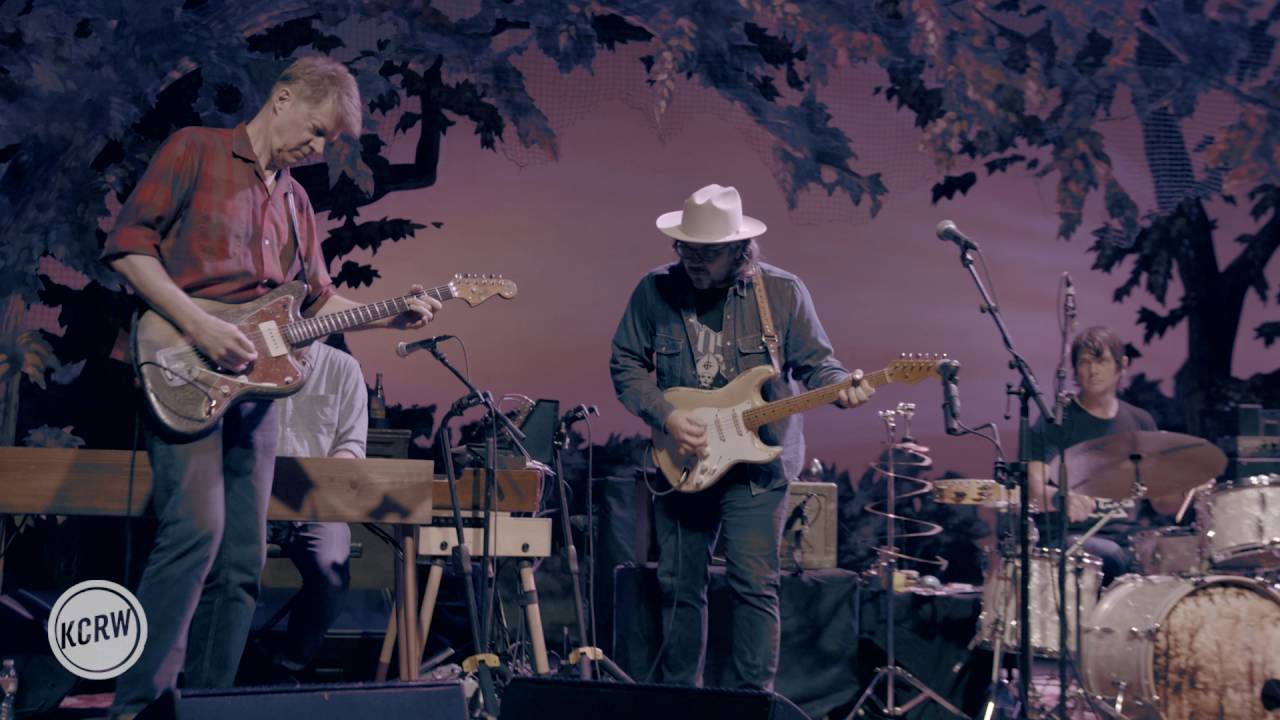
While many alternative rock guitarists hide behind walls of digital distortion, Jeff Tweedy has spent over three decades mastering the art of the “beautifully broken” tone. As the frontman and primary songwriter for Wilco (and previously the alt-country pioneers Uncle Tupelo), Tweedy redefined the boundaries of American roots music. In 2026, fresh off intimate solo acoustic tours and a celebrated run of residency shows with Wilco, Tweedy stands as a definitive blueprint for the modern singer-songwriter: a player who treats the guitar not just as an accompaniment, but as an extension of the lyrical narrative.
The Acoustic Backbone and Offset Precision
Tweedy’s guitar style is a fascinating study in contrast. On one hand, he is a master of the rhythmic “thumb-thump” acoustic strumming that drives Wilco’s most anthemic tracks. His signature acoustic tone is deeply tied to his love for vintage Gibson acoustics, particularly his beloved 1930s Gibson L-00 and his own Gibson Custom Shop Jeff Tweedy J-45. He plays these instruments with a percussive, heavy-handed attack that feels immediate and raw, cutting cleanly through complex studio arrangements.
When he plugs in an electric, however, Tweedy leans straight into avant-garde territory. He is a famous champion of offset guitars, most notably his signature Fender Jazzmaster in a striking Blue Agave finish. Tweedy treats the electric guitar as a texture machine. He rarely plays traditional, fluid blues scales; instead, his lead work is characterized by jagged, staccato lines, explosive feedback manipulation, and a reckless use of the Jazzmaster’s tremolo arm.
This dual capability—the ability to hold down a pristine acoustic pocket while executing unpredictable, high-energy electric noise—presents a masterclass in dynamic contrast. It is a philosophy we explore deeply across our profiles of versatile icons in the Blues Guitar Greats and rock circles, where technical precision always bows to the emotional needs of the song. Much like the session masters we cover like Jefferson Kewley, Tweedy knows that the most important note is the one that serves the lyric.
3 Essential Jeff Tweedy Songs
1. “Impossible Germany” While lead guitarist Nels Cline plays the legendary, soaring outro solo on this track, it is Tweedy’s interlocking rhythmic foundation that makes it work. Tweedy plays the dual-harmony guitar lines that mesh perfectly with Cline’s phrasing. The song is a premier example of “guitar dialogue,” showing how two completely different players can share a fretboard without stepping on each other’s toes—a collaborative spirit we also champion in the career of arena and theater veterans like Pete Friesen.
2. “Via Chicago” This track is the ultimate showcase of Tweedy’s avant-garde philosophy. While he performs a delicate, steady acoustic progression and delivers a vulnerable vocal melody, the rest of the band erupts into a chaotic wall of electric noise and drum fills. Tweedy’s ability to remain steady as the rhythmic anchor amidst a storm of sonic distortion is a masterclass in stage presence and compositional restraint.
3. “I Am Trying to Break Your Heart” The opening track of the seminal album Yankee Hotel Foxtrot highlights Tweedy’s love for acoustic textures mixed with industrial, lo-fi grit. The acoustic guitar is dry and percussive, acting almost as a drum, while layered noise swells around it. It reminds the GuitarDoor community that a great acoustic tone doesn’t always have to be pretty—sometimes, the grit in the wood is where the soul lives.
The Songsmith’s Fretboard
In 2026, Jeff Tweedy remains a vital reminder that the guitar is a tool for storytelling. Whether he is performing entirely solo with a single Gibson acoustic or fronting Wilco’s three-guitar assault on an arena stage, his focus never wavers from the song itself. For the GuitarDoor community, Tweedy is proof that you don’t need to be the fastest shredder on the planet to be a compelling guitar hero. Sometimes, a steady thumb, a vintage acoustic, and an honest story are all it takes to shift the landscape of modern rock.
External Resources