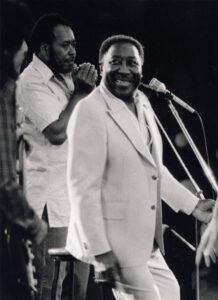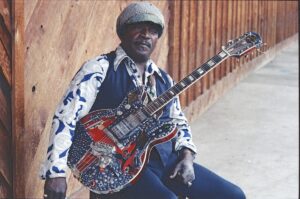
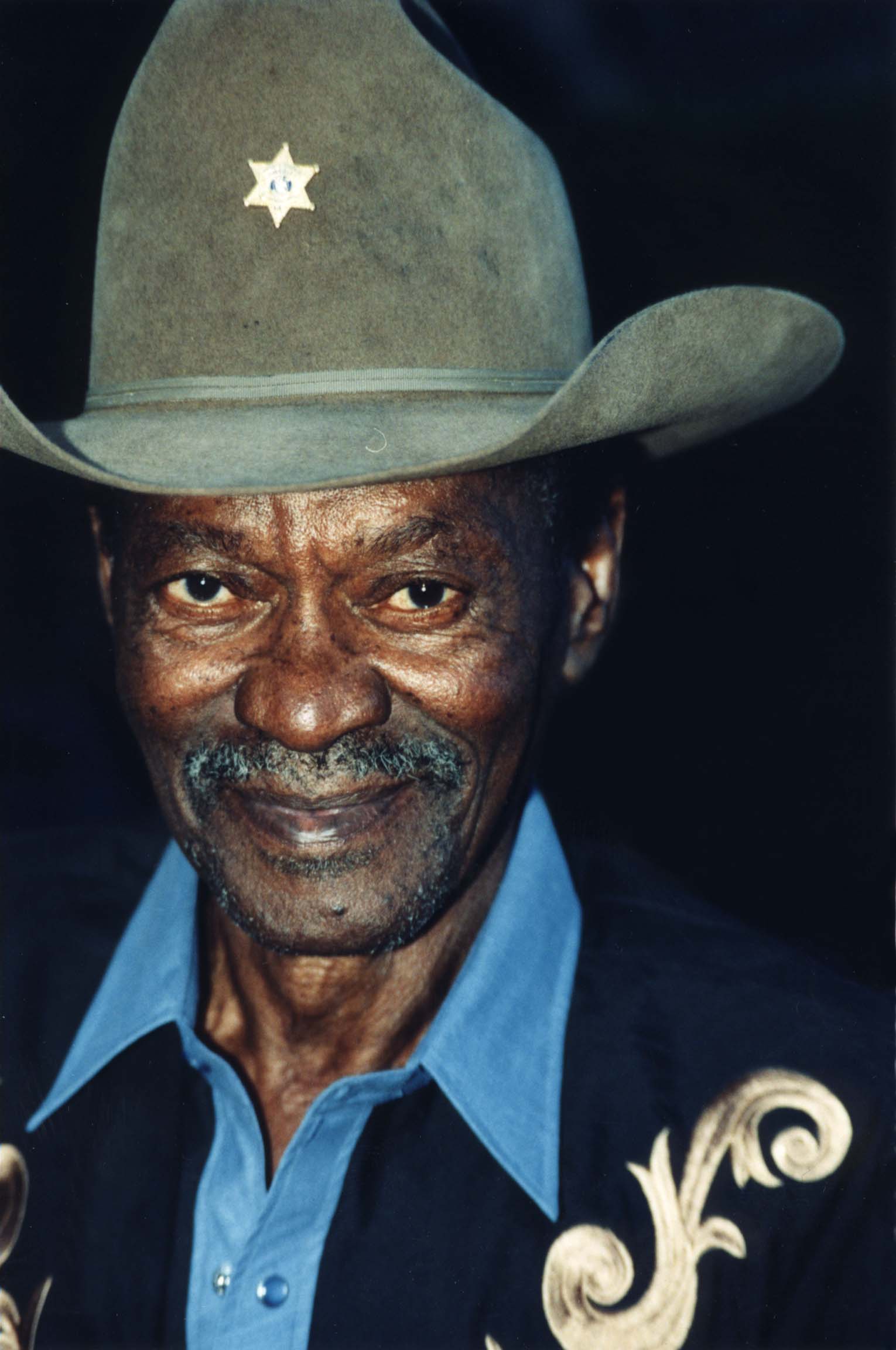
Clarence “Gatemouth” Brown. A multi-instrumental virtuoso and a Grammy-winning artist, Gatemouth was a Texas-born musical powerhouse who famously refused to be confined by genre. While rooted in the blues, he spent his six-decade career masterfully blending country, jazz, big-band swing, and Cajun music into a sound he proudly called “American Music, Texas Style,” leaving behind a body of work as vast and varied as the nation itself.
American Music, Texas Style
To understand Gatemouth’s musical style is to understand his fierce independence. He began his career in the late 1940s, emerging from the same vibrant Texas blues scene that produced his hero, T-Bone Walker. His early recordings for Peacock Records are treasures of jump blues, showcasing a fiery and fleet-fingered guitar style full of stinging, horn-like phrases and boundless energy. But right from the start, Gate was different. He bristled at being labeled a “bluesman,” feeling it was a commercial box that ignored the full scope of his musical loves.
His vision was far grander. He was a bandleader at heart, infusing his music with the sophisticated horn arrangements of big-band swing and the improvisational spirit of jazz. He had a deep love for country music, and its twang and storytelling were always present in his sound. Later in his career, he fully embraced his Louisiana roots, making the fiddle a co-star alongside his guitar and weaving the infectious rhythms of Cajun and Zydeco music into his repertoire. His performances were a masterclass in showmanship, whether he was unleashing a rapid-fire guitar solo, sawing away at a joyous fiddle tune, or blowing a soulful harmonica. Gatemouth wasn’t playing one genre; he was playing them all, creating a rich, seamless gumbo of American sound.
The Tools of a Musical Gumbo
Gatemouth’s technique was as unique as his musical philosophy. He was a master of many instruments, but his approach to the guitar was particularly distinctive. He famously eschewed a pick, instead developing a sharp, percussive attack using his thumb and fingers. This gave him incredible dynamic control, allowing him to coax a wide range of tones from his instrument. His single-note lines were precise and articulate, often played at blistering speeds, while his rhythm playing was a masterclass in swinging, syncopated chord work. He was also a frequent and strategic user of a capo, allowing him to change keys easily to suit his arrangements and vocal range.
While the guitar may have been his first love, the fiddle became an equally important voice in his music. He attacked it with the same verve and improvisational fire, often trading blistering solos between the two instruments during his live shows. His gear setup was chosen for clarity and versatility, to allow the nuances of his playing on multiple instruments to shine through. In his early years, he often played Gibson archtop guitars like the Byrdland, which provided the warm, yet articulate, tone needed for his jazz and swing leanings. Later on, he became closely associated with a heavily customized 1966 Fender Telecaster.
Unlike many of his contemporaries, Gatemouth’s sound was typically clean and clear, not heavily distorted. He preferred powerful amplifiers that provided ample clean headroom, allowing his intricate lines to cut through the mix without turning to mush. He was known to use classic Fender amps as well as Music Man amps later in his career. His setup wasn’t about effects or processing; it was about capturing the pure, honest sound of his hands on the instrument, whether it had six strings or four.
Essential Gatemouth: A Taste of Texas Style
Clarence “Gatemouth” Brown’s discography is a sprawling journey across the American musical map. To get a sense of his incredible versatility and infectious energy, these three tracks are a fantastic starting point.
“Okie Dokie Stomp”
“Okie Dokie Stomp,” released in 1954, stands as a high-octane masterpiece of jump blues and a definitive showcase for Clarence “Gatemouth” Brown’s virtuosity. As a blistering instrumental, the track is anchored by a driving horn section and a relentless swing rhythm, but it is Brown’s electric guitar work that takes center stage. He eschews the heavy distortion of later eras in favor of a clean, biting tone and sophisticated, horn-like phrasing that bridges the gap between Texas blues and big-band jazz. His fluid use of the finger-picking style and rapid-fire “chicken picking” runs influenced generations of guitarists, most notably Albert Collins and Stevie Ray Vaughan. Even decades after its debut, the song remains a quintessential example of Gulf Coast swing, capturing an infectious energy that makes it impossible to sit still.
“The Alligator Boogaloo”
While “Alligator Boogaloo” (often spelled Alligator Bogaloo) is most famously associated with jazz saxophonist Lou Donaldson, Clarence “Gatemouth” Brown recorded a blistering version of the song for his 1981 album Road Trip.
Gatemouth Brown’s rendition transforms the 1967 soul-jazz classic into a gritty, guitar-driven tour de force. While Donaldson’s original version featuring a young George Benson is defined by its laid-back, “boogaloo” groove and organ-drenched sound, Gatemouth injects the track with his signature Texas Swing energy. His version is notable for its sharp, percussive guitar attack and sophisticated phrasing, blending blues, jazz, and R&B. It became a staple of his later career, showcasing his ability to take a jazz standard and “Gate-ify” it with the same high-speed precision he used on “Okie Dokie Stomp.”
“Pressure Cooker”
Clarence “Gatemouth” Brown’s version of “Pressure Cooker” is the title track of his 1985 Grammy-nominated album, though it was originally recorded during his incredibly fertile sessions in France in the 1970s. Despite its name, the track is less of a “boiling over” of aggression and more of a masterclass in controlled, swinging intensity.
It is a quintessential Gatemouth instrumental that highlights his “Texas Swing” philosophy—blending big-band jazz sophistication with a gritty blues foundation. Backed by legends like jazz pianist Jay McShann and organist Milt Buckner, Gatemouth uses the track to showcase his signature “stinging” guitar tone. He often introduced the song live with a playful challenge: “This is for all guitar players, wherever you are… this is a very easy tune to play,” a classic bit of “Gate” irony considering the track’s complex, rapid-fire phrasing and impeccable timing.
Clarence “Gatemouth” Brown was a true American original, a musical maverick who followed his own muse for over half a century. He was a living bridge between the worlds of blues, country, and jazz, proving that these styles had more in common than what separated them. His fierce individuality and monumental talent serve as a timeless inspiration for any musician who dares to create a sound that is entirely their own.
Cover Photo Credit “Clarence ‘ Gatemouth ‘ Brown” by Kingkongphoto & www.celebrity-photos.com from Laurel Maryland, USA is licensed under CC BY-SA 2.0