Lonnie Johnson’s playing style was truly revolutionary, cementing his status as the first great guitar soloist in blues and jazz. Unlike the chord-strumming and bottleneck slide techniques common in early rural blues, Johnson pioneered a sophisticated, fluid single-string melodic approach. He used a flatpick with exceptional dexterity and articulation, allowing him to play intricate, fast-paced lines that sounded less like a rhythmic accompaniment and more like a singing voice. This vocal-like quality was further enhanced by his masterful use of string bending and a distinctive, controlled vibrato, techniques that would become the cornerstones of modern lead guitar in the decades that followed. His refined, city-blues sound often featured a clear, clean tone, showcasing a deep understanding of harmony that allowed him to effortlessly bridge the worlds of the raw blues and complex jazz.
💎 Lonnie’s Lyrical Gems: Three Essential Songs
Playing with the Strings
One of Johnson’s most celebrated instrumental pieces is “Playing with the Strings” (1928), which brilliantly showcases his innovative single-note soloing. This track is a masterclass in his clean technique, featuring a continuous, winding melody that demonstrates his vision of the guitar as a powerful, soloistic voice, years before electric guitarists would take up the mantle.
Hotter Than That
Another quintessential track is “Hotter Than That” (1927), a seminal jazz recording with Louis Armstrong and His Hot Five. Here, Johnson engages in a breathtaking call-and-response duet with Armstrong’s trumpet, demonstrating his ability to improvise complex, swinging phrases that perfectly complement a jazz ensemble, proving his versatility and advanced musicianship.
Tomorrow Night
Finally, his 1948 smash hit, “Tomorrow Night,” became his biggest commercial success, highlighting his smooth, urbane vocal style alongside his gentle, tasteful electric guitar fills. The song’s tender, sentimental ballad structure, underpinned by his sophisticated playing, proved his capacity to adapt and connect with a post-war rhythm and blues audience.
📜 A Life of Innovation and Enduring Legacy
Alonzo “Lonnie” Johnson was born on February 8, 1899, in New Orleans, Louisiana. He came from a musical family, initially focusing on violin before making the guitar his primary instrument. He gained prominence in the 1920s after winning a blues contest and signing with Okeh Records, becoming one of the label’s most prolific artists. His early career included groundbreaking collaborations with jazz giants like Louis Armstrong and Duke Ellington, as well as a legendary series of guitar duets with white jazz guitarist Eddie Lang (recorded under the pseudonym Blind Willie Dunn to circumvent segregation). Johnson’s career spanned five decades, though he struggled with lean times before being rediscovered during the 1960s blues revival. His most profound achievement was pioneering the single-string, note-by-note guitar solo, essentially creating the vocabulary for the modern lead guitarist.
His influence is massive and far-reaching: Robert Johnson (the Delta blues legend) was profoundly influenced by Lonnie’s records, borrowing from his lyrical themes and even telling people they were related due to his immense admiration. This makes Lonnie Johnson a key figure in bridging the Delta blues tradition with the sophisticated, urban style that would later define the electric blues. Legends like B.B. King, T-Bone Walker, and Charlie Christian openly acknowledged their debt to Lonnie Johnson’s melodic ingenuity and use of the instrument as a solo voice. His work also greatly impacted European jazz guitarists like Django Reinhardt.
To further explore the rich history of the blues guitar, you should also learn about the following influential artists: Robert Johnson (for Delta blues mythology and complex acoustic playing), T-Bone Walker (the quintessential electric blues pioneer), Muddy Waters (the father of Chicago electric blues), and the three Kings: B.B. King, Albert King, and Freddie King (for their essential contributions to modern blues phrasing and technique).
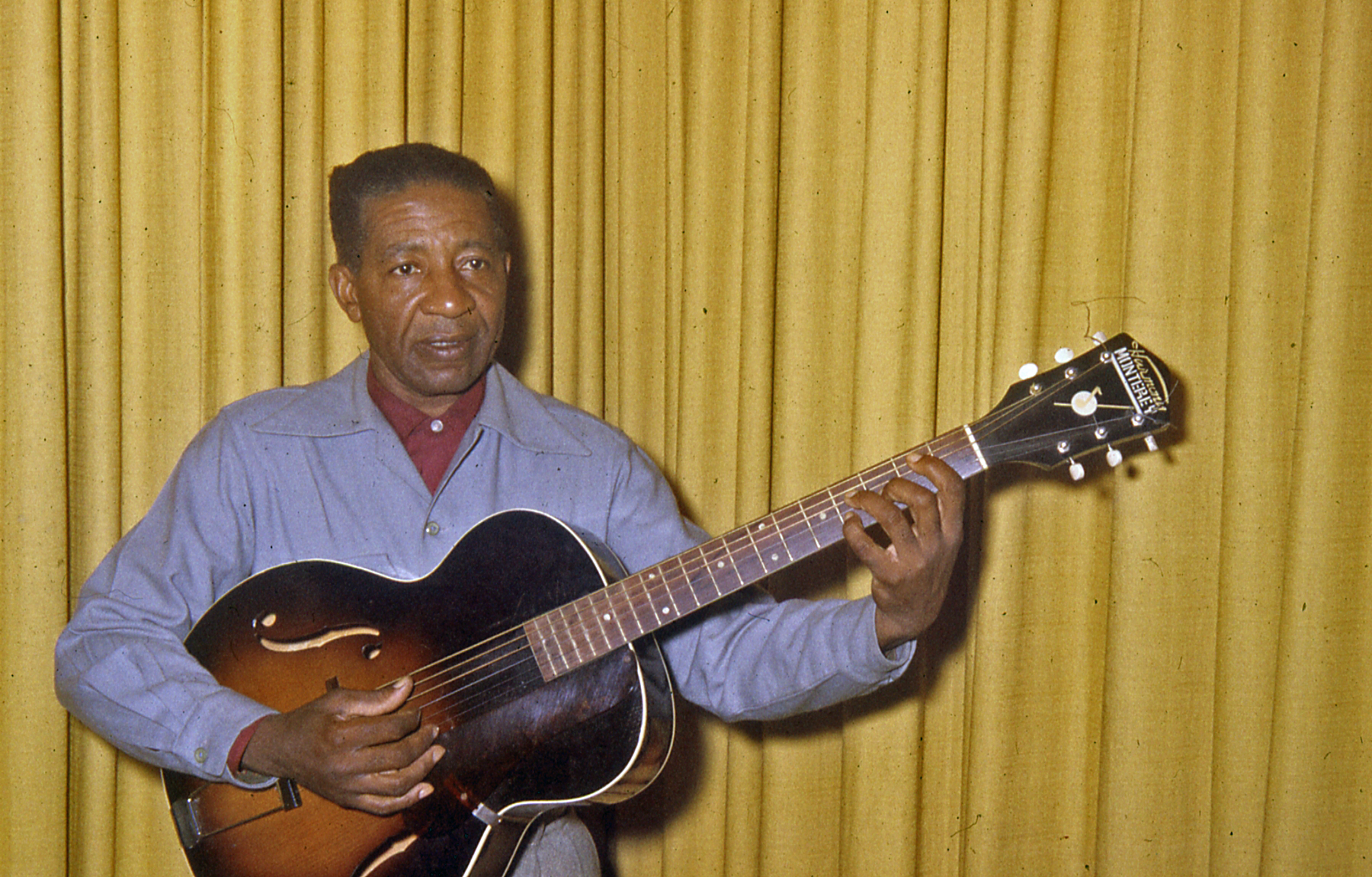
Cover Photo Credit “Lonnie Johnson at my place 1960” by Christiern Albertson at English Wikipedia is licensed under CC BY-SA 3.0