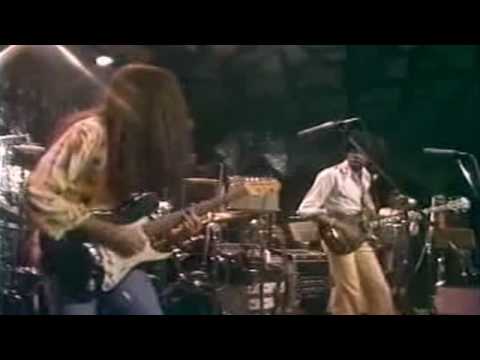
When discussion turns to the absolute peak of 1970s jazz-fusion, Ray Gomez stands as one of the most explosive, criminally underappreciated guitarists to ever pick up a Stratocaster. While his extensive session resume spans work with everyone from Chaka Khan to Jack Bruce, his defining moment on record remains his monumental performance on Stanley Clarke’s 1976 landmark album, School Days.
Taking on the iconic title track, Gomez delivered a masterclass in tone, phrasing, and raw aggression that redefined the boundaries of modern electric lead playing in a high-octane instrumental setting.
The Collision of Blues Grit and Fusion Intellect
What made Ray Gomez’s work on “School Days” so breathtaking wasn’t just his blistering speed; it was the sheer attitude he brought to a genre that could sometimes lean too heavily into clinical technique. Influenced heavily by Jimi Hendrix, Eric Clapton, and the classic blues Kings, Gomez injected a fierce, emotional bite directly into Stanley Clarke’s heavy funk-fusion arrangements.
On the track “School Days,” Gomez was pitted against Clarke’s staggering, lead-bass virtuosity. Rather than retreating into simple background comping, Gomez matched Clarke note-for-note with razor-sharp rhythm hits, aggressive double-stops, and a lead tone that screamed out of the speakers. Executed live in the studio in just one or two takes with legendary producer Ken Scott at the desk, the recording captures raw, unadulterated musical magic captured right on the floor.
Anatomy of the “School Days” Solo
Gomez’s lead break on “School Days” remains required listening for any serious student of fusion and rock guitar. Several key elements make this solo an absolute tour de force:
Whammy Bar Expression: Taking direct inspiration from Hendrix’s “Machine Gun,” Gomez used his Stratocaster’s tremolo arm not for cheap gimmicks, but to create vocal, howling pitch bends and expressive, wide vibrato that felt deeply emotional.
Pentatonic Speed & Chromatic Voicings: His soloing bridged traditional minor pentatonic blues runs with complex chromatic passes, blending raw pentatonic fury with sophisticated jazz harmony.
Attacking Tone: Plugging his vintage Fender Stratocaster directly into cranked amplifiers, Gomez achieved a biting, mid-forward crunch that maintained pristine string definition even during rapid-fire, wide-interval runs.
An Enduring Guitar Legacy
Though Ray Gomez often operated as a “musician’s musician”—a private, deeply expressive player revered by peers like Joe Bonamassa and his work on School Days solidified his legend forever. He proved that a player could bridge the intellectual demands of high-level jazz fusion with the unbridled, soul-stirring power of rock ‘n’ roll. Much like how other master arrangers and legendary guitar slingers build distinct sonic landscapes, Gomez’s work with Stanley Clarke remains a masterclass in tone, timing, and unyielding passion.