Pat Metheny is a name that stands completely alone in the modern jazz canon. Far from being a traditionalist bound by rigid genre formulas, his radical approach to composition and sonic texture has made him one of the most polarizing and brilliant figures in guitar history. A massive part of this creative longevity stems from his chameleonic nature; Metheny’s collaborations and musical partnerships have not only defined his own career but have continuously altered the trajectory of contemporary jazz fusion.
This profile explores the vast creative ecosystem of Pat Metheny, tracking his profound influence in the jazz world and his contributions to music through high-stakes creative relationships. From the cinematic landscapes of the legendary Pat Metheny Group to avant-garde subversions alongside free-jazz pioneers, Metheny treats the guitar as an open-ended dialogue. His historic partnership with the late keyboardist and composer Lyle Mays remains the definitive centerpiece of this journey, establishing a production standard that changed instrumental music forever.
Whether analyzing the delicate, heartbreaking lines of “September 15th”—his iconic tribute to pianist Bill Evans—or his aggressive work with Ornette Coleman and Charlie Haden, Metheny’s career is defined by constant artistic reinvention. This article serves as a comprehensive resource for long-time audiophiles and new listeners alike, offering an analytical deep dive into his discography, global touring legacy, and pioneering studio ethos.
The Genius of Pat Metheny
What sets Pat Metheny apart is his uncanny capacity to make highly complex, sophisticated jazz structures sound inherently lyrical. His genius lies in a rare compositional balance: weaving advanced, shifting harmonic movements into melodies that feel as expansive and open as the American Midwest. This distinctive narrative depth reflects his upbringing in Lee’s Summit, Missouri, grounding his fluid improvisations with a clear sense of place and story.
Equally vital to his legacy is his fearlessness regarding technology. Metheny was among the absolute first jazz guitarists to embrace the Roland GR-300 guitar synthesizer, turning a widely dismissed piece of hardware into a soaring, trumpet-like lead voice that became his sonic signature. From acoustic folk and symphonic tapestries to intense, abrasive noise experiments, his career over the last four decades proves that true musical genius is an ongoing process of evolution.
Early Life and Musical Beginnings
Born on August 12, 1954, Metheny grew up in an environment rich with brass and classical music. Alongside his brother Mike, who would become an accomplished professional flugelhornist, Pat was exposed to a vast array of musical forms early on. By the time he picked up the guitar at age twelve, his obsession was total. He rapidly absorbed the vocabulary of bebop, developing a mature style with staggering speed.
The turning point arrived when a teenage Metheny immersed himself in the legendary jazz club scene of nearby Kansas City. At just fifteen years old, he was already sharing the stage with seasoned local masters. This trial-by-fire environment gave him a practical, deeply physical understanding of jazz rhythm and improvisation long before he ever stepped foot into a professional conservatory.
Rise to Fame with the Pat Metheny Group
In 1977, Metheny joined forces with a young, extraordinarily gifted pianist named Lyle Mays. This meeting spawned the Pat Metheny Group (PMG), an ensemble that completely broke the existing mold of jazz fusion. While contemporary groups of the late ’70s focused on aggressive, funk-driven technical displays, PMG prioritized cinematic storytelling, rich acoustic textures, and pristine digital production values.
Their self-titled debut and landmark follow-ups like Offramp and Still Life (Talking) catapulted them from jazz club favorites to stadium-filling festival headliners. The group’s sound relied entirely on the telepathic interplay between Metheny’s singing guitar lines and Mays’ lush, orchestral synthesizer voicings—a legendary chemistry that sadly reached its final curtain with Mays’ passing in 2020.
Signature Sounds and Styles
Metheny’s tone is instantly recognizable to anyone with an ear for jazz. Rather than employing the bright, mid-range bite common in traditional archtop setups, he favors a warm, round, heavily modulated sound with a slight digital delay. His phrasing is heavily influenced by horn players, featuring long, sweeping legato lines that bypass standard guitar patterns in favor of sophisticated vocal melodies. His constant boundary-pushing mirrors the broader evolution of the instrument; to see how his ethos aligns with modern industry shifts, look no further than our analysis of the digital guitar landscape and what players are searching for right now.
Rhythmically, Metheny is an absolute daredevil, drifting effortlessly through odd meters and complex polyrhythms while maintaining a relaxed, flowing pocket. He is a master of structural dynamics, shifting seamlessly from delicate acoustic fingerpicking on a custom multi-string Pikasso guitar to a roaring, synthesizer-driven electric onslaught. His improvisations are celebrated because they are entirely non-indulgent—every solo is constructed like a miniature composition with a clear beginning, middle, and emotional climax.
The Pat Metheny Guitar Model
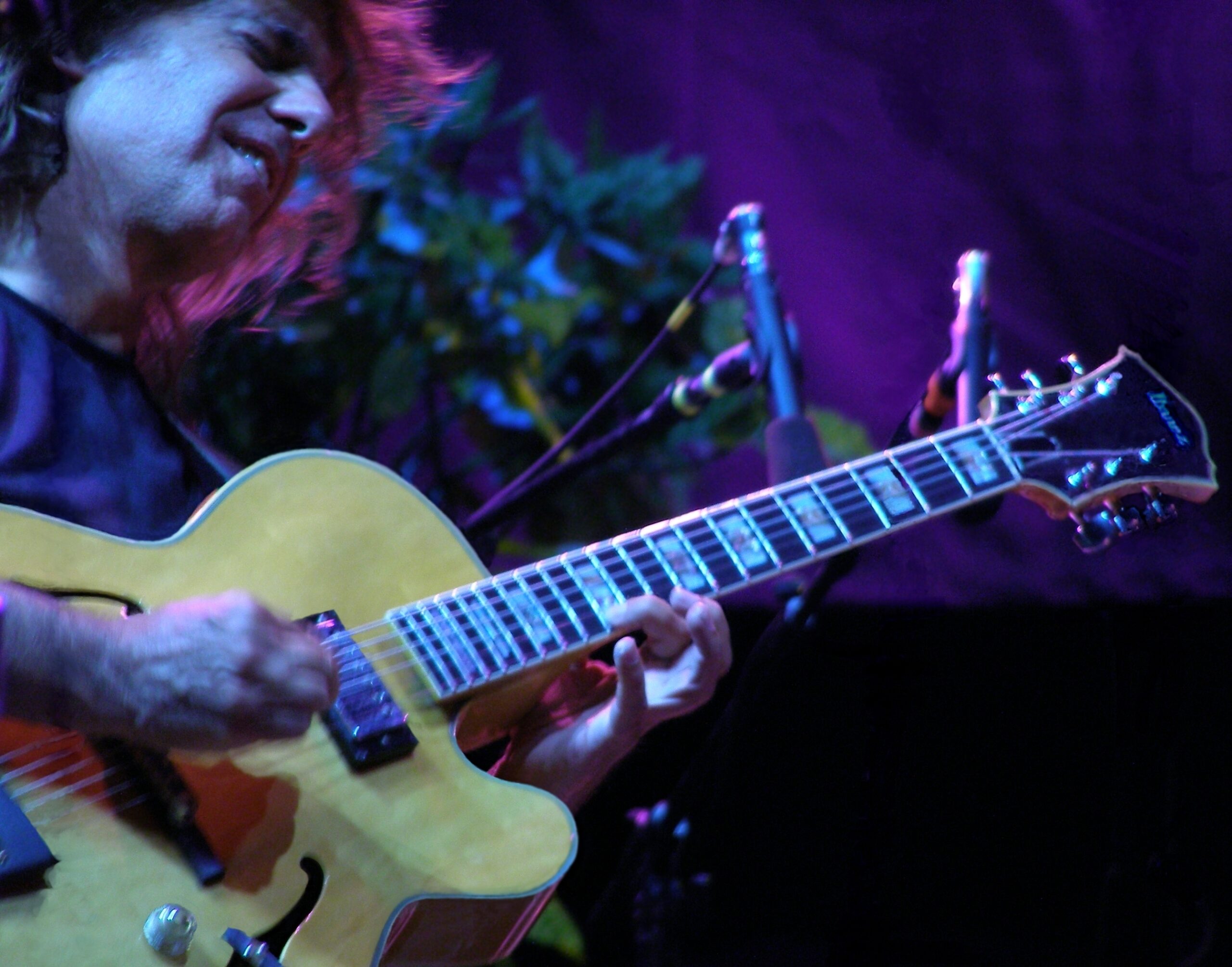
Metheny’s relationship with his primary instrument is intensely personal. For decades, his main companion was a heavily modified, battle-scarred Gibson ES-175 held together with duct tape. Seeking to capture that specific magic in a more stable touring format, he partnered with Ibanez to develop the acclaimed PM signature hollow-body series. Custom-built to handle his aggressive right-hand attack, these instruments feature a thick spruce top and maple back and sides, generating the precise acoustic resonance and fat, woody sustain required for his dense chord-melody passages.
Innovations in Jazz Guitar
Metheny has spent his life expanding the instrument’s sonic boundaries. Beyond his pioneering work with the Roland guitar synth, he made waves with the Orchestrion project—a massive, custom-built stage rig of solenoid-driven acoustic instruments, marimbas, and percussion all controlled directly via his guitar strings through MIDI. His relentless gear experimentation shows an uncompromising demand for technical precision. Even when managing his touring rigs, his approach mirrors the uncompromising mindset detailed in our breakdown of the road-ready guitar tuners that players actually reach for in 2026.
Iconic Collaborations
While the Pat Metheny Group provided his main commercial anchor, Metheny’s artistic growth has been fueled by an astonishingly diverse array of side projects. He views collaborative work not as a casual jam session, but as a total immersion into another musician’s universe. These high-level creative unions have repeatedly forced him out of his stylistic comfort zone, resulting in some of the most challenging and acclaimed records in jazz history.
The Avant-Garde Partnership with Ornette Coleman
In 1985, Metheny shocked the jazz establishment by teaming up with free-jazz iconoclast Ornette Coleman. The resulting album, Song X, was a fierce, chaotic, and jaw-dropping piece of avant-garde art. Coleman’s revolutionary “harmolodic” concept completely dismantled conventional notions of key centers and chord changes. Rather than backing away, Metheny leaned directly into the storm, matching Coleman’s frantic saxophone shrieks with industrial, distorted guitar-synth textures that permanently shattered his image as a safe, mainstream player.
Cross-Generational Work with Brad Mehldau
Decades later, Metheny sought out a different kind of challenge by partnering with piano virtuoso Brad Mehldau. This cross-generational meeting of minds resulted in a pair of breathtaking albums that highlighted their shared lyrical sensibilities. Mehldau’s complex, polyphonic left-hand lines provided a fascinating counterpoint to Metheny’s soaring hollow-body acoustic work. The tracking showcased a master guitarist perfectly willing to step back, listen, and adapt to the brilliant instincts of a younger generation.
Other Notable Collaborations
The list of legends who have shared studio space with Metheny is staggeringly vast. His acoustic duets with bassist Charlie Haden on the Grammy-winning Beyond the Missouri Sky stand as a masterclass in quiet, starkly beautiful minimalism. In the pop and folk realm, his contributions to Joni Mitchell’s live masterwork Shadows and Light brought a distinctive jazz fluency to her structural arrangements. He has even traveled far past Western jazz traditions, recording an acclaimed cross-cultural project alongside vocalist Anna Maria Jopek that seamlessly intertwined fusion improvisation with traditional Polish folk melodies.
The Emotional Depth of “September 15th”
Among the hundreds of compositions in Metheny’s massive discography, the instrumental “September 15th” holds a deeply sacred place for guitar purists. Recorded alongside Lyle Mays for their 1980 duo album As Falls Wichita, So Falls Wichita Falls, the track is a heart-wrenching acoustic elegy written immediately following the tragic death of jazz piano giant Bill Evans. The title marks the exact date of Evans’ passing, and the music carries that immediate weight of grief and profound remembrance.
The track is built on an incredibly delicate, spacious arrangement where Metheny’s nylon-string classical guitar weaves lines over Mays’ swelling, ambient synthesizer canvas. It features no driving rhythm section or flashy technical displays; instead, it relies entirely on negative space and pure emotional phrasing. It is an absolute masterclass in sonic storytelling, demonstrating Metheny’s rare ability to connect with an audience on a deeply raw, human level without uttering a single word.
Touring the World: Pat Metheny on Stage
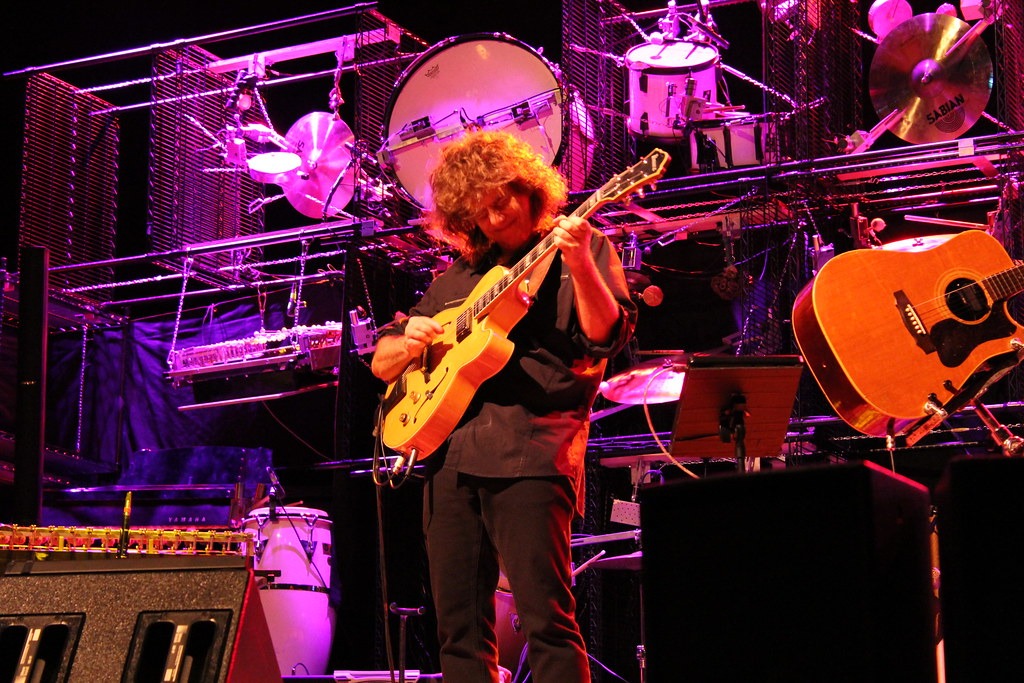
To truly understand Pat Metheny, you have to witness him live on a stage. Known for maintaining one of the most punishing and relentless touring schedules in the music industry, he treats live performance as an interactive workshop. His concerts are legendary for their stamina, routinely crossing the three-hour mark without a single drop in musical intensity or structural focus.
Metheny’s live setlists are masterfully curated marathons, effortlessly blending brand-new avant-garde material with decades-old fan favorites. What makes these global tours so compelling is his absolute refusal to rely on nostalgia. He constantly re-arranges his classic catalog, giving his ensemble complete freedom to subvert the original studio recordings. This electric, unpredictable atmosphere guarantees that audiences are witnessing a genuine, singular creative moment rather than a rehearsed recital.
Live Performances and Audience Experience
Attending a Metheny show is a completely immersive sonic journey. He intentionally creates an intimate, collaborative rapport with the crowd, often walking out on stage entirely alone with an acoustic guitar to play a quiet medley before bringing out his full, high-octane touring band. The venue’s atmosphere transitions seamlessly from a hushed, reverent listening room to an explosive, multi-layered fusion arena. It is this profound dynamic range that keeps generating generational loyalty among fans worldwide.
The Pat Metheny Tour: What to Expect
A night on a Metheny tour is a complete sonic adventure. Audiences can expect a staggering display of technical precision that never once cold-shoulders emotional depth. He consistently surrounds himself with world-class backing prodigies, challenging his bandmates to match his relentless improvisational pace and leaving concertgoers thoroughly inspired by the sheer power of live music.
Awards and Recognition
The global critical consensus on Pat Metheny’s legacy is backed up by an unparalleled mountain of professional accolades. He holds the staggering historical distinction of winning 20 Grammy Awards across a multitude of entirely different categories—including Best Rock Instrumental, Best Jazz Fusion Performance, and Best Contemporary Jazz Album. This cross-genre recognition highlights a chameleonic ability to innovate wherever his musical curiosity takes him.
Beyond his massive trophy case, Metheny’s lifetime achievements have been solidified through honorary doctorates from elite institutions like the Berklee College of Music, alongside high-profile Hall of Fame inductions. Yet, his true validation isn’t found in gold statuettes or academic titles; it resides in his massive, permanent impact on the DNA of modern guitar playing, setting a gold standard for technical discipline and fearless creative independence.
Educational Contributions and Influence
Pat Metheny’s dedication to the guitar extends far past the studio walls and festival stages. He is an intensely passionate educator who has spent decades nurturing the next generation of musical innovators. As the youngest teacher in the history of both the University of Miami and the Berklee College of Music, his academic legacy is anchored in a highly practical, performance-driven philosophy.
Through intensive international masterclasses and workshops, Metheny demystifies complex jazz theory by focusing heavily on the mental mechanics of real-time improvisation. He routinely discourages his students from simply copying his signature licks, pushing them instead to build an individual sonic identity and aggressively break down existing generic boundaries. By blending rigorous academic discipline with profound emotional expression, Metheny ensures that his visionary approach to the instrument will continue to inspire musicians across the globe for generations to come.