
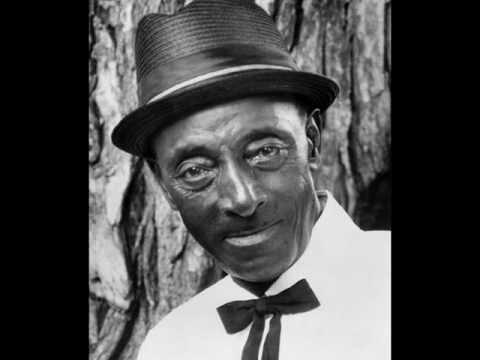
In the history of country blues, few names carry the raw, percussive weight of Mississippi Fred McDowell. While many of his contemporaries leaned into the polished, horn-driven structures of urban electric blues, McDowell remained a fierce guardian of the traditional, hypnotic style native to the hills east of the Mississippi Delta. He is an essential pillar of the roots music community—a player who famously declared, “I do not play no rock and roll,” yet inadvertently laid down the rhythmic blueprint that blues-rock legends would spend decades trying to replicate.
Whether tracking down his original acoustic sessions or analyzing his late-career transition to a cranked electric amplifier, McDowell’s work represents the absolute raw tissue of American music. His ability to build a towering sonic structure out of a single recurring chord voicing sets him apart as one of the most stylistically pure artists to ever pick up a guitar.
The Bottleneck Attack and the Trance Groove
McDowell’s guitar style is a definitive masterclass in rhythmic autonomy and emotional urgency. Unlike Delta players who favored complex chord progressions or ragtime-infused fingerpicking, McDowell focused on the North Mississippi “Hill Country” approach: a relentless, repetitive groove that functions like a trance.
His technical formula was built on a brilliant, driving separation of his thumb and fingers:
- The Steady Bass: His thumb maintained an unwavering, driving rhythm on the low E and A strings, acting as the heartbeat of the song.
- The Vocal Slide: Using a smooth bottleneck worn on his ring finger, he would slide up and down the higher strings, mimicking his vocal lines with uncanny accuracy.
Playing primarily in open tunings (such as Open G or Open D), McDowell transformed his acoustic—and later, his electric Gibson Trini Lopez—into a percussive engine. His slide work wasn’t about sweet, melodic embellishments; it was sharp, stinging, and deeply visceral. This ability to completely command a room using just a rhythmic thumb-thump and a raw slide voice is an artistic philosophy we explore deeply across our profiles of versatile icons like Stef Burns: The Versatile Virtuoso.
Much like the session legends we cover like Jefferson Kewley, McDowell knew that the most powerful note is the one that directly serves the story. He didn’t mask his playing behind walls of complex music theory; instead, he squeezed infinite expression out of micromovements along the fretboard, using the cold steel or glass of his slide to mimic the microtonal inflections of the human voice.
3 Essential Fred McDowell Recordings
1. “You Gotta Move” This is perhaps McDowell’s most famous composition, immortalized by The Rolling Stones on their 1971 album Sticky Fingers. McDowell’s original recording is a hauntingly sparse masterpiece of slide guitar. Played with a slow, deliberate cadence, the song demonstrates how a single, perfectly phrased bottleneck lick can carry more weight than a hundred fast notes, showcasing the exact fire we love to celebrate in our Blues Guitar Greats section.
2. “Shake ‘Em On Down” First captured by folklorist Alan Lomax during his historic 1959 field recording sessions, this track introduced McDowell to the wider world. Driven by a fast, syncopated rhythm, his thumb sets a blistering pace while his slide cuts through the air with aggressive, metallic bites. It is the definitive blueprint for the Hill Country trance-blues style.
3. “Write Me a Few of Your Lines” A stellar display of McDowell’s vocal-and-guitar dialogue. His bottleneck response lines match his vocal phrasing note-for-note, creating an intense call-and-response dynamic. The track serves as a brilliant reminder to the GuitarDoor community that great guitar playing doesn’t require complex music theory—it requires an ironclad internal clock and absolute emotional conviction, a trait shared by stage and arena veterans like Pete Friesen.
The Acoustic vs. Electric Evolution
When McDowell was first recorded on his front porch in 1959, he was playing a borrowed acoustic guitar. This initial wave of acoustic recordings established him as a folk-blues superstar during the American roots revival. However, McDowell was never an antiquarian museum piece. As soon as he could, he plugged in, adopting a red electric Gibson Trini Lopez guitar and plugging directly into small, overdriven tube amplifiers.
This shift to electric gear didn’t dilute his sound; it amplified the inherent violence and urgency of his rhythm. The sustained distortion of an electric amplifier allowed his bottleneck lines to scream with a vocal-like sustain, bridging the historical gap between rural front porches and modern rock arenas. This transition from acoustic traditionalism to high-energy electric performance is a creative path shared by many artists we cover, matching the sonic evolution of pioneers like Quinn Sullivan, who similarly moved from traditional blues roots into expansive, modern electric performance boundaries.
Conclusion: The Living Blueprint of the Root
Ultimately, Mississippi Fred McDowell remains a towering lighthouse for any guitarist seeking the absolute truth of the acoustic bottleneck. From mentoring a young Bonnie Raitt in the precise nuances of slide placement to providing the raw stylistic foundation for modern roots torchbearers like The Black Keys, his influence is permanently woven into the fabric of rock, country, and blues history.
McDowell stands as the ultimate proof that authentic blues isn’t a matter of clinical precision, rapid-fire scalar speed, or complex chord alterations—it is a matter of pure soul, a locked-in rhythm pocket, and an uncompromising dedication to the root note. For the modern player, studying McDowell isn’t just an exercise in music history; it is a vital lesson in how to strip away the digital noise of the modern world to find the raw, beating heart of your instrument.
External Resources