It’s a moment blues fans dream about, yet rarely witness: three distinct voices, three legendary guitars, united by one language—the blues.
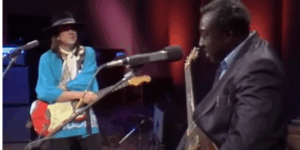
The scene was the 1988 New Orleans Jazz & Heritage Festival. The stage was set, and the atmosphere was electric as the crowd realized they were about to witness a historic summit. Standing side-by-side were the undisputed patriarch of the genre, B.B. King; the master of the “icy” attack, Albert Collins; and the man who was injecting raw, rocket-fuel energy back into the format, Stevie Ray Vaughan.
This performance wasn’t just a jam session; it was a conversation spanning fifty years of electric blues history. It was a cultural exchange that put the master’s wisdom, the veteran’s stinging precision, and the young gun’s explosive power all in the same spotlight. Join us as we explore the defining moment that showcased the past, present, and undeniable future of electric blues guitar.
II. The Three Voices: Defining the Styles
What made this collaboration so riveting wasn’t just the star power, but the profound contrast in technique and emotion between the three men. Each represented a crucial branch on the blues family tree:
B.B. King: The Regal King 👑
At the time of this performance, B.B. King was already an institution. His style is the ultimate lesson in economy and phrasing. Unlike the younger players who might rely on speed, B.B. was the master of understatement. With his beloved “Lucille,” he could make one note weep, groan, or testify, primarily through his instantly recognizable, wide, and expressive finger vibrato. He never played a run when a single, perfectly bent note would suffice. He was the foundation—the calm, authoritative voice guiding the whole conversation.
Albert Collins: The Iceman 🥶
Albert Collins was the wild card. Standing next to B.B.’s smooth maturity and SRV’s raw power, Collins brought a shocking, unique attack. He played with a thumb pick, often tuned to an open minor chord, and utilized a capo high up on the neck. The result was his signature “stinging” sound—sharp, punctuated bursts of treble that cut through the mix like ice shards. His style was aggressive, angular, and unpredictable, often leaving vast spaces of silence between his phrases, creating incredible tension.
Stevie Ray Vaughan: The Torchbearer 🔥
Stevie Ray Vaughan represented the modern evolution of the blues. He took the foundational lessons of B.B. King and Albert King and fused them with the high-volume, high-energy attack of rock and roll. Playing on notoriously thick gauge strings, SRV’s tone was fat, powerful, and utterly relentless. He mixed classic Texas blues licks with complex jazz chords, delivering solos with a furious intensity. He was the link between the past and the future, showing reverence for the elder statesmen while demonstrating how the blues could continue to evolve and remain excitingly relevant.
III. The Jam Session: A Conversation in Blues
The high point of this legendary summit was the extended, collaborative jam on “Texas Flood.” A song already synonymous with Stevie Ray Vaughan, it became the perfect template for the three legends to exchange ideas, respect, and sonic fireworks.
The beauty of the performance lies in the way they interacted rather than just taking turns. It was less a guitar battle and more a deep, fluent conversation:
B.B. King: The Guiding Hand
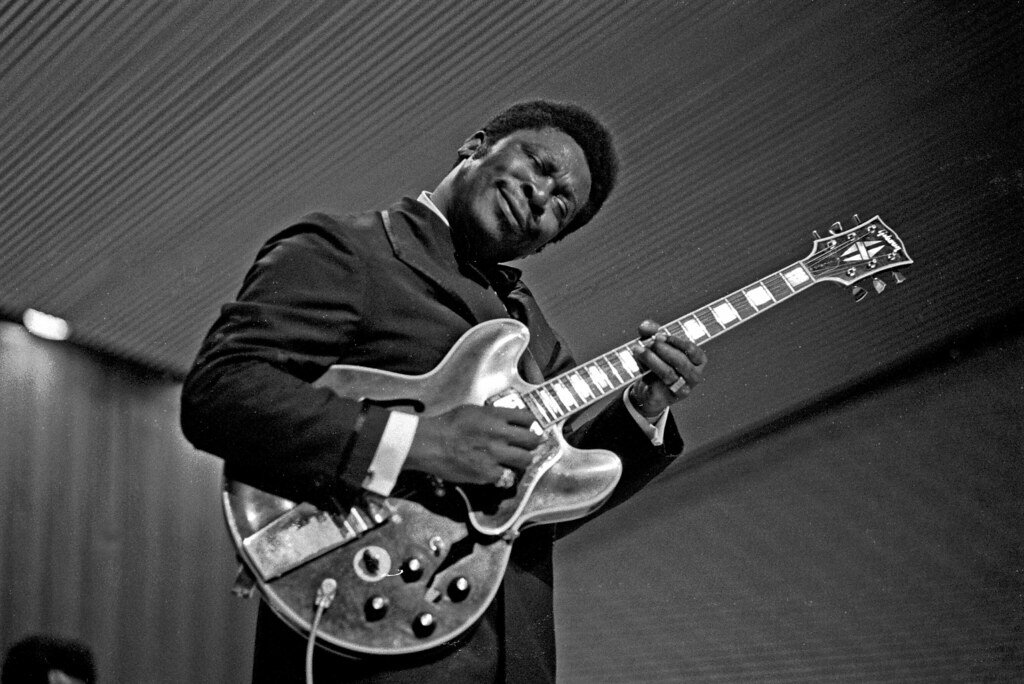
B.B. King often kicked off the solos. He set the tone, demonstrating his trademark restraint. You can see him smile, almost with fatherly amusement, as he plays his signature phrases. His approach was the ultimate foundation: never busy, always soulful, providing a blueprint of emotional depth that the other two could launch from. His presence ensured the music always remained rooted in the traditional blues structure, despite the escalating volume.
Albert Collins: The Tension Builder
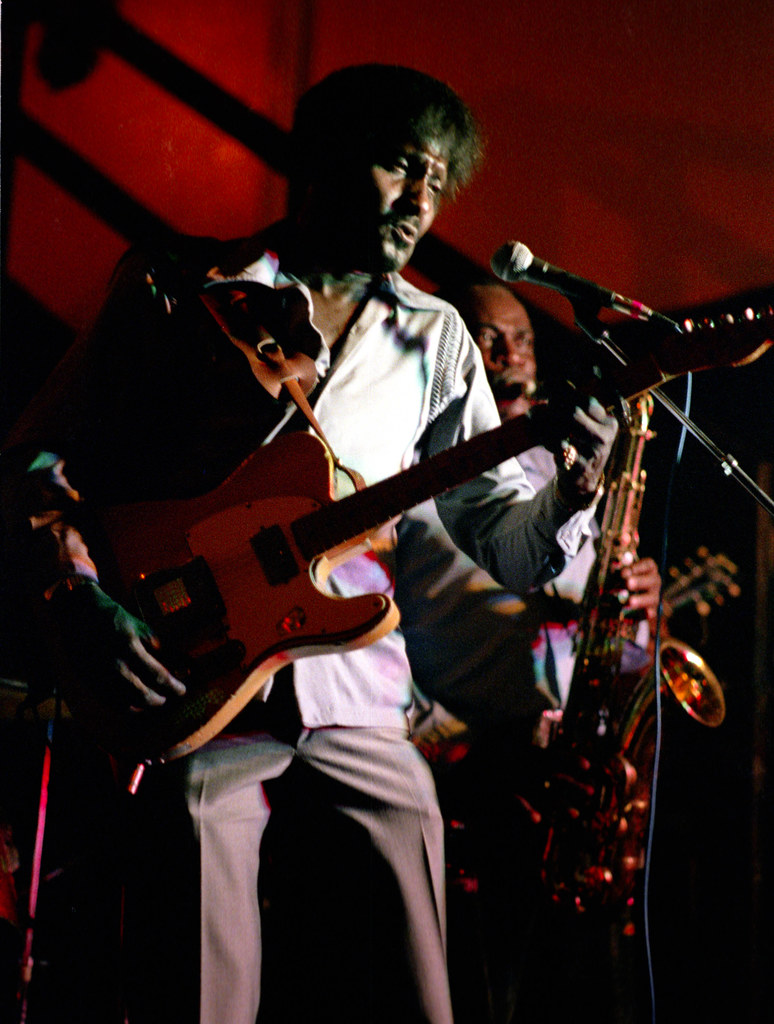
When Albert Collins stepped forward, the texture of the music instantly changed. Gone was the warmth; in came the sting. Using his signature, sharp, high-pitched licks, Collins introduced a dynamic tension. He played with massive spaces between his phrases, letting the notes hang in the air before stabbing the rhythm with a quick, aggressive burst. Watching him, you see him engaging directly with the crowd and his fellow musicians, his playing a masterclass in dynamic control.
Stevie Ray Vaughan: The Reverent Blaze
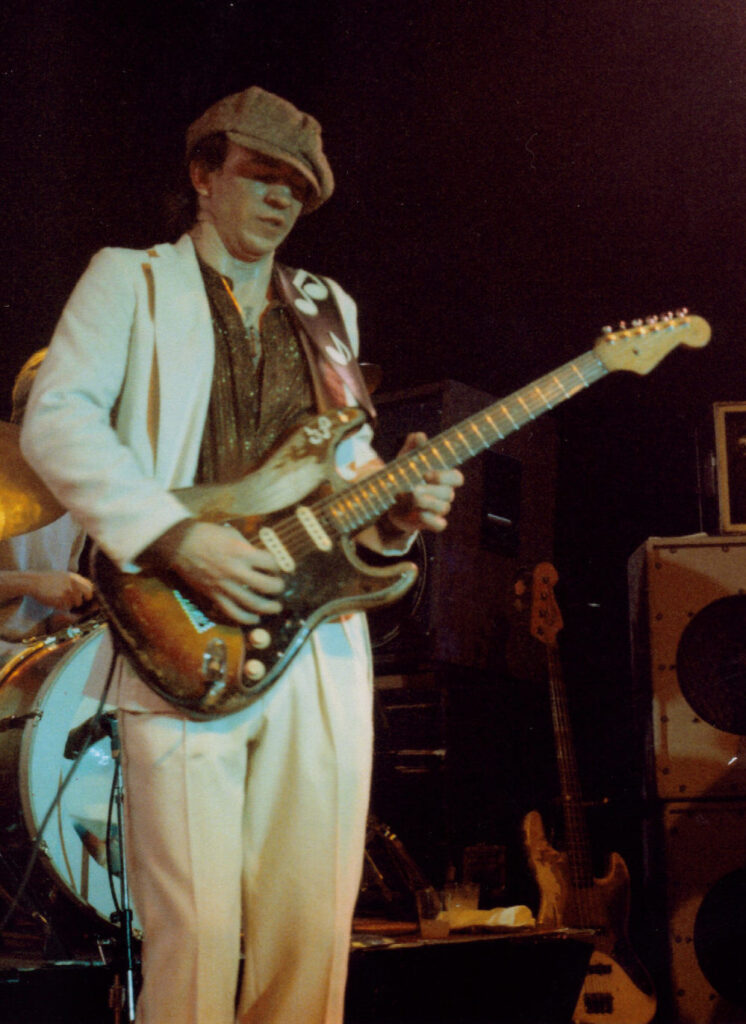
When SRV took his turn, he was an absolute explosion of energy—but an explosion delivered with immense respect. He didn’t just showcase technicality; he wove the influences of both men into his playing. You can hear him channeling Albert King’s massive bends while firing off the rapid, rock-infused phrases that was his own signature. Crucially, as soon as he finished his run, he would often step back and defer immediately to B.B. King or Collins, demonstrating that for all his power, he understood he was sharing the stage with his heroes.
The resulting performance is a perfect document of cross-generational bluesmanship—a moment where the tradition was simultaneously honored and pushed forward.
IV. Conclusion: A Legacy Cemented
The 1988 New Orleans Jazz Festival jam was more than just a memorable concert; it was a profound moment of validation and continuity for the blues genre.
In that single, extended performance, a lineage was unequivocally drawn. B.B. King demonstrated the timeless power of classic phrasing; Albert Collins showcased the enduring brilliance of stylistic originality; and Stevie Ray Vaughan proved that the blues was not a museum piece, but a vibrant, evolving art form ready for the next century. SRV’s willingness to step back and honor his elders, even as he blew the roof off the tent, cemented his role not just as a brilliant guitarist, but as a loyal student of the craft.
This summit showed that despite vast differences in attack, volume, and age, the language of the 12-bar blues remains the unifying force. It is a moment where the tradition was both honored and spectacularly pushed forward.
Watch the Jam Session
If you haven’t witnessed this moment of collaborative genius, watch the core performance of “Texas Flood” below. Prepare for an essential, goosebump-inducing document for every guitarist, musician, and fan of soul-stirring music.
(Note: While the video title says 1984, historical records place this famous jam at the 1988 New Orleans Jazz & Heritage Festival.)