
Welcome back to Guitardoor.com, where we celebrate the players who changed the conversation around the electric guitar. Today, we focus on one of the most important and influential British guitarists of all time: the legendary Johnny Marr. As the co-songwriter and sonic innovator behind The Smiths, Marr provided a brilliant and necessary antidote to the blues-based, solo-heavy rock clichés of the time. He wasn’t a guitar hero in the traditional sense; he was a sonic architect, a weaver of intricate textures, and a master of melody whose influence defined the sound of indie rock and continues to reverberate today.
The Smiths and the Rejection of the Cliché

Johnny Marr’s musical style was born from a conscious decision to create something new. In the early 1980s, rock guitar was largely dominated by heavy riffs and virtuosic, blues-derived solos. Marr rejected this wholesale. His approach was song-centric, focused on creating a complete and shimmering sonic environment to envelop Morrissey’s iconic vocals. Instead of one monolithic guitar part, he thought like an orchestra conductor, building his songs from multiple, interlocking layers. His signature sound was built on chiming, arpeggiated chords, intricate single-note lines that danced around the vocal, and bright, rhythmic stabs that provided both harmony and percussion.
Drawing influence from the fingerstyle work of Bert Jansch and the bright chime of The Byrds’ Roger McGuinn, Marr crafted a style that was uniquely his own. He made the guitar jangle and ring, using open strings and clever voicings to create a sound that was full, detailed, and beautiful. With The Smiths, he proved that a guitarist’s primary role could be that of a colourist and an arranger, not just a soloist. This philosophy extended into his celebrated post-Smiths career, where he has lent his unmistakable style as a “guitarist for hire” to bands like The The, Modest Mouse, and The Cribs, before embarking on a successful solo career, proving the endless adaptability of his inventive approach.
The Alchemist’s Toolkit: Technique and Tone
The magic of Johnny Marr’s playing lies not in overt flash, but in meticulous precision, rhythmic ingenuity, and boundless creativity. His technique is a masterclass in blending lead and rhythm playing into one cohesive, fluid part. His famous arpeggiated passages, though sounding like intricate fingerpicking, were often executed with a pick, showcasing his incredible accuracy and control. He possessed a dynamic and precise right hand, capable of tight, funky strumming and delicate, detailed picking in equal measure. He approached the guitar as a complete harmonic and rhythmic tool, always serving the song’s greater good.
His choice of gear is iconic and was central to crafting his sound. The early sound of The Smiths is inextricably linked to the bright, clear chime of a Rickenbacker 330. This guitar, combined with his Fender Telecasters, provided the signature “jangle” that defined an era. As his style evolved, he embraced other instruments, notably a Gibson ES-355 for its rich, semi-hollow warmth, and the Fender Jaguar, which has become his primary instrument in the modern era, leading to his own highly-regarded signature model.
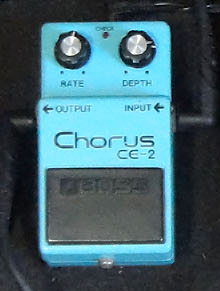
For amplification, Marr has consistently favoured amps known for their clarity and chime. In The Smiths, the clean, chorus-laden tones were often achieved with a Fender Twin Reverb or the famously clean solid-state Roland JC-120. The classic British grit of a Vox AC30 also played a significant role. His use of effects was subtle but foundational. A compressor was crucial for evening out his arpeggios and adding sustain. A chorus pedal, like the classic Boss CE-2, provided the shimmering, watery texture that became a hallmark of his sound. Add in a dash of delay for ambience and a tremolo for texture, and you have the core components of the Marr sound machine.
Essential Marr: The Pillars of The Smiths’ Sound
Johnny Marr’s work with The Smiths is a masterclass in songwriting and guitar arrangement. To truly appreciate his genius for texture and melody, these three tracks are absolutely essential listening.
“This Charming Man”
“How Soon Is Now?”
“There Is a Light That Never Goes Out”
Johnny Marr is, without exaggeration, one of the most influential guitarists of his generation. He provided a vital and brilliant alternative to the dominant rock guitar narrative of his time and, in doing so, wrote the playbook for countless indie, alternative, and Britpop bands that followed. He taught the world that a guitarist could be an orchestrator, a colourist, and a subtle weaver of magic, forever changing the sound of rock music in the process.
Cover Photo Credit “Johnny Marr” by Man Alive! is licensed under CC BY 2.0