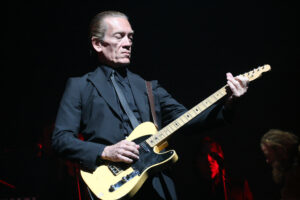
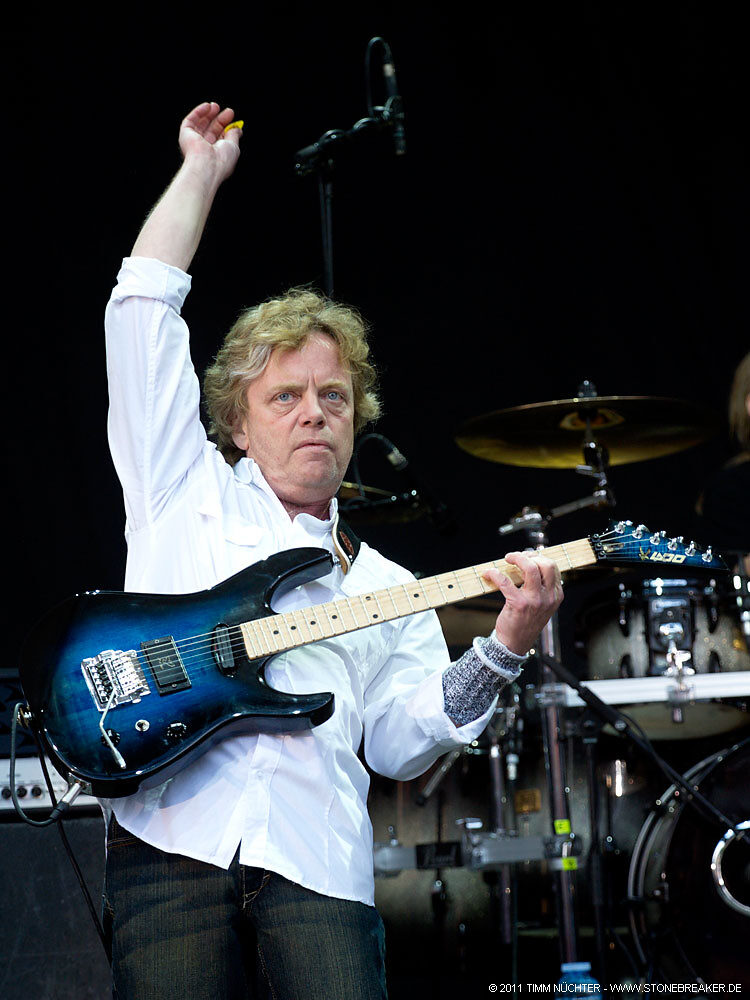
If progressive rock has a quiet guitar hero whose style is instantly identifiable within a single bar, it is Ian Crichton. As the co-founder and explosive engine behind Canadian progressive rock giants Saga, Crichton built a legacy out of subverting what people expected from a 1970s prog guitarist. Instead of the sweeping, blues-based soloing of David Gilmour or the classical acoustic tapestries of Steve Howe, Crichton injected the genre with a furious, machine-gun staccato precision that fundamentally changed how the guitar interacted with synthesizers.
The Staccato Attack and the Flyweight Fly-Rig
Crichton’s signature sound is rooted in complex, hyper-fast alternate picking and aggressive palm muting. Influenced heavily by the angular, avant-garde arrangements of UK legends Gentle Giant, his playing functions less like a traditional rock guitar and more like a polyrhythmic percussion instrument.
His lines lock in perfect unison with Saga’s dual-keyboard attack, executing blazing, hyper-technical runs that have become a definitive textbook for melodic neo-prog. This adaptive, lightning-fast dynamic—the ability to share the frontline with towering synthesizer textures without getting swallowed by the mix—is a trait we admire in highly versatile masters like Stef Burns: The Versatile Virtuoso.
While Crichton spent decades dominating European arenas with high-gain stacks, his modern touring philosophy leans directly into digital minimalism. To avoid the lottery of variable international rental backlines, his fly-rig centers around the boutique BluGuitar AMP1 Mercury Edition, a microscopic, 100-watt floor amp that sits right in his carry-on bag. He pairs this ultra-lean setup with a classic chorus pedal for pristine clean textures and drops into “Modern” mode when he needs to push into a searing, fluid lead voice.
This smart, non-bloated approach to pro gear mirrors the exact “session-ready” adaptability we spotlight in our breakdowns of theater and studio mainstays like Jefferson Kewley.
3 Essential Saga Tracks
1. “Don’t Be Late (Chapter Two)” The definitive showcase of the Crichton staccato technique. The track features an iconic, rapid-fire unison riff between Ian’s guitar and the synthesizers that requires superhuman picking hand endurance. It is a masterclass in precision, illustrating how to construct a heavy rock hook out of complex, interlocking time signatures without losing the melodic pocket.
2. “On the Loose” Saga’s biggest international breakthrough hit and a spectacular display of dynamic restraint. Crichton holds back during the verse with subtle, palm-muted rhythmic stabs, allowing the vocal melody space to breathe before exploding into a scorching, high-gain solo that serves as a masterclass in building tension. It proves a philosophy shared by veterans like Pete Friesen: the best guitarists know exactly when to step back and when to dominate.
3. “Wind Him Up” Driven by a shimmering, heavily chorused clean progression, this track shows off Crichton’s pop-rock sensibilities. The rhythm guitar parts act almost like an arpeggiated synth line, pushing the song’s narrative forward with a clean, metronomic drive before bleeding into a jagged, heavy rock chorus.
The Half-Century Milestone
Saga has officially announced their massive 50th Anniversary Tour, a spectacular milestone celebrating five decades of uncompromising progressive music since forming in Oakville, Ontario back in 1977. This historic “Generations Tour” honors a staggering legacy of over 10 million albums sold worldwide and a fiercely loyal global community.
For the GuitarDoor audience, Ian Crichton stands as a monument to stylistic individuality. He remains living proof that you don’t need to follow standard genre blueprints to build a legendary career; sometimes, a relentless picking hand, a brilliant sense of timing, and the courage to carve out your own unique sonic space are all it takes to shift the landscape of rock guitar.
External Resources