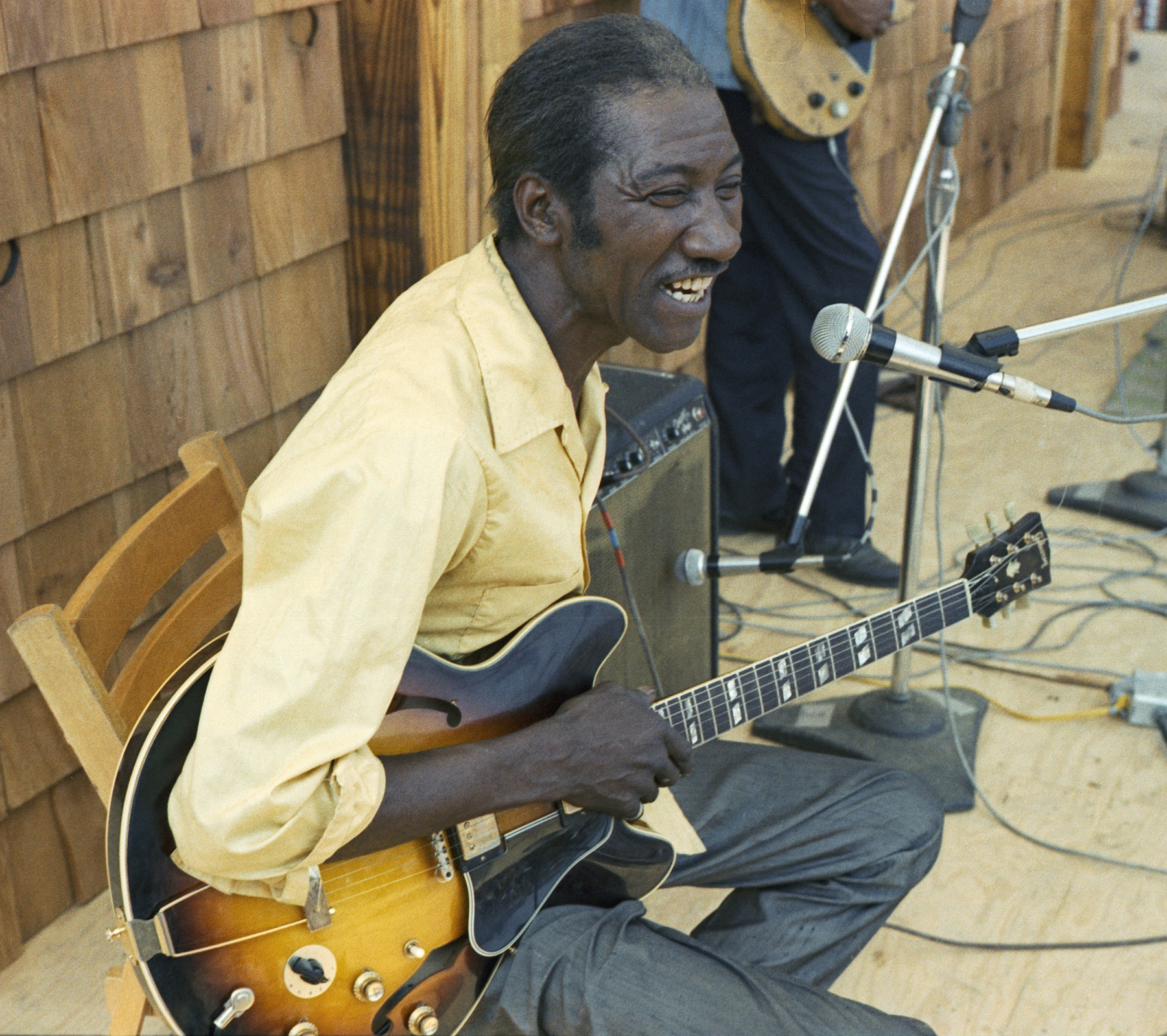
Welcome back to Guitardoor.com, where we celebrate the true originals who played from the heart, not the hymnal. Today, we’re plugging in, turning everything up to ten, and diving into the glorious, distorted, and joyfully chaotic sound of one of the most beloved cult figures in blues history: Theodore Roosevelt “Hound Dog” Taylor. As the leader of his legendary band, the HouseRockers, and the very first artist signed to the now-iconic Alligator Records, Hound Dog was the absolute embodiment of pure, no-frills, good-time bar blues, a player known for his gloriously raw slide guitar, his infectious energy, and the famous fact that he played it all with six fingers on his fretting hand.
Let’s Have Some Fun
The musical style of Hound Dog Taylor was the sound of a packed, sweaty, South Side Chicago juke joint on a Saturday night. It was loud, raw, drenched in cheap beer, and, above all else, incredibly fun. His motto was famously, “When I die, they’ll say, ‘he couldn’t play shit, but he sure made it sound good!'” This perfectly captured his ethos. In an era when Chicago blues was producing sophisticated artists, Hound Dog’s music was a primal celebration of the boogie.
His band, the HouseRockers, featured a unique lineup with no bass player. It was just Hound Dog on guitar and vocals, Brewer Phillips on a second guitar (often playing thunderous bass lines), and Ted Harvey on drums. This stripped-down format created a raw, treble-heavy, and incredibly energetic sound. While players like his contemporary Magic Sam were pioneering the slick, reverb-drenched “West Side” sound, Hound Dog was playing a much more raw and distorted brand of blues that was the spiritual ancestor of both rock and roll and punk.
Anatomy of a HouseRocker
Hound Dog Taylor’s sound was a glorious testament to the power of feel over finesse and attitude over expensive equipment.
The Raw Slide: His slide guitar playing was his signature. It was not the sweet, vocal style of other masters; it was a raw, aggressive, and beautifully imperfect assault on the strings. His slide work was full of buzzing, rattling notes, a wild vibrato, and a chaotic energy that was pure, unadulterated excitement.
The Six-Fingered Legend: Part of his mythos comes from the fact he was born with polydactyly, having a small sixth finger on his left hand. While it was more of a physical curiosity than a key part of his technique, it added to his legendary, larger-than-life persona.
The Cheap Guitar Gospel: Hound Dog was the ultimate anti-gear-snob. He famously played cheap, Japanese-made Teisco or Kawai electric guitars, often bought from department stores. He proved that the soul of the music was in the player’s hands, not the price tag on the headstock.
The Screaming Amp Tone: His iconic tone came from plugging his cheap guitars into equally inexpensive Sears Silvertone tube amplifiers and cranking them to their absolute breaking point. The result was a glorious, distorted, and fuzzy roar, with the speakers themselves crying for mercy. This lo-fi, high-energy sound was a massive influence on later garage rock and punk musicians who valued raw power over pristine clarity.
Essential Taylor: The Alligator Classics
Hound Dog Taylor’s classic albums for Alligator Records are the definitive documents of his raw and joyous sound. To get a sense of his incredible energy, these three tracks are essential.
“Give Me Back My Wig”
This is his most famous and beloved song, a pure, good-time boogie that perfectly encapsulates his “let’s have some fun” ethos. The track is driven by his signature chaotic, fuzzy slide riff and his infectious, shouted vocals. It’s the sound of a wild party, a joyous and unpretentious anthem that is impossible not to love.
“She’s Gone”
A slow, grinding blues, “She’s Gone” showcases a different, more menacing side of his playing. The pace is deliberate, and his slide work is full of raw, gritty emotion. The gloriously distorted tone of his cranked Silvertone amp is on full display here, creating a sound that is pure, saturated, and dripping with feeling.
“Take Five”
In a move of sheer, brilliant absurdity, Hound Dog and his band take the famous, cool, and sophisticated Dave Brubeck jazz standard and drag it through the mud of a South Side bar. They transform the 5/4 jazz classic into a raw, frantic, and barely recognizable boogie. It’s a perfect demonstration of their unique, chaotic, and fun-loving approach to music.
Hound Dog Taylor was a true original and a hero to anyone who believes in the power of raw, honest, and joyous music. He stood as a gritty alternative to the more polished blues of his day, creating a sound that was pure, unfiltered, and unapologetically real. Like the beautifully raw playing of Hubert Sumlin, his music was a testament to the fact that the most powerful feeling often comes from the most beautifully imperfect notes. His influence lives on in every garage rocker, punk, and blues player who understands that the most important thing is to plug in, turn up, and have some fun.
Cover Photo Credit “Hound Dog Taylor 1970 AABF JT” by Eatonland is licensed under CC BY-SA 4.0