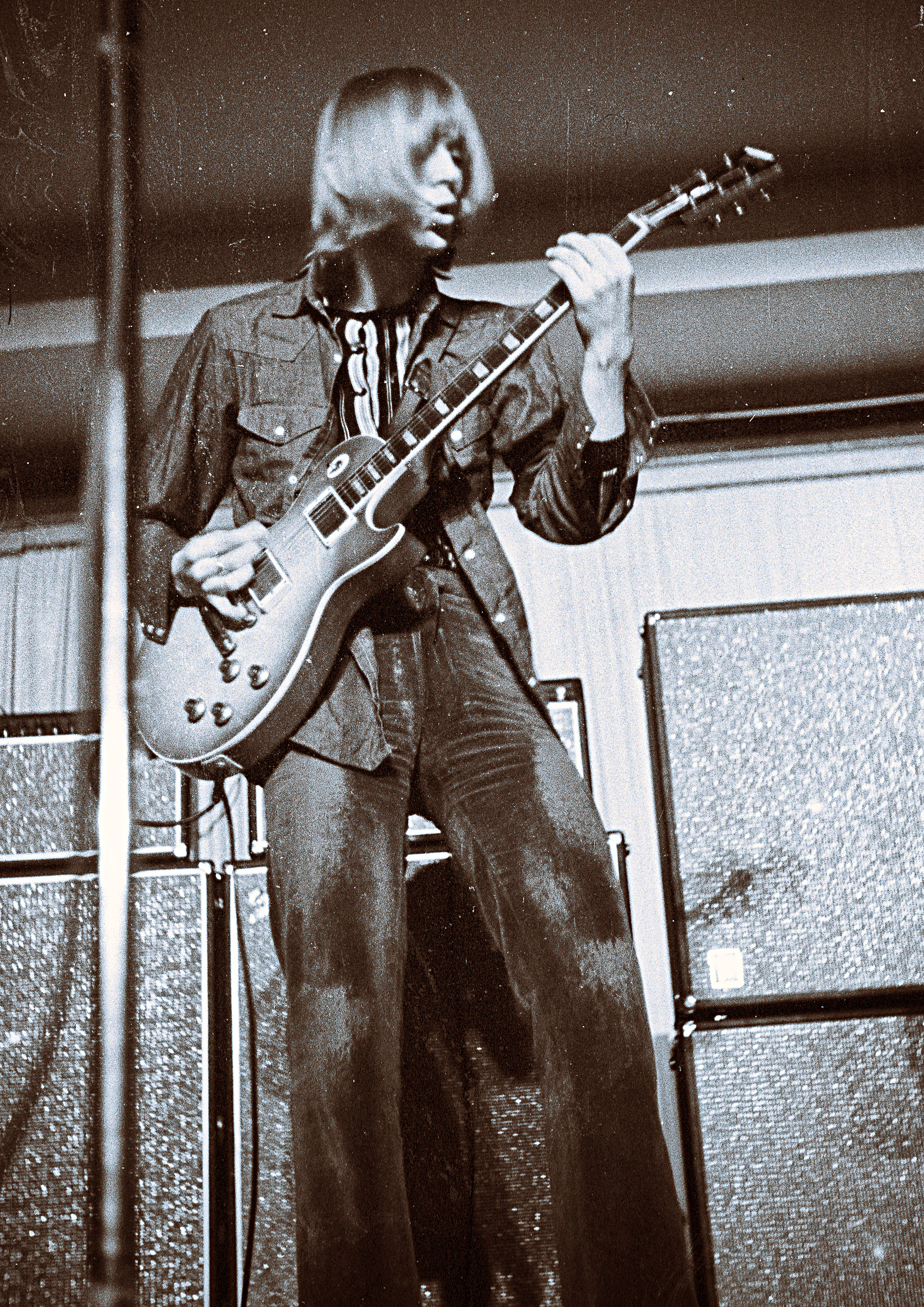
Danny Kirwan was a British musician who remains one of the most gifted and tragic figures in the history of rock guitar. Joining Fleetwood Mac in 1968 at the age of eighteen, Kirwan was brought in by Peter Green to provide a melodic counterpoint to Green’s own blues-heavy style. While he possessed immense technical facility, Kirwan’s true genius lay in his vibrato and his ability to compose haunting, neoclassical guitar lines that pushed the band far beyond their initial blues-rock roots. His tenure with the group marked their transition into a sophisticated, experimental pop-rock outfit, setting the stage for the massive success they would find years later.
The Signature Kirwan Style: Neoclassical Vibrato and Harmonic Precision
Kirwan’s signature guitar style was defined by a breathtaking, rapid-fire vibrato and a clean, singing tone. Unlike many of his contemporaries who favored heavy distortion, Kirwan often played with a crisp, bell-like clarity that highlighted his complex chord voicings and melodic precision. He was deeply influenced by the big band era and instrumental groups like The Shadows, which led him to incorporate sophisticated jazz-influenced harmonies into his rock playing. His approach was often described as “lyrical” because his guitar lines mimicked the phrasing of a human voice, weaving intricate, singing melodies that were as emotional as they were technically perfect.
Three Essential Tracks to Hear His Genius
To understand Kirwan’s impact on the sound of Fleetwood Mac, three specific tracks stand out as masterpieces of his craft. First is the instrumental “Albatross” (1968), where Kirwan’s delicate, atmospheric harmonies provided the essential “wash” of sound over which Peter Green played the lead melody. This track proved Kirwan’s ability to create deep, evocative textures that transformed a simple blues progression into something ethereal.
Next, listen to “Jigsaw Puzzle Blues” (1968), a Kirwan composition that displays his mastery of the ragtime and jazz-blues styles. On this track, his fingerpicking and melodic speed are on full display, showing a level of technical maturity that was well beyond his teenage years. It remains a definitive example of his ability to blend traditional styles into a modern rock context.
Finally, explore “Sands of Time” (1971) from the album Future Games. This track represents the height of his creative power within the band’s post-Peter Green era. Kirwan’s guitar work here is expansive and melodic, featuring his signature double-tracked harmonies and a shimmering, clean tone. It perfectly captures the “California folk-rock” sound that Fleetwood Mac would later make famous, proving that Kirwan was the primary architect of that evolution.
The Ultimate Rolodex: The Three-Guitar Attack
Kirwan’s career was defined by his incredible chemistry with his bandmates during Fleetwood Mac’s most creative period. He initially formed a legendary twin-guitar partnership with Peter Green, creating a harmonic interplay that remains a benchmark for blues-rock guitarists. Later, after Green’s departure, he worked alongside Jeremy Spencer and Bob Welch, helping the band navigate multiple shifts in genre. His collaboration with bassist John McVie and drummer Mick Fleetwood was equally vital, as their rock-solid rhythm section provided the necessary space for Kirwan’s elaborate and often fragile melodic excursions.
Conclusion: A Legacy of Melodic Brilliance
Danny Kirwan’s time in the spotlight was relatively brief, as personal struggles eventually led to his departure from the music industry. However, his influence is undeniable. He moved Fleetwood Mac away from being a standard blues band and turned them into a vehicle for sophisticated songwriting and melodic experimentation. His rapid vibrato and neoclassical sensibilities continue to inspire guitarists who seek to balance technical prowess with genuine emotional depth. Kirwan remains a cornerstone of the Fleetwood Mac legacy, remembered as a musician who played with a rare and haunting beauty.
Cover Photo Credit “Fleetwood Mac Danny Kirwan 12” by W.W.Thaler – H. Weber, Hildesheim is licensed under CC BY-SA 3.0