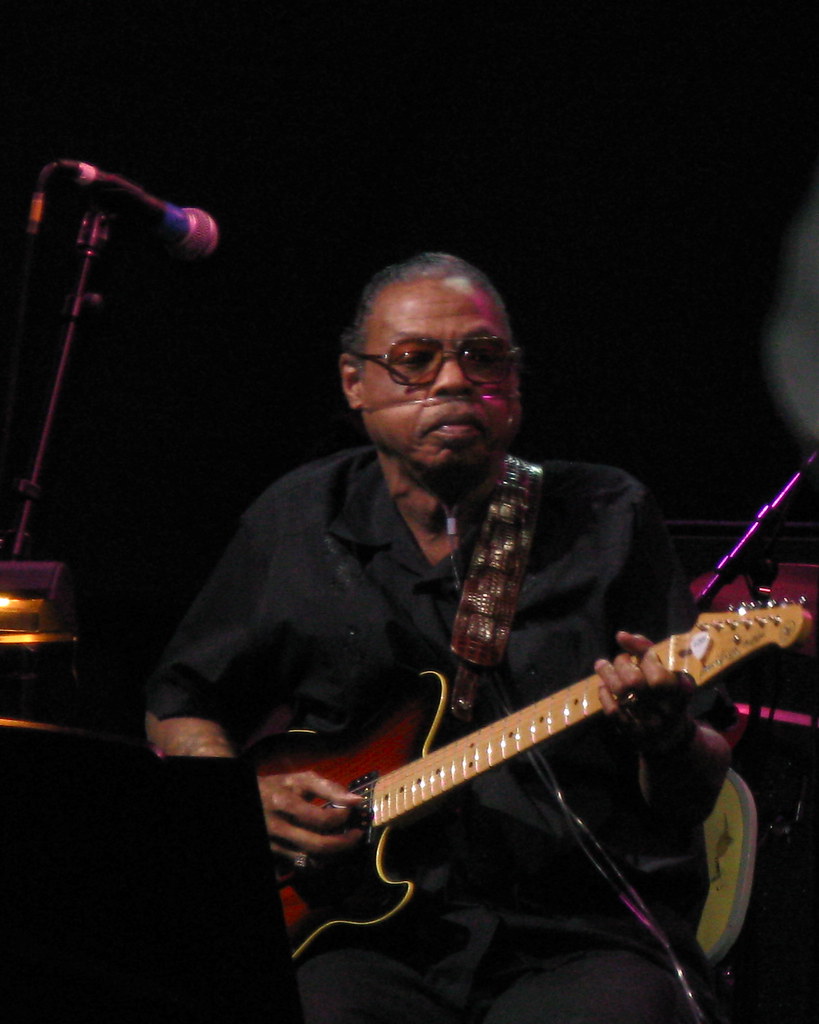
Welcome back to Guitardoor.com, where we celebrate the unsung heroes whose playing is the very foundation of the music we love. Today, we pay tribute to one of the most recorded, respected, and deeply funky guitarists of all time: the legendary Cornell Dupree. As a first-call session musician and a key member of the iconic R&B group Stuff, “The Groovemaster” was the secret weapon on over 2,500 recordings, laying down his signature greasy, in-the-pocket guitar parts for legends like Aretha Franklin, King Curtis, Donny Hathaway, and Miles Davis.
The Sound of the Pocket
The sound of Cornell Dupree was the sound of the New York session scene in its golden age—a sophisticated, soulful, and undeniably funky brand of R&B. He was the ultimate musical chameleon, but every part he played was infused with his unmistakable personality. In an era of explosive rock soloists, Dupree was the master of the groove. His job was not to be the star, but to make the star shine brighter. He was the architect of the perfect feel, the player who could find the deepest pocket in any rhythm and lock into it with an unshakable and deeply soulful conviction. His playing was the warm, swampy, and incredibly satisfying sound that made you want to move.
Anatomy of The Groovemaster
The genius of Cornell Dupree’s guitar playing is the very definition of professional musicianship and impeccable taste. It is a world away from flashy pyrotechnics or self-indulgent soloing; it is the art of the perfect part, a masterclass in using the guitar as a subtle, powerful, and essential rhythmic and melodic voice. To listen to Dupree is to hear a player who has a Ph.D. in groove, a master craftsman whose every note is chosen with absolute purpose to make the entire song feel better. He is the ultimate proof that the most powerful statement a guitarist can make is often the one that is felt more than it is heard.
The King of the Fill:
Dupree was the undisputed master of the short, melodic, and perfectly placed guitar fill. His playing was a conversation with the vocalist, using beautiful, clean double-stops and short, lyrical phrases to “answer” and comment on the vocal lines with impeccable timing and soul.
The Greasy Groove:
As a rhythm player, he was simply untouchable. His style was funky, “greasy,” and incredibly deep in the pocket. His rhythm work was built on a foundation of clean, percussive chord stabs and a subtle, almost behind-the-beat feel that gave his playing its signature relaxed and swampy swagger.
Mr. Telecaster:
He was one of the ultimate icons of the Fender Telecaster. He famously nicknamed his beloved, heavily modified Tele “The Duchess.” The bright, articulate, and percussive sound of the Telecaster was the perfect tool for his clean, rhythmic style, allowing his parts to slice through a dense R&B mix with perfect clarity.
The Tone of Truth: His signature sound was pure, clean, and incredibly responsive. He was a long-time user of the Fender Twin Reverb amplifier, an amp prized for its massive clean headroom. This setup allowed every nuance of his incredible touch and dynamic control to come through with absolute honesty and warmth.
The Essential Grooves of Dupree
Cornell Dupree’s legendary guitar work is the secret ingredient on countless classic records. To understand his incredible genius for crafting the perfect, unforgettable part, these three tracks are absolutely essential.
“Rainy Night in Georgia” (by Brook Benton)
This is arguably his most famous and beautiful performance. His guitar part is not just an accompaniment; it is the atmosphere of the song. To approach playing this, the key is the heavy, pulsating tremolo effect. It’s a masterclass in “less is more.” The part consists of slow, deliberate, and perfectly placed arpeggios and melodic fills that evoke the sound of falling rain. Focus on a gentle touch and let each note have its own space to breathe and shimmer.
“Rock Steady” (by Aretha Franklin)
This is one of the funkiest and most iconic tracks in music history, and it is driven by Dupree’s unforgettable intro riff. To play this, the key is pure rhythmic precision and attitude. The approach is to use a clean but slightly gritty tone and to play the syncopated, staccato riff with a sharp, percussive attack. The challenge is to lock into the drummer’s hi-hat pattern and to play with a deep, funky swagger that is both tight and relaxed.
“Memphis Soul Stew” (by King Curtis)
A live-in-the-studio masterpiece, this track introduces each member of the legendary band as they build the groove from the ground up. Dupree’s part is a brilliant lesson in ensemble playing. The approach is to find your own small space within a dense and funky arrangement. Use short, funky, double-stop licks and clean chordal stabs to add texture and commentary without ever stepping on the bass line or the horns. It is a masterclass in being the perfect team player.
In the end, Cornell Dupree’s legacy is that of one of the true, unsung giants of the electric guitar. He was the ultimate professional, the Groovemaster, and the secret weapon on more classic songs than almost anyone. He is a timeless inspiration for any guitarist who understands that the deepest and most powerful groove often comes from the most perfectly and tastefully chosen notes.
Cover Photo Credit “IMG_2833” by annulla is licensed under CC BY-SA 2.0