
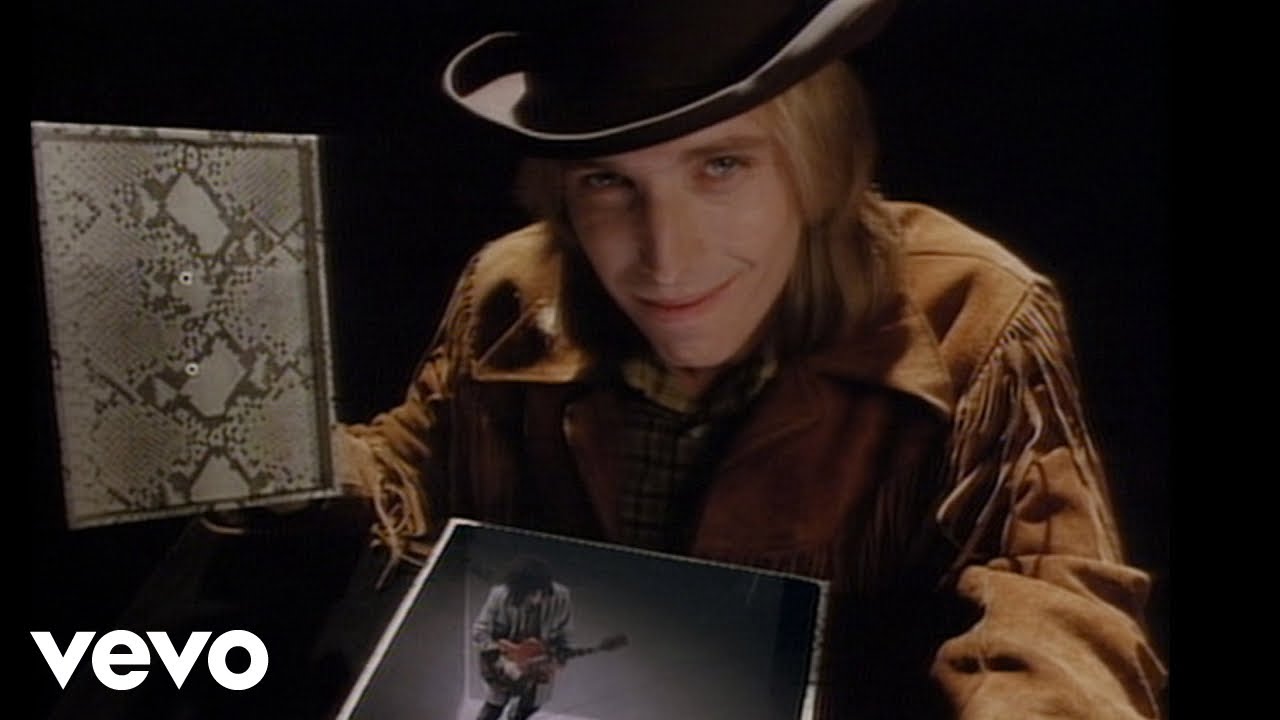
Released in May 1989 as the lead single from his critically acclaimed debut solo studio album Full Moon Fever, “I Won’t Back Down” by Tom Petty stands as a landmark track in roots-infused heartland rock and acoustic pop history. Written by Petty alongside his longtime musical partner and lead guitarist Mike Campbell, the song was forged during a deeply challenging personal period. Shortly before recording began, Petty’s home in Encino, California, was completely destroyed by an arson fire. Amidst the ashes, Petty discovered that his favorite Gibson Dove acoustic guitar had miraculously survived the blaze. Sitting down with that exact scarred instrument in Los Angeles studios alongside co-producer Jeff Lynne, Petty channeled his profound sense of violation, grief, and resilience into a sparse, driving anthem of stubborn defiance. The resulting track featured an all-star studio lineup, including George Harrison on acoustic rhythm guitar and backing vocals, whose presence added an extra layer of rock royalty camaraderie to the sessions.
Beyond its storied backstory, “I Won’t Back Down” is an exceptional song to learn on guitar because it serves as an absolute masterclass in open-position rhythmic momentum and dynamic space. Many developing guitarists struggle with keeping a steady acoustic pulse without over-strumming, but this track teaches you how to lock your right hand into a relentless, driving heartbeat that supports a vocal melody without cluttering the frequency spectrum. It trains your open-position chord clarity, sharpens your transition timing between major chords and unexpected secondary walking steps, and demonstrates how a minimalist arrangement can sound massive when played with absolute conviction. Whether you are performing around a campfire or holding down rhythm in a full band, mastering this track builds fundamental acoustic stamina within our Songs To Learn collection.
Before diving into the fretboard mechanics, listen to the original studio track for sound reference via the Official Tom Petty I Won’t Back Down Audio Reference in the video below. You can also view the complete chord sheet on this I Won’t Back Down Chords Guide, or follow along with the dedicated video guide below.
Practice your timing, chord transitions, and strumming accuracy directly alongside the detailed fretboard instructions in the playing guide video below.
Key & Scales Breakdown
The song is written in the bright, resonant key of E Major. Keep your guitar in standard tuning (E A D G B E). No capo is required for this arrangement, allowing you to take full advantage of wide-open cowboy chords that ring out with maximum acoustic body resonance, matching the vintage acoustic tracks recorded by Petty and George Harrison.
To improvise over the track, navigate Mike Campbell’s signature lead fills, or build melodic intros and vocal counter-melodies, focus primarily on the E Major Pentatonic scale (`E, F#, G#, B, C#`). Because Petty’s music blends straightforward folk-rock with blues roots, you can also incorporate the E Major Blues scale (adding the chromatic passing flat-5th note, A# or Bb) to highlight the gritty, expressive bends used in the recorded lead work. Practicing these scalar positions across the neck ensures your improvisations stay locked tightly to the song’s harmonic center.
Chords You Need to Know
E Major (022100): The primary tonic home anchor that opens the verse sequence, providing a wide-open, ringing foundation that carries the bulk of the song’s rhythmic momentum.
D Major (xx0232): Delivers the descending rock contrast that steps downward during the chorus and bridge transitions, adding unexpected major-scale color outside the root key.
A Major (x02220): Provides the bright subdominant lift that moves the verse progression forward, locking seamlessly with the open E and D shapes.
B Major (x24442) or B7 (x21202): Acts as the dominant tension chord, building harmonic pressure before resolving directly back to the E root tonic.
Quick Reference Chart
| Chord / Scale Name | Fret Diagram / Formula | Difficulty | Role in Song |
| E | 0 2 2 1 0 0 | Beginner | Home Key / Tonic Anchor |
| D | x x 0 2 3 2 | Easy | Bridge & Turnaround Contrast |
| A | x 0 2 2 2 0 | Beginner | Subdominant Lift |
| E Major Pentatonic | E, F#, G#, B, C# | Beginner / Intermediate | Lead Solos & Melodic Fills |
Step-by-Step Song Lesson
Step 1: Master the Strumming & Rhythm Pulse. Lock in the steady heartland rock groove before adding complex chord movement. Focus on maintaining a driving down-and-up picking motion that emphasizes the backbeat and mirrors Petty’s rhythmic acoustic attack as demonstrated in the playing guide video.
Step 2: Navigate the Verse Progressions. Move smoothly through the main sequence, transitioning from E into the supporting A and B chords. Keep your fretting fingers arched cleanly to ensure the open strings ring out without muting adjacent notes during rapid chord changes.
Step 3: Execute Chorus & Lead Fills. Increase your picking intensity when transitioning into the main chorus anthem where the D major chord enters. Integrate notes from the E Major Pentatonic scale over the chord transitions to mimic Mike Campbell’s iconic electric guitar hooks and fills.
Tone & Gear Breakdown
To capture the authentic tone of this recording, focus on your pickup selection and gain structure.
Pickup & Amp Setup: Use a bright acoustic dreadnought guitar equipped with a bone saddle and phosphor bronze strings for the primary rhythm tracks, or switch to a neck-position single-coil electric guitar running into a clean tube amplifier set near the edge of breakup for lead parts.
Effects & Dynamics: Add subtle room reverb for spatial depth without washing out the percussive attack of your rhythm strumming or burying the clean articulation of your open chords.
Outro: Mastering the Track
“I Won’t Back Down” remains a classic demonstration of how effective rhythm, solid chord choices, and scale knowledge build an iconic song. Practice along with the embedded video guides above to lock in your timing. For more song breakdowns, explore our Songs To Learn section, check out our published features in the guitar lessons directory, or dive into our guide on mastering classic song arrangements.