
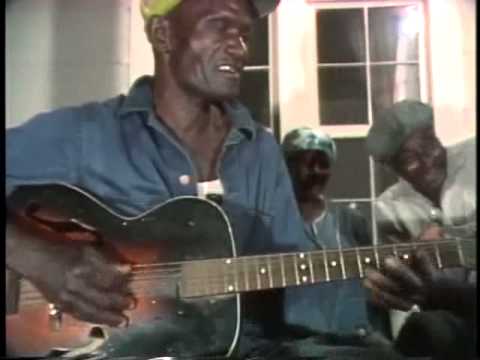
Clyde Maxwell, often known by the nickname Clyde “Judas” Maxwell, was an American folk and blues musician from Mississippi whose work belongs to the tradition of deep Southern regional blues. He was primarily known for his contribution to traditional blues and work songs, performing for folklorists late in his life. His legacy is preserved almost entirely through the fieldwork recordings made by Alan Lomax and his team in the late 1970s.
The Signature Maxwell Style: Rural Blues and Field Recordings
Maxwell’s style is a powerful example of the raw, unadorned Mississippi Delta and Hill Country blues traditions. As a guitarist and vocalist, his music carried the improvisational character of regional, non-commercial blues, rooted in the everyday life of the rural South. His playing, often captured on his farm near Canton, Mississippi, features a direct, percussive approach, supporting vocals that range from traditional narratives to spiritual songs and field hollers. Because his work was documented by Alan Lomax, his style represents a valuable, late-era snapshot of a dying tradition of acoustic, vernacular blues that was rarely recorded commercially.
Three Essential Pieces to Hear His Genius
To hear the authentic, field-recorded sound of Clyde Maxwell, these three pieces are crucial:
First, listen to his version of “Corrina” (1978). Recorded by Alan Lomax, this performance is a direct and heartfelt take on the classic blues standard. The recording captures the intimate setting of his farm and the simplicity of his guitar accompaniment, highlighting the genuine, conversational nature of his vocals.
Next, his performance of “Way Down In the Valley” (1978) demonstrates his ability to deliver powerful, gospel-infused material. This track showcases his raw vocal intensity and the way his guitar acts as a steady, grounding rhythmic anchor for the spiritual content of the song.
Finally, explore the “Stagolee” fragment (1978). This short piece is a glimpse into the regional variations and improvisational nature of folk blues, performed right on his porch. This recording captures the unique atmosphere of the Lomax fieldwork, showing Maxwell maintaining a connection to the old, mythic themes of the blues tradition.
The Ultimate Rolodex: The Lomax Legacy
Clyde Maxwell’s career was not defined by commercial recordings, but by his collaboration with the Alan Lomax team in 1978, which sought to document America’s diverse musical traditions. He performed at his farm for the American Patchwork film project alongside his neighbor, fellow blues guitarist Belton Sutherland. Clyde also performed at the Mississippi Delta Blues Festival in 1979, bringing his authentic sound to a wider audience late in life. His entire body of known work remains preserved in the Lomax Digital Archive, where it continues to serve as an invaluable resource for blues historians and enthusiasts.
Conclusion: A Voice from the Hill Country
Clyde Maxwell stands as a powerful, final link to the deep roots of the Delta and Hill Country blues. His recordings, though few, provide an unvarnished window into the traditional music that shaped the entire genre. His enduring legacy is not measured by album sales, but by the authenticity of his guitar work and the truth contained within his voice.