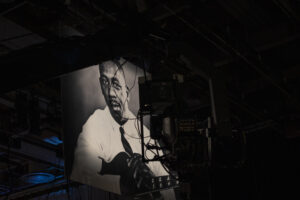
In an era when acoustic guitarists were competing to see who could play the fastest, Norman Blake quietly carved out a legacy by doing the exact opposite. While the bluegrass world increasingly celebrated athletic virtuosity and breakneck tempos, Blake built his reputation on the spaces between the notes, establishing himself as a definitive session musician for icons like Johnny Cash and Bob Dylan. His solo work doesn’t rely on flash or technical overindulgence; instead, it serves as a masterclass in clean execution, structural nuance, and an uncompromising loyalty to the core melody of the song.
The Heart of the Song
Norman Blake’s musical style is deeply embedded in the soil of old-time, pre-bluegrass Appalachian string band music. His entire approach is built around serving the melody and the narrative. He is the complete antithesis of the modern “hot-shot” flatpicker; his playing is not a showcase for athletic virtuosity but a masterclass in thoughtful interpretation. This deliberate, patient approach offers a striking contrast to how we view guitar prodigies today; where a modern phenom like Quinn Sullivan captured the world’s attention with explosive, lightning-fast blues lines at a young age, Blake commands attention by pulling back, letting the arrangement breathe.
He possesses a relaxed, behind-the-beat groove that gives his music an irresistible, front-porch feel, inviting the listener to lean in closer. For Norman Blake, the spaces between the notes carry just as much weight as the notes themselves. He is a master interpreter, taking traditional fiddle tunes and old folk ballads and translating them to the guitar with a lyrical, vocal-like quality that always keeps the original melody at the forefront. His own songwriting feels as timeless as the traditional tunes he performs, telling stories of rural life, history, and personal reflection with a plain-spoken poetry. He remains a direct link to the very roots of American folk music, performing not as a historical reenactor, but as a genuine participant in a living tradition.
The Anatomy of Understated Grace: Technique and Tone
The secret to Norman Blake’s revered sound lies in a relaxed, efficient, and highly personalized technique. A key characteristic of his right-hand approach is the way he often anchors his pinky or ring finger on the top of the guitar, just below the soundhole. This provides a stable pivot point, allowing for incredible control over his pick attack. His picking itself is a fluid and seamless blend of single-note runs and brush-like strums, often executed within the same musical phrase. This creates his signature sound, where lead and rhythm playing are not separate disciplines but are woven together into one cohesive, flowing part.

This approach is perfectly encapsulated in what has become known as the “Norman Blake lick”—a fluid, single-note melody line that effortlessly resolves into a full, open-string chord strum. It’s a move that is instantly recognizable and has been adopted by countless folk and Americana guitarists. This philosophy of stripping away unneeded technical clutter to let the core rhythm stand out can be found across entirely different genres; it mirrors the raw, minimalist approach of players like Todd Huth, who relied on unusual, bare-bones note choices rather than traditional, heavy guitar layering to establish a distinct musical groove.
While celebrated for his flatpicking, Blake is also an equally masterful fingerstyle player, bringing the same level of taste and nuance to his blues and ragtime interpretations.
His choice of gear is central to his sound and philosophy. Norman Blake is a connoisseur of vintage Martin guitars, but not the booming dreadnoughts common in bluegrass. He overwhelmingly prefers smaller, lightly built, 12-fret models from the 1920s and 30s, such as the Martin 00-18 or 000-28. He values these instruments for their dry, woody, and incredibly responsive tone. They produce a balanced sound with a strong midrange focus, which is perfect for his melodic, note-for-note playing style. His tone is not about earth-shaking volume; it’s about clarity, warmth, and the honest, unadorned voice of aged wood.
Essential Blake: The Storyteller’s Songbook
Norman Blake’s discography is a vast and rewarding journey into the heart of American music. To begin to understand his influential style and his mastery of interpretation, these three songs are the perfect introduction.
“Whiskey Before Breakfast”
“Ginseng Sullivan”
“Church Street Blues”
The Power of Quiet Authority
Norman Blake is a true master, a vital touchstone for any musician who believes in the power of “less is more.” He has taught generations of guitarists that the ultimate goal is not to impress, but to connect, and that the most profound statement you can make is to beautifully and honestly play the song. In a world of noise, his music remains a testament to the enduring power of quiet authority.
Cover Photo Credit “Norman Blake” by rê_invento is licensed under CC BY-NC-ND 2.0