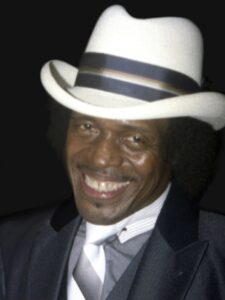

Reverend Gary Davis (1896–1972) was one of the most virtuosic and influential acoustic guitarists of the 20th century, a master of the Piedmont blues style who infused it with gospel, ragtime, marches, and spirituals. Born nearly blind, Davis made his living as a street musician and, after being ordained in 1933, as a gospel preacher, earning him the moniker “Harlem Street Singer” later in his life. Unlike many of his peers whose styles were regionally specialized, Davis commanded a repertoire that was both harmonically and technically diverse. His guitar playing was so complex and advanced that it became the gold standard for fingerpicking during the American folk revival of the 1960s.
🛠️ The Davis Technique: A Piano on the Fretboard
Davis’s demanding guitar style resulted from his efforts to adapt complex piano-based ragtime music to the six strings of the guitar, creating an illusion of multiple instruments playing at once. His core technique is defined by an alternating thumbed bass line, usually executed with a thumbpick, that maintains a relentless, steady rhythm on the lower strings. Simultaneously, his index finger (often with a fingerpick) executes intricate, rapid-fire melodic runs, chords, and rhythmic accents on the higher strings. Davis explored musical ideas unusual for blues at the time, including jazz-influenced chord substitutions (like diminished and major 7th chords) and complex rhythmic figures, ensuring that his arrangements were perpetually challenging and harmonically rich. This system required extraordinary rhythmic independence, with the thumb and fingers working like separate entities, a true testament to his virtuosity.
🎵 Three Essential Songs and How to Approach Them
Reverend Gary Davis’s immense technical skill can be best appreciated by examining three of his essential tracks: “Samson and Delilah” (or “If I Had My Way”), “Candy Man,” and “Death Don’t Have No Mercy.” Each song demands a different facet of his mastery, offering a complete lesson in his repertoire.
Samson and Delilah
For “Samson and Delilah”, a powerful gospel piece (often played in the key of C), the core challenge is maintaining the rock-solid, alternating thumb-picked bass line while the index finger executes frequent, fast jumps to play the melody high up the neck. This track requires significant practice in rhythmic independence to keep the bass unwavering as the melody shifts positions and tempo.
Candy Man
The classic ragtime blues, “Candy Man,” serves as an excellent exercise in syncopation and rhythmic discipline. To play it authentically, the guitarist must maintain a strict thumb rhythm on the on-beats (downward motion) while the index finger dances playfully on the off-beats (upward flicking motion). This precise counter-rhythm is key to capturing the infectious, upbeat ragtime groove.
“Death Don’t Have No Mercy”
Finally, the slow, mournful gospel blues of “Death Don’t Have No Mercy” showcases Davis’s harmonic sophistication. Unlike simpler blues, this piece uses a darker, more complex chord vocabulary and a deliberate, slow pace. The approach here requires the guitarist to prioritize feeling and tone over speed, using sustained notes and controlled vibrato to convey the song’s intense spiritual and emotional weight, demonstrating his power in restrained expression.
📜 Legacy and Enduring Influence
Reverend Gary Davis experienced a massive career resurgence during the folk revival of the 1960s, transitioning from a street preacher to a beloved concert and festival headliner. His true legacy rests in his role as a master teacher and torchbearer for the complex Piedmont style. Many young urban folk and rock musicians sought him out for lessons, and his students went on to become immensely influential figures, guaranteeing the survival of his unique style. His pupils included Bob Dylan, Dave Van Ronk, Jorma Kaukonen (Jefferson Airplane/Hot Tuna), Stefan Grossman, Taj Mahal, and Bob Weir (Grateful Dead), with bands like Peter, Paul and Mary and the Grateful Dead recording his songs and ensuring his music reached global audiences. Davis’s work remains an unparalleled resource for anyone studying fingerstyle guitar.
Cover Photo Credit “061LittlePink” by Joanie-21 is licensed under CC BY-NC-ND 2.0