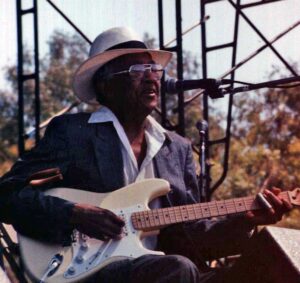
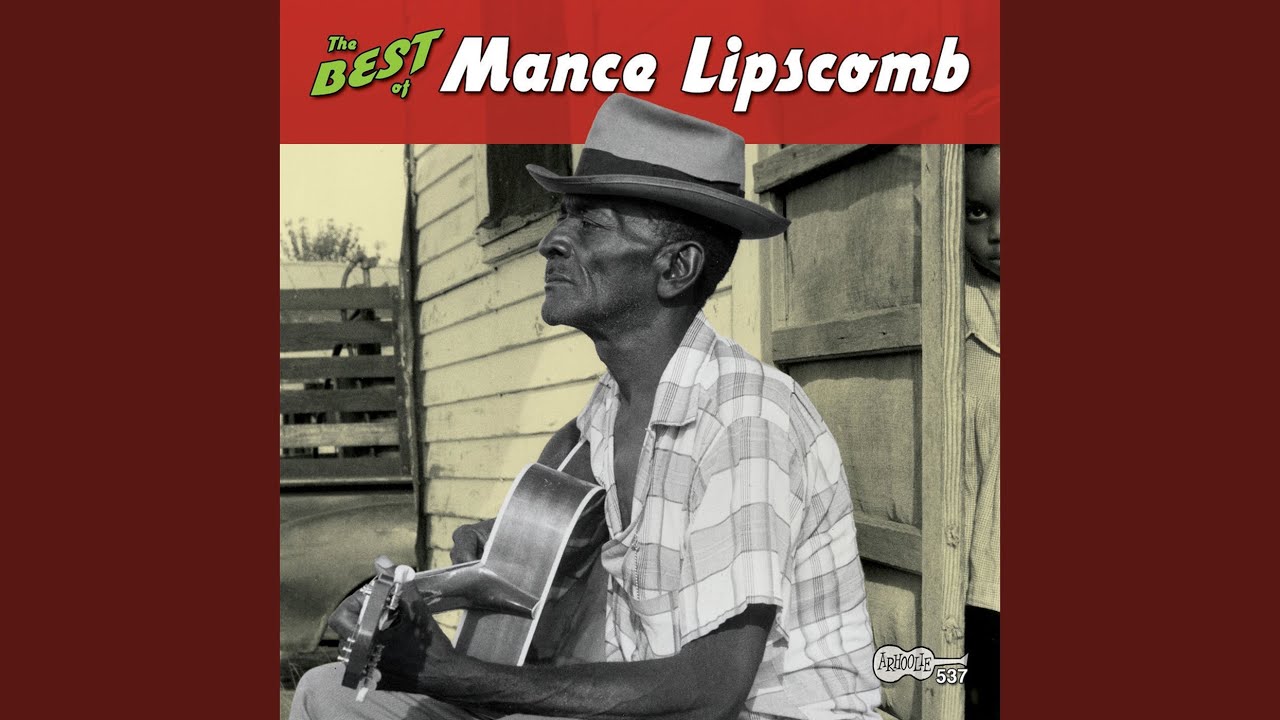
Mance Lipscomb was not just a bluesman; he was a “songster,” a title that carries the weight of an entire era of American music. Born in 1895 in Navasota, Texas, Lipscomb lived the majority of his life as a tenant farmer, only gaining international recognition in 1960 at the age of 65. His discovery by musicologists Chris Strachwitz and Mack McCormick provided a rare, high-definition window into the diverse musical landscape of the pre-war South—a world where the blues lived alongside ragtime, ballads, and spirituals.
The Mastery of the Dead-Thumb Technique
The defining characteristic of Mance Lipscomb’s playing is his incredible rhythmic independence, often referred to as the “dead-thumb” technique. Unlike the flashier, more erratic styles found in the Delta, Lipscomb maintained a relentless, metronomic bass line with his thumb, mimicking the steady pulse of a dance-hall piano. While his thumb provided the “thump” of a bass drum, his fingers picked out syncopated, melodic leads on the higher strings.
The Practical Art of the One-Man Band
This “one-man-band” approach was essential for his role as a performer at “country suppers” and Saturday night dances, where he was expected to provide music that a room full of people could move to for hours on end. His vocals were conversational and rhythmic, delivered with the calm authority of a man who had spent decades observing the world from the seat of a plow.
Sweet Melodies and Gambling Songs
To truly understand Lipscomb’s repertoire, one must look beyond standard blues structures. His iconic track “Sugar Babe” features a sweet, repetitive melody and a swinging rhythm that perfectly illustrates the “songster” tradition—music meant for social gathering rather than just solo lamentation.
Meanwhile, “Jack o’ Diamonds” showcases his ability to take a classic Texas gambling theme and imbue it with a driving, percussive energy, building tension through his relentless thumb-bass and narrative storytelling.
Capturing the Energy of the Texas Fests
Tracks like “Shake, Shake, Mama” highlight his more aggressive, dance-oriented side. It is a rhythmic powerhouse that demonstrates why he was a staple of the Texas “fests” for over half a century, capturing the raw energy of a rural social scene that existed long before the advent of television or radio.
Influencing the Folk Revival Generation
Lipscomb’s late-life career was a whirlwind of activity as he became a cornerstone of the Arhoolie Records catalog. He was a sensation at the Newport Folk Festival, where his dignified presence and technical mastery stunned a younger generation of musicians. He influenced countless artists during the 1960s folk boom, including Bob Dylan, Taj Mahal, and Ry Cooder, who saw in Mance a level of authenticity and “swing” that was disappearing from modern music.
A Historian with Six Strings
Mance Lipscomb remained a man of deep humility, famously stating that he didn’t “play the blues,” but rather “played life.” His legacy is one of the most important in American musicological; he proved that the roots of the guitar are vast and interconnected, stretching far beyond the boundaries of a single genre. He was a historian with six strings, and his music remains a masterclass in rhythm, storytelling, and the enduring power of the acoustic guitar.