When director Jonathan Demme decided to greenlight the 2015 comedy-drama Ricki and the Flash, he handed down a terrifying, uncompromising directive to his cast and technical crew: no playback, no studio overdubs, and absolutely no miming. Every single note played by the fictional bar band “The Flash”—fronted by Meryl Streep as Ricki Rendazzo, an aging, gig-hardened rock ‘n’ roller who abandoned her family for a shot at stardom—had to be tracked 100% live on the smoky set.
To pull off that level of raw realism without letting the cinematic illusion collapse, Hollywood called in the ultimate sonic cleanup man: Neil Citron.
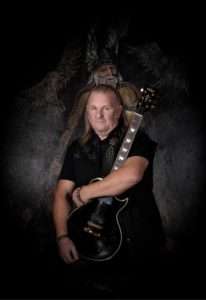
Citron is the definition of a musician’s musician. He is a Grammy-winning recording engineer, a former hot-shot guitarist for heavy metal legends Quiet Riot during their Rehab era, and the technical mastermind who spent years running Steve Vai’s legendary “Mothership” studio, tracking guitar icons from Eddie Van Halen to Ozzy Osbourne. But for Ricki and the Flash, Citron had to pull off a completely different kind of studio miracle: running a high-stakes, multi-month musical boot camp to turn one of the world’s greatest dramatic actors into an authentic, sweat-soaked bar-band veteran.
Neil Citron of Ricki and the Flash Chats Music!
The Grueling Eight-Hour-a-Day Guitar Boot Camp
While Meryl Streep was certainly no stranger to singing on camera—having shown off her vocal chops in everything from Mamma Mia! to Into the Woods—she had never picked up, tuned, or plugged in an electric guitar in her life. Citron was tasked with changing that, and the clock was ticking relentlessly toward day one of principal photography.
The pedagogical strategy wasn’t about teaching her dry academic theory, pentatonic scales, or simple open-position campfire chords. It was entirely about muscle memory, physical endurance, and the mechanics of guitar tone. Citron locked himself in a rehearsal space with Streep for up to eight hours a day, drilling the material until her fingers blistered and callused over.
“She could actually play the basic structures of the songs within a single week,” Citron recalled during the film’s press circuit. “But then we just had to drill, drill, drill so that she could completely focus on her acting performance and not have to visually check her hands or worry about the next chord change. She has incredible natural timing, a great internal feel for the rhythm, and she genuinely played every note you hear in the movie. There is no finger double, no hidden session player, or any of that Hollywood smoke-and-mirrors stuff.”
Citron armed Streep with a classic, road-worn Fender Telecaster and focused heavily on rock ‘n’ roll fundamentals: clean bar chords, rapid hand transitions, palm-muting, and the specific physical swagger of a musician who has spent thirty years playing under neon tavern lights. Because Demme refused to use traditional, intrusive stage vocal microphones on camera in order to preserve the cinematic framing of the scenes, the technical challenge fell squarely on Citron and the production sound crew to capture authentic, roaring live guitar tones direct from hidden lines and isolated, off-stage amplifiers.
Ricki And The Flash – Featuring Meryl Streep – In Theaters Now!
Rick Springfield and the “Ferrari” Gear Factor
Streep wasn’t the only heavy hitter holding down the stage on set. Her on-screen lead guitarist and romantic foil, Greg, was played by 1980s power-pop icon and genuine guitar slinger Rick Springfield. Citron, who had crossed paths with Springfield decades prior on the competitive Los Angeles club circuit, was thoroughly blown away by the pop veteran’s technical depth, noting that Springfield’s knowledge of complex jazz inversions, blues phrasing, and chord voicings was strictly top-tier elite.
The stark contrast in the characters’ gear choices also fundamentally shaped the film’s sonic identity. Citron famously compared premium, master-built instruments to driving a high-end Ferrari—they are structurally rock-solid, they effortlessly stay in tune under heavy bending, and playing them feels smooth and forgiving. Springfield relied on a classic, high-end Gibson SG that delivered that exact professional reliability take after take.
On the flip side, Streep’s character was supposed to be working a day job as a grocery store cashier just to afford her rent, meaning her gear had to look and feel like it had been salvaged from a local pawn shop. Citron purposely selected budget-tier instruments with stiff, high action that actively fought back against the player. This deliberate technical hurdle added a palpable layer of physical strain and grit to Streep’s performance, forcing her to dig into the strings to make the notes ring out.
RedPlate Amplifiers – Neil Citron playing the RedPhoenix
A Legacy of Grit, Humility, and Pure Audio Authenticity
Ultimately, Citron’s extensive engineering background and his decades spent surviving the volatile music industry gave Ricki and the Flash a sharp, uncompromising edge that the vast majority of Hollywood music movies completely miss. Instead of the polished, pitch-corrected, and sterilized perfection of a modern studio overdub session, the film brilliantly captures the real, sweaty, unpredictable push-and-pull of a live rock band making minor mistakes, adjusting on the fly, and finding the groove together in real time.
For discerning guitar enthusiasts watching the film, every string bend, slide, rhythmic rake, and chord shape Streep executes on screen is completely authentic. It stands as a dual testament to a legendary actress’s fierce work ethic and the meticulous, blues-and-rock-hardened coaching of a true industry veteran like Neil Citron.