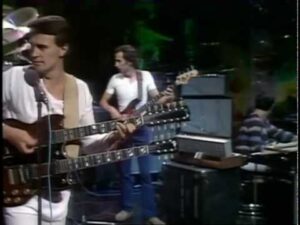
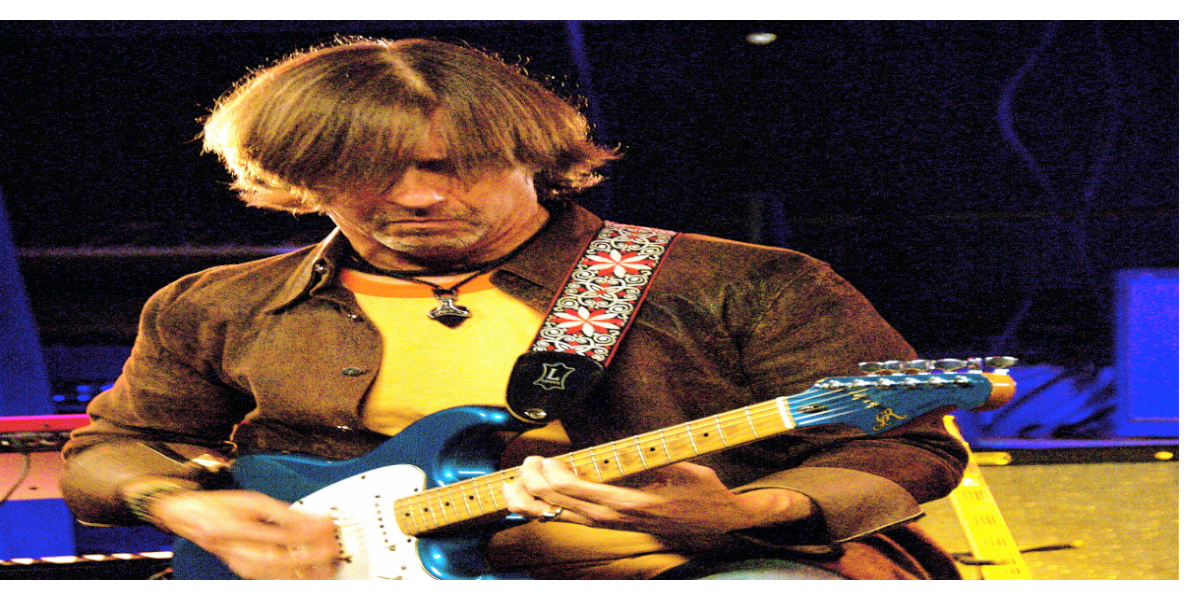
Dean Brown is a central figure in the world of modern jazz-fusion, a guitarist whose career has been defined by his explosive energy and a “who’s who” list of collaborators. While many jazz musicians lean toward the academic or the reserved, Brown is a performer who physically and sonically embodies every note he plays. Since emerging in the late 1970s, he has moved seamlessly between the worlds of high-concept jazz, gritty funk, and sophisticated rock, establishing himself as one of the most sought-after session and touring guitarists in the industry.
The Signature Style: Rhythmic Intensity and “The Face”
The signature style of Dean Brown is a masterclass in the intersection of funk and virtuosic shredding. He possesses a rare ability to stay “locked in the pocket” with a heavy groove while simultaneously unleashing complex, high-speed chromatic runs. His playing is characterized by a wide dynamic range, moving from whisper-quiet atmospheric textures to blistering, distorted leads in an instant.
Beyond the technicality, Brown is famous for his intense physical connection to the instrument; his expressive facial contortions and movement on stage are not just for show—they are a direct reflection of the emotional weight he puts behind every bend and vibrato.
Essential Listening: From “Here” to “Unfinished Business”
To understand the evolution of Brown’s sound, one should look to his solo discography, which serves as a laboratory for his fusion experiments. His 2001 debut, “Here,” is a foundational album that features a staggering lineup of guests and showcases his ability to compose music that is both technically challenging and hook-laden.
“Uncle Ray”: A Masterclass in Funk-Fusion Synergy
Another standout moment on Unfinished Business is the opening track, “Uncle Ray.” Dedicated to the legendary Ray Charles, this piece moves away from traditional soul and dives headfirst into a high-octane, syncopated funk-fusion groove. The track is notable for its incredible rhythmic interplay, particularly the chemistry between Brown and his long-time collaborator, bassist Marcus Miller. Brown utilizes a sharp, percussive “scratch” guitar technique to provide a secondary rhythmic layer, creating a thick, interlocking web that allows the lead melody to pop.
His solo on “Uncle Ray” is a highlight of the album, showcasing his ability to blend soulful, bluesy bends with modern, angular jazz lines. He makes extensive use of an envelope filter, which gives the guitar a vocal-like, “quacky” quality that perfectly complements the “slap” bass lines provided by Miller. The track serves as a reminder that while Brown is a technical titan, his music is always rooted in the “pocket,” ensuring that even the most complex fusion remains infectious and danceable.
The Ultimate Rolodex: A Session Legend’s Portfolio
Dean Brown’s career is most notably marked by his deep musical relationships with some of the greatest names in music history. He was a primary voice in the bands of Marcus Miller and Billy Cobham, two icons of the rhythm section who demanded a guitarist with impeccable timing and creative fire.
He also spent significant time with The Brecker Brothers, navigating their complex, horn-heavy arrangements with ease. His ability to fit into these high-pressure environments while still maintaining a distinct personal voice is what made him a first-call musician for David Sanborn, Steps Ahead, and Joe Zawinul.
A Master of Tone and Texture
Brown is an advocate for a diverse tonal palette, often utilizing a custom signature model guitar (such as his work with Carvin/Kiesel) and a sophisticated array of pedals to achieve his “fusion” sound. His setup is designed to handle everything from clean, percussive funk scratches to the thick, sustaining lead tones required for his rock-inflected solos.
This technical knowledge allows him to act as a sonic chameleon, ensuring that whether he is playing a standard jazz club or a massive rock arena, his guitar sits perfectly in the mix.
Conclusion: The Global Fusion Ambassador
Dean Brown remains a tireless performer and educator, traveling the world to share his unique approach to the instrument. He views the guitar not just as a tool for notes, but as a vehicle for global communication, often incorporating rhythmic ideas from his travels into his compositions. He has successfully bridged the gap between the precision of the studio and the raw energy of the stage, proving that jazz-fusion is at its best when it is played with heart, humor, and a relentless drive to push the boundaries.